São Tomé and Príncipe is a destination where tropical landscapes, African traditions, Portuguese influences and centuries of history come together. Beyond its beaches, rainforests and volcanic scenery, the islands offer visitors an opportunity to discover a fascinating cultural heritage shaped by different peoples, historical events and economic activities.
Cultural Tours in São Tomé and Príncipe are an excellent way to experience the destination beyond conventional sightseeing. Through visits to historic plantations, local communities, traditional markets, churches, museums, colonial buildings, fishing villages and cultural sites, travelers can learn about the history and daily life of the Santomean people while experiencing the authentic character of the islands.
For travelers interested in history, architecture, gastronomy, traditions and local communities, São Tomé and Príncipe provides many opportunities for meaningful cultural experiences.
Understanding the Cultural Heritage of São Tomé and Príncipe
The cultural identity of São Tomé and Príncipe has developed over centuries. The islands were uninhabited when Portuguese explorers arrived in the late 15th century, and São Tomé later became an important center of plantation agriculture.
Sugar production initially played an important role in the colonial economy. Later, cocoa and coffee became major agricultural products, transforming the islands into important producers within the Portuguese colonial system.
The plantation system brought people from different parts of Africa to the islands, creating communities with diverse cultural backgrounds. Over time, these communities developed distinctive traditions, languages, music, cuisine and social customs.
Today, this history can still be seen in the old roças, traditional houses, churches, agricultural landscapes and historic buildings scattered across São Tomé Island and Príncipe.
A cultural tour allows visitors to understand how this history continues to influence contemporary life.
Explore the Historic Roças of São Tomé
One of the most important cultural experiences in São Tomé is visiting the historic roças, or agricultural plantations.
Roças were large plantation estates that included agricultural areas, workers’ accommodation, administrative buildings, warehouses, hospitals, schools and religious structures. Many were designed as self-contained communities.
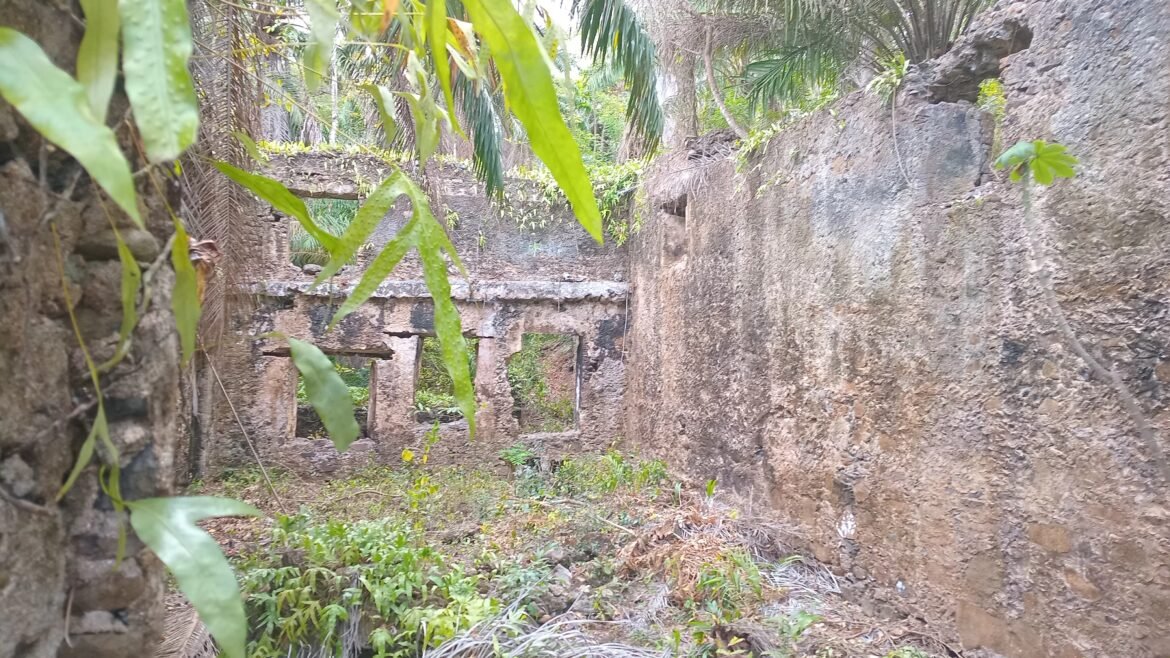
Although some plantations are now abandoned or partially ruined, their architecture and surrounding landscapes remain important elements of São Tomé’s cultural heritage.
A cultural tour can include visits to historic plantations such as Roça Agostinho Neto, Roça Água Izé, Roça Monte Café and other former agricultural estates.
These locations offer travelers the opportunity to learn about cocoa and coffee production, plantation architecture and the social history associated with the agricultural economy.
Walking through an old plantation can be particularly memorable because the experience combines history, architecture and nature.
Visit São Tomé City and Its Historic Center
The capital city of São Tomé is another important destination for cultural tourism.
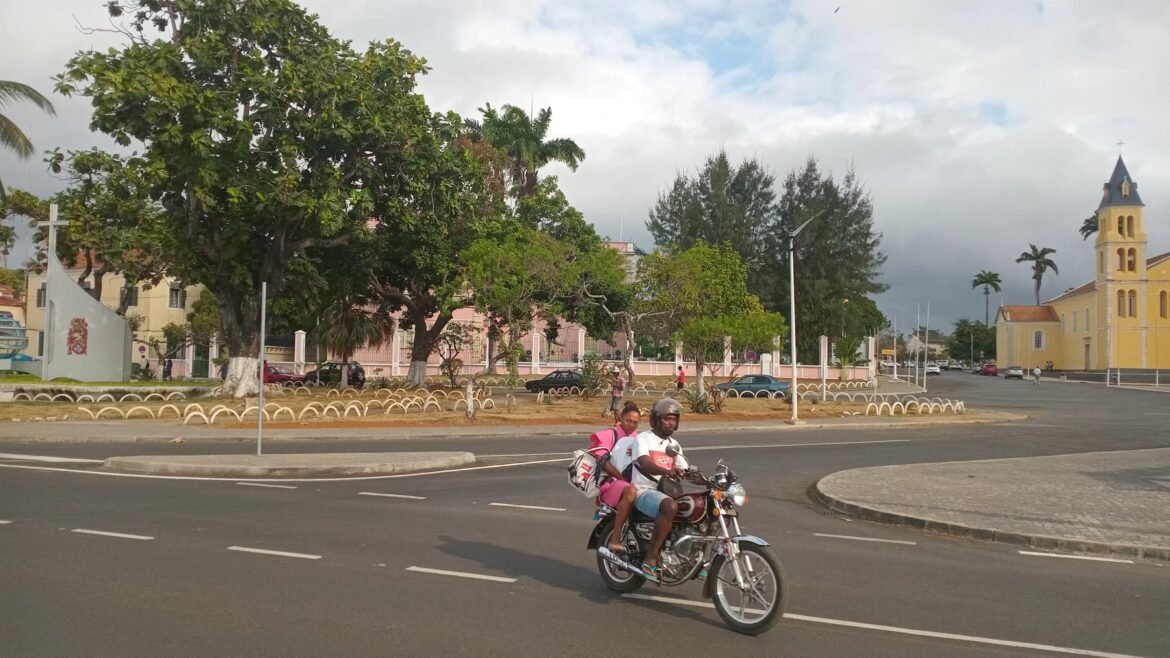
A walking tour through the city provides an introduction to the history of the country and its colonial architecture. Visitors can explore historic streets, public squares, churches, markets and buildings that reflect different periods of the city’s development.
Among the places that can be included in a cultural city tour are São Sebastião Fortress, the Cathedral of São Tomé, Independence Square, the National Museum and the central market.
The city is also an excellent place to observe everyday life.
Instead of simply passing through the capital by vehicle, travelers can walk through local neighborhoods, visit markets and interact with residents. This provides a more personal understanding of how people live, work and socialize in São Tomé.
Discover São Tomé’s Cocoa Heritage
Cocoa is one of the products most closely associated with the history of São Tomé and Príncipe.
During the colonial period, cocoa production became extremely important to the islands’ economy. São Tomé was once known internationally for its cocoa production, and many plantations were established across the territory.
Today, visitors can learn about cocoa cultivation and processing by visiting plantations and agricultural communities.
A cocoa tour may include walking through plantations, observing cocoa trees, learning how cocoa pods are harvested and discovering traditional processing methods.
For food lovers, the experience can also include tasting local chocolate or cocoa-based products.
This combination of agriculture, history and gastronomy makes cocoa tourism an interesting cultural experience for international visitors.
Experience the Coffee Culture of Monte Café
Coffee is another important part of São Tomé’s agricultural heritage.
The central region of the island, particularly around Monte Café, has a long history connected with coffee cultivation.
A visit to Monte Café can introduce travelers to the history of coffee production and the communities that have worked in this sector for generations.
Visitors can learn how coffee is grown, harvested, processed and prepared.
The surrounding landscape is also spectacular, with mountains, forests and agricultural areas creating a completely different environment from the coastal beaches.
A cultural tour combining Monte Café with nearby natural attractions can provide a balanced experience of history, agriculture and nature.
Meet Local Communities
One of the most valuable aspects of cultural tourism is the opportunity to meet local people.
São Tomé and Príncipe is home to communities with distinctive traditions, occupations and lifestyles. Fishing villages, agricultural communities and urban neighborhoods each offer different perspectives on Santomean life.
Responsible cultural tours should prioritize respectful interaction.
Visitors can learn about local traditions, food, music, crafts and daily activities without treating communities simply as tourist attractions.
Depending on the itinerary, travelers may have opportunities to meet local producers, fishermen, artisans, farmers or cultural groups.
These encounters can transform a normal sightseeing trip into a more meaningful travel experience.
Discover Traditional Food in São Tomé and Príncipe
Food is an essential part of culture, and São Tomé’s cuisine reflects the islands’ history and natural environment.
Traditional dishes commonly make use of fish, seafood, plantains, breadfruit, cassava, vegetables, coconut and locally grown spices and herbs.
One of the best ways to understand local culture is to experience the food in a local environment.
A cultural tour can include a traditional lunch or visit to a local restaurant where travelers can taste Santomean dishes.
Fresh fish is particularly important in coastal communities, while agricultural products from the interior contribute to the variety of local cuisine.
For many visitors, discovering the food of São Tomé becomes one of the most memorable parts of the journey.
Traditional Music, Dance and Cultural Expressions
Music and dance are important elements of Santomean cultural identity.
Traditional performances may include styles such as Tchiloli, Dança do Congo and Ússua, each with its own historical and cultural significance.
Tchiloli is particularly distinctive and represents one of the island’s best-known traditional theatrical expressions. Its performances combine theater, music, costumes and historical narratives.
Cultural experiences involving traditional performances should be approached with respect for the communities that preserve these traditions.
When available, travelers can attend cultural presentations or local events and learn about the meaning behind the music, costumes and performances.
Explore the National Museum
The National Museum of São Tomé and Príncipe is an important stop for visitors interested in the country’s history.
Located in São Sebastião Fortress, the museum provides an opportunity to learn about the colonial period, plantation society, religious traditions and material culture.
A visit to the museum can be especially useful at the beginning of a cultural itinerary because it gives travelers historical context before they explore plantations and other heritage sites.
Understanding the historical background makes later visits much more meaningful.
Visit Traditional Markets
Markets provide another fascinating way to experience local culture.
São Tomé’s markets are places where residents buy and sell food, vegetables, fruits, fish, spices and other everyday products.
For visitors, a market visit provides an opportunity to observe local commerce and discover products that may not be familiar to international travelers.
With a knowledgeable local guide, travelers can learn the names and uses of different fruits, vegetables, spices and traditional products.
Markets are also excellent places for photography, although visitors should always ask permission before photographing individuals.
Discover the Culture of Príncipe Island
Although São Tomé is the larger and more populated island, Príncipe has its own distinctive cultural identity.
The island is known for its small communities, historic settlements, tropical environment and preserved traditions.
Santo António, the capital of Príncipe, is an excellent place to experience the island’s atmosphere.
Walking through the town allows visitors to observe historic buildings, churches, local shops and everyday community life.
Príncipe’s cultural experiences can also be combined with visits to former plantations and natural areas, creating an itinerary that connects heritage and biodiversity.
Combine Culture with Nature
One of the greatest advantages of traveling in São Tomé and Príncipe is that cultural experiences can easily be combined with nature.
A single itinerary can include a historic plantation in the morning, a rainforest walk later in the day and a traditional meal in the evening.
Travelers can visit waterfalls, plantations, villages, beaches and historic sites without having to choose between cultural tourism and nature tourism.
For example, a cultural itinerary might combine Monte Café, a plantation visit, a rainforest experience and a local lunch.
Another itinerary could combine São Tomé city, the National Museum, a traditional market and a visit to a nearby plantation.
This flexibility makes the destination suitable for travelers with different interests.
Cultural Tours for Families
Cultural tours can also be excellent experiences for families.
Children can learn about agriculture, history, local food and traditional life through practical experiences rather than only through museums or books.
Visiting a cocoa plantation, for example, allows young travelers to see where chocolate begins.
Walking through a historic plantation can also introduce children to architecture and history in an engaging way.
Family-friendly cultural tours should be adapted to the age and interests of the participants, with comfortable transportation, appropriate walking distances and sufficient time for rest.
Private Cultural Tours in São Tomé
For travelers who prefer flexibility, a private cultural tour can provide a more personalized experience.
Instead of following a fixed group schedule, private travelers can choose the sites and activities that interest them most.
A private cultural tour can include a professional local guide, private transportation, plantation visits, city sightseeing, traditional food experiences and interactions with local communities.
The itinerary can also be adjusted according to the traveler’s interests.
History enthusiasts may prefer a heritage-focused tour, while food lovers may want to emphasize cocoa, coffee and local cuisine. Families may prefer shorter visits combined with interactive experiences.
Why Choose a Local Cultural Guide?
A local guide can make a significant difference to the quality of a cultural experience.
Historic buildings and plantations can be interesting to see, but understanding their background gives them greater meaning.
A knowledgeable guide can explain the history of different locations, introduce local traditions, identify plants and agricultural products, explain cultural practices and help travelers communicate respectfully with local communities.
Local guides also contribute to the local tourism economy by ensuring that tourism benefits people living in the destination.
Responsible Cultural Tourism
Cultural tourism should be based on respect.
Travelers should respect local customs, ask permission before photographing people, avoid damaging historical structures and follow the guidance of local communities.
Responsible tourism also means supporting local businesses whenever possible.
Choosing local guides, restaurants, artisans, producers and community-based experiences can help tourism generate benefits beyond hotels and major tourism companies.
For a destination such as São Tomé and Príncipe, where cultural heritage and natural environments are closely connected, responsible tourism can contribute to the preservation of both.
Plan Your Cultural Tour in São Tomé and Príncipe
A cultural journey through São Tomé and Príncipe can be designed around the interests of each traveler.
A short cultural experience may focus on São Tomé city, the National Museum, historic churches, local markets and traditional cuisine.
A full-day tour can combine the capital with a plantation, agricultural area and local community.
For travelers with more time, a multi-day itinerary can include cocoa plantations, coffee heritage, historic roças, Príncipe Island, traditional villages, local gastronomy and nature experiences.
The most important thing is not simply to visit many places. It is to understand the stories behind them.
Experience the Real São Tomé and Príncipe with Voltours
For travelers looking for more than beaches and conventional sightseeing, Cultural Tours in São Tomé and Príncipe provide an opportunity to discover the history, people and traditions that make the islands unique.
From the historic streets of São Tomé city to the old roças, from cocoa and coffee plantations to traditional markets, villages and cultural performances, every experience reveals another part of the country’s identity.
At Voltours, cultural experiences can be organized around the interests, schedule and travel style of each visitor. Private tours, guided excursions, plantation visits, city tours, cultural experiences and combined nature-and-culture itineraries can be arranged with local support and professional guidance.
São Tomé and Príncipe is more than a tropical destination. It is a place of stories, traditions, flavors, landscapes and living heritage.
Come and discover São Tomé and Príncipe through its culture, history and people. Your journey can begin with a tour—but the memories will stay with you long after you leave the islands.
Valdemar vera cruz
Valdemar vera cruz
Licenciado em Gestão, Contabilidade e Fiscalidade Financeira na universidade ISP em São Tomé e Príncipe, Formação Profissional em Marketing Turístico e Relações públicas, Mestre em Criatividade em Conteúdos Digitais.
São Tomé: História e Tours – Descubra a História, Cultura e Natureza da Ilha
São Tomé é um destino onde história, natureza, cultura e aventura se encontram numa pequena ilha situada no Golfo da Guiné. Viajar para São Tomé e Príncipe não significa apenas conhecer praias tropicais de águas quentes ou caminhar por florestas exuberantes. Significa também entrar em contacto com uma história marcada pela presença portuguesa, pela produção de açúcar, café e cacau, pelas antigas roças, pela diversidade cultural e pela construção de uma identidade própria que acompanha o país desde a época colonial até à independência.
Para quem deseja conhecer verdadeiramente São Tomé, fazer um tour acompanhado por um guia local pode transformar uma simples viagem numa experiência muito mais profunda. Cada estrada, antiga roça, plantação, igreja, mercado, praia ou comunidade pode contar uma parte da história da ilha.
Uma ilha com uma história fascinante
As ilhas de São Tomé e Príncipe foram encontradas por navegadores portugueses no final do século XV. A ocupação e o povoamento começaram posteriormente, dando origem a um processo histórico que transformaria profundamente as ilhas.
São Tomé tornou-se particularmente importante devido às condições naturais favoráveis à agricultura tropical. O clima equatorial, a abundância de água, os solos vulcânicos e a localização geográfica contribuíram para o desenvolvimento de culturas agrícolas destinadas à exportação.
Durante os primeiros séculos da colonização, a produção de açúcar teve grande importância. Foram construídos engenhos e estruturas agrícolas destinadas ao processamento da cana-de-açúcar. A economia açucareira esteve ligada também à escravização e às redes comerciais atlânticas da época.
Com o passar do tempo, a produção de açúcar perdeu importância e a economia agrícola da ilha passou por diferentes transformações. No século XIX, o café e, posteriormente, o cacau tornaram-se fundamentais para São Tomé e Príncipe.
É nesse período que as grandes roças começaram a ganhar uma importância extraordinária na paisagem e na história do país.
As roças de São Tomé: uma viagem ao passado
Visitar uma roça é uma das melhores formas de compreender a história económica e social de São Tomé.
As roças eram grandes propriedades agrícolas organizadas como verdadeiros complexos produtivos. Algumas possuíam casas de administração, hospitais, escolas, igrejas, oficinas, armazéns, secadores, linhas ferroviárias, habitações dos trabalhadores e outras estruturas.
A produção de café e cacau transformou São Tomé num importante produtor de produtos tropicais para exportação.
No entanto, a história das roças também está associada a um sistema de trabalho coercivo e a condições de exploração que marcaram profundamente a sociedade santomense. Por isso, conhecer uma roça não deve ser apenas uma visita turística: é também uma oportunidade para compreender diferentes capítulos da história colonial.
Em 2026, seis roças de São Tomé e Príncipe — Monte Café, Água Izé, Diogo Vaz, São João, Sundy e Belo Monte — foram inscritas na Lista do Património Mundial da UNESCO, como conjunto denominado “The Roças of São Tomé and Príncipe: Colonial Agricultural System and Forced Migration”. Esta inscrição reconhece o valor histórico e cultural do sistema das roças e a sua importância para compreender a história agrícola e colonial do arquipélago.
Tour histórico por São Tomé
Uma visita histórica à cidade de São Tomé pode começar pelo centro urbano, onde o visitante encontra edifícios, igrejas, praças e espaços ligados à evolução da cidade.
O centro histórico permite observar diferentes períodos arquitetónicos e perceber como São Tomé se desenvolveu como cidade portuária e administrativa.
Durante um tour pela cidade, o visitante pode conhecer lugares históricos, mercados, igrejas, edifícios antigos e espaços onde a vida quotidiana dos santomenses continua a acontecer.
Mais do que simplesmente fotografar monumentos, o acompanhamento de um guia local permite compreender o significado de cada lugar.
Uma visita guiada pode explicar como a cidade cresceu, como funcionava o comércio, como diferentes comunidades contribuíram para a formação da sociedade e como a história colonial influenciou a cultura contemporânea.
Forte de São Sebastião e Museu Nacional
Entre os locais de interesse histórico da cidade encontra-se o Forte de São Sebastião, uma das construções militares mais conhecidas de São Tomé.
O espaço está ligado à história defensiva da cidade e oferece ao visitante uma oportunidade para conhecer melhor diferentes períodos da história do arquipélago.
No interior encontra-se o Museu Nacional, onde podem ser observados objetos relacionados com a história, cultura e património de São Tomé e Príncipe.
Para quem gosta de história, uma visita ao museu pode complementar perfeitamente um city tour.
Engenhos e a antiga produção de açúcar
A história de São Tomé não pode ser compreendida sem falar da produção de açúcar.
Os primeiros engenhos representaram uma transformação profunda da economia da ilha. A produção açucareira esteve ligada ao desenvolvimento das primeiras estruturas agrícolas de grande dimensão e às redes comerciais atlânticas.
Locais relacionados com essa época permitem ao visitante imaginar como funcionava uma economia baseada na produção agrícola e no processamento da cana-de-açúcar.
Um exemplo interessante é a zona de Praia Melão, onde vestígios e elementos associados à antiga produção açucareira podem ser integrados numa experiência de turismo histórico e arqueológico.
Um tour desta natureza pode combinar história, arqueologia, paisagem e interpretação cultural.
Roça Água Izé
A Roça Água Izé é outro local importante para quem deseja compreender o passado agrícola de São Tomé.
Localizada numa área de grande beleza natural, a antiga roça conserva elementos que permitem perceber a dimensão das antigas propriedades agrícolas.
Ao visitar Água Izé, o turista pode observar antigas estruturas e conhecer histórias relacionadas com a produção agrícola e com as comunidades que viveram e trabalharam na região.
O contraste entre a arquitetura histórica, a vegetação tropical e o oceano torna esta experiência especialmente interessante para fotografia e turismo cultural.
Roça Monte Café e a Rota do Café
No centro da ilha encontra-se Monte Café, uma das referências para quem deseja conhecer a história do café em São Tomé.
A região montanhosa proporciona paisagens diferentes das zonas costeiras. A vegetação, as plantações e as antigas estruturas agrícolas criam um cenário ideal para uma experiência de turismo rural e cultural.
Um tour pela Rota do Café pode incluir explicações sobre o cultivo, processamento e importância económica do café.
O visitante pode também combinar a visita à roça com outras atrações da região central, incluindo trilhos, rios, cascatas e áreas de floresta.
Rota do Cacau
São Tomé tornou-se historicamente conhecido pela produção de cacau, e a cultura do cacau continua a fazer parte da identidade agrícola do país.
Uma Rota do Cacau permite conhecer plantações, observar diferentes etapas do cultivo e compreender como o cacau influenciou a economia e a sociedade santomenses.
Para os visitantes interessados em gastronomia, esta experiência pode ser ainda mais interessante quando combinada com uma degustação de produtos locais.
O cacau pode tornar-se uma verdadeira ponte entre história, agricultura, gastronomia e turismo.
Natureza e aventura depois da história
São Tomé não é apenas um destino histórico. A ilha oferece uma enorme variedade de experiências naturais.
Depois de conhecer as roças e os monumentos históricos, o visitante pode continuar a viagem explorando florestas tropicais, rios, cascatas, montanhas e praias.
Entre as experiências possíveis encontram-se caminhadas, observação de aves, visitas a cascatas, exploração de trilhos e passeios pelas zonas costeiras.
O Pico Cão Grande é um dos símbolos naturais mais impressionantes da ilha. A sua formação vulcânica destaca-se na paisagem e tornou-se uma das imagens mais conhecidas de São Tomé.
Para quem gosta de trekking e fotografia de natureza, a região oferece excelentes possibilidades.
As praias de São Tomé
Depois de explorar a história e a natureza do interior da ilha, é possível descobrir algumas das suas praias.
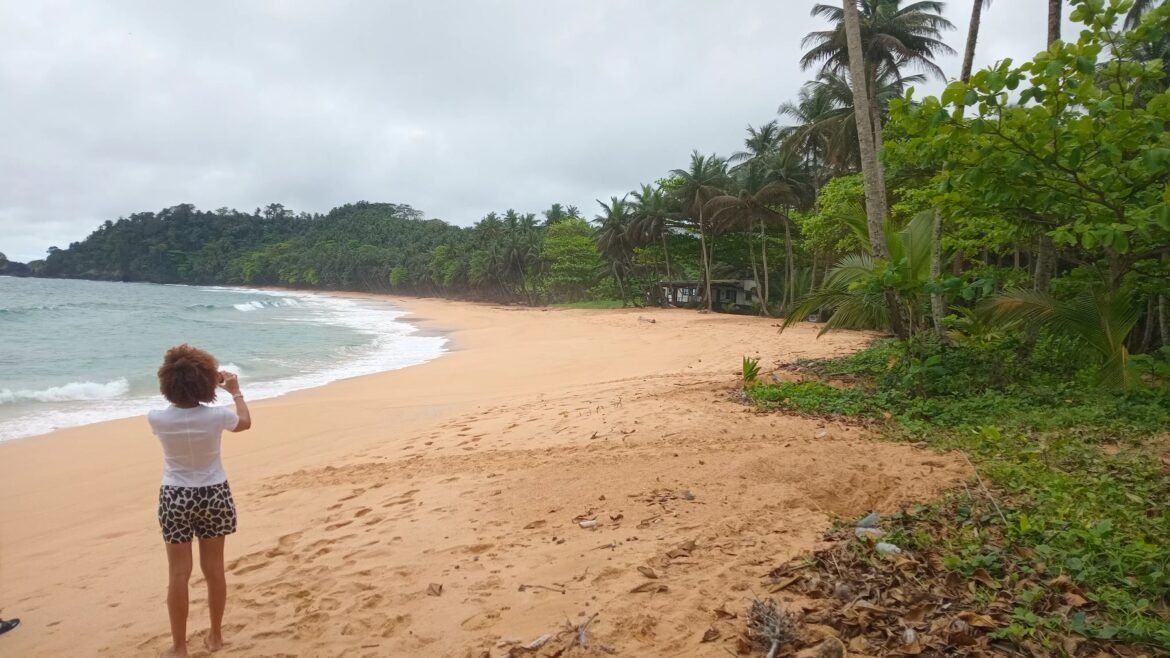
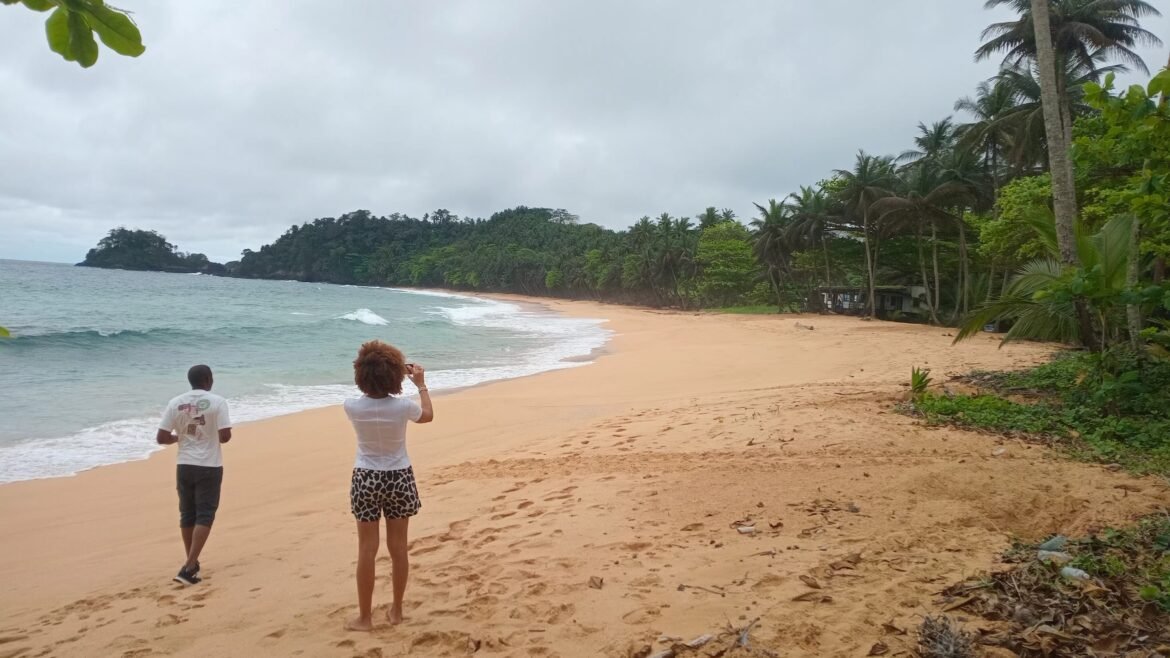
Praias como Jalé, Inhame, Piscina, Praia das Sete Ondas e outras zonas costeiras apresentam diferentes paisagens e experiências.
Algumas são mais adequadas para descanso, enquanto outras permitem combinar praia com natureza, fotografia e contacto com comunidades locais.
Um roteiro bem organizado pode combinar história durante a manhã e praia durante a tarde, criando uma experiência equilibrada entre cultura e lazer.
São Tomé e a sua cultura
A cultura santomense é resultado de séculos de encontros entre diferentes povos e influências.
A música, a dança, a gastronomia, as festas tradicionais, as línguas locais e as manifestações culturais fazem parte da identidade do país.
O visitante pode conhecer pratos tradicionais como o calulu, peixe grelhado, banana-pão, banana frita e outros sabores locais.
Experimentar a gastronomia é também uma forma de conhecer a história de um país.
A cultura não está apenas nos museus. Está nas pessoas, nas comunidades, nos mercados, na música, na comida e na vida quotidiana.
Um tour personalizado em São Tomé
Uma das vantagens de visitar São Tomé com um guia local é a possibilidade de adaptar o roteiro aos interesses do visitante.
Quem gosta de história pode escolher um roteiro dedicado às cidades, fortalezas, igrejas, engenhos e roças.
Quem prefere natureza pode optar por trilhos, cascatas, florestas, montanhas e praias.
Para quem deseja conhecer um pouco de tudo, é possível criar um roteiro combinando história, cultura, natureza, gastronomia e aventura.
Um tour privado também permite adaptar o ritmo da viagem. O visitante pode passar mais tempo num determinado local, tirar fotografias, conversar com habitantes locais ou simplesmente desfrutar da paisagem sem seguir o ritmo de um grupo grande.
São Tomé em cinco dias
Para quem dispõe de vários dias, um roteiro de cinco dias pode proporcionar uma visão abrangente da ilha.
O primeiro dia pode ser dedicado à cidade de São Tomé, com visita ao centro histórico, mercado, museus e outros pontos de interesse.
O segundo dia pode explorar a Rota do Cacau e as antigas roças do norte da ilha.
O terceiro dia pode ser dedicado à Rota do Café, Monte Café, cascatas e paisagens do centro.
O quarto dia pode levar o visitante ao sul, com praias, comunidades costeiras e possibilidade de conhecer o Ilhéu das Rolas e o Marco do Equador.
O quinto dia pode ser reservado para uma experiência complementar, como trekking, observação de aves, gastronomia ou uma visita a locais que não tenham sido incluídos nos primeiros dias.
Este tipo de roteiro pode ser adaptado conforme os interesses, condição física, tempo disponível e orçamento de cada viajante.
Por que fazer tours com um guia local?
Explorar São Tomé sozinho pode ser uma experiência interessante, mas um guia local acrescenta contexto à viagem.
Um edifício antigo deixa de ser apenas uma construção quando o visitante conhece a sua história. Uma plantação deixa de ser apenas uma paisagem quando se compreende a sua importância económica. Uma praia torna-se ainda mais interessante quando se conhece a comunidade e a cultura da região.
O guia também pode ajudar na organização dos deslocamentos, na escolha dos melhores locais para visitar e na adaptação do programa às condições do dia.
Para visitantes estrangeiros, contar com uma equipa local pode ainda facilitar a comunicação e tornar a experiência mais confortável.
Descubra São Tomé através da Voltours
A Voltours é uma agência de viagens e turismo recetivo baseada em São Tomé e Príncipe, especializada em experiências que permitem aos visitantes conhecer o destino através da natureza, cultura, história e contacto com as comunidades locais.
Os tours podem ser personalizados de acordo com o perfil do viajante, incluindo city tours, visitas às roças, Rota do Café, Rota do Cacau, praias, trekking, cascatas, observação da natureza, experiências culturais e excursões privadas.
Mais do que visitar lugares, a proposta é ajudar o viajante a compreender São Tomé.
Conclusão
São Tomé é um destino que merece ser descoberto com tempo e curiosidade.
A história da ilha está presente nas antigas roças, nos engenhos, nas construções históricas, nas plantações de café e cacau e nas tradições das comunidades. Ao mesmo tempo, a natureza oferece florestas tropicais, montanhas, cascatas, praias e paisagens que tornam cada viagem diferente.
Um tour por São Tomé pode, portanto, ser muito mais do que uma excursão. Pode ser uma verdadeira viagem através do tempo.
Desde a história dos primeiros engenhos até à cultura do cacau e do café, passando pelas antigas roças, pela cidade, pelas praias e pelas florestas, São Tomé oferece ao visitante a oportunidade de conhecer um país pequeno em território, mas extraordinariamente rico em história, cultura e natureza.
Se pretende descobrir São Tomé de uma forma autêntica, organizada e personalizada, uma visita guiada com uma equipa local pode ser o ponto de partida para uma experiência inesquecível.
Está a planear uma viagem a São Tomé e Príncipe? Prepare-se para descobrir um destino onde praias tropicais, florestas exuberantes, antigas roças de cacau e café, montanhas vulcânicas, cascatas, cultura, gastronomia e paisagens únicas se encontram.
Para quem visita o arquipélago pela primeira vez, escolher as excursões certas é uma das melhores formas de aproveitar cada momento da viagem.
Entre os lugares mais procurados estão o Ilhéu das Rolas, o Pico Cão Grande, as praias do sul, as roças históricas, a Lagoa Azul, a Cascata de São Nicolau e o Parque Natural Obô. Listas de atrações e experiências turísticas publicadas em 2026 também destacam Banana Beach, Praia Piscina, Praia Jalé e outros pontos imperdíveis.
Neste guia, reunimos 10 excursões que podem tornar a sua viagem a São Tomé e Príncipe verdadeiramente inesquecível — seja para quem procura praias, natureza, aventura, história, cultura ou experiências autênticas.
1. Ilhéu das Rolas e Marco do Equador 🌍
O Ilhéu das Rolas é uma das experiências mais emblemáticas do arquipélago. Localizado no extremo sul da ilha de São Tomé, é conhecido pelo Marco do Equador, associado à linha que divide os hemisférios Norte e Sul.
A excursão começa normalmente com uma viagem até Porto Alegre, seguida de uma travessia de barco. Ao chegar, encontrará floresta tropical, praias de águas claras e uma atmosfera tranquila.
Além de visitar o Marco do Equador e tirar fotografias, poderá explorar praias, observar a vegetação tropical e, dependendo do programa, realizar atividades no mar.
Ideal para: casais, famílias, fotógrafos e viajantes interessados em geografia.
Duração recomendada: dia inteiro.
2. Rota do Sul: Pico Cão Grande, praias e paisagens vulcânicas 🌋
O sul de São Tomé reúne algumas das paisagens naturais mais impressionantes da ilha.
O grande destaque é o Pico Cão Grande, uma formação rochosa vulcânica que se eleva acima da floresta. Com cerca de 663 metros de altura, é um dos símbolos naturais de São Tomé e Príncipe.
A excursão pode incluir passagens por comunidades, plantações e praias como Praia Jalé, Praia Piscina e Praia das 7 Ondas.
O Pico Cão Grande é sobretudo um ponto de observação e fotografia. A sua escalada exige preparação e experiência especializada, não sendo uma simples caminhada turística.
Ideal para: amantes da natureza, fotografia, aventura e paisagens vulcânicas.
3. Rota do Norte: cacau, Lagoa Azul e Roça Agostinho Neto 🍫
A região norte combina história, agricultura, cultura e praias.
Uma excursão típica pode incluir antigas zonas de produção de cacau, uma roça histórica, comunidades locais e a costa.
A Roça Agostinho Neto é uma das principais referências do passado agrícola de São Tomé. O roteiro pode continuar até à Lagoa Azul, conhecida pelas suas paisagens e águas azuladas.
Esta é uma excelente opção para quem quer conhecer o país para além das praias e compreender melhor a importância do cacau na economia e na sociedade são-tomense.
Ideal para: história, cacau, cultura, fotografia e paisagens costeiras.
4. Rota do Café: Monte Café, Jardim Botânico e Cascata de São Nicolau ☕
A Rota do Café leva-o ao interior da ilha, onde a paisagem muda completamente.
Em Monte Café, poderá conhecer antigas estruturas agrícolas, aprender mais sobre o cultivo e processamento do café e descobrir a história das plantações.
O percurso pode ser complementado com uma visita ao Jardim Botânico e à Cascata de São Nicolau, uma das quedas de água mais conhecidas da ilha.
Ideal para: amantes do café, natureza, história, fotografia e caminhadas leves.
5. Parque Natural Obô e Lagoa Amélia 🌿
Para quem procura natureza e aventura, o Parque Natural Obô é uma experiência imperdível.
A floresta apresenta uma biodiversidade muito rica e oferece oportunidades para caminhadas, trekking e observação da natureza.
A região da Lagoa Amélia é especialmente procurada por quem gosta de ambientes florestais. Dependendo das condições, o percurso pode exigir preparação física, calçado adequado e acompanhamento de um guia.
Ideal para: trekking, natureza, observação de aves, fotografia e aventura.
Recomendação: contratar um guia local experiente.
6. Praias do sul de São Tomé 🏖️
O sul da ilha combina floresta tropical com praias de grande beleza.
Uma excursão pode incluir paragens na Praia Jalé, Praia Inhame, Praia Piscina, Praia Cabana e outras zonas costeiras, dependendo das condições da estrada e do tempo disponível.
Este passeio permite conhecer diferentes paisagens, tomar banho de mar, tirar fotografias e provar a gastronomia local.
Ideal para: famílias, casais, fotografia e quem procura tranquilidade.
7. Mangal de Malanza e passeio de canoa 🛶
Uma das experiências mais diferentes do sul da ilha é visitar o mangal de Malanza.
O passeio tradicional de canoa pelo rio Malanza permite conhecer o maior mangal do país, observar a vegetação característica, aves e outros elementos da fauna local.
É uma forma completamente diferente de explorar São Tomé, entrando num ambiente aquático rodeado por mangais.
Ideal para: ecoturismo, famílias, fotógrafos, observadores de aves e amantes da natureza.
8. Tour histórico e cultural pela cidade de São Tomé 🏛️
Nem todas as melhores excursões precisam de sair da cidade.
Um passeio guiado pela cidade de São Tomé pode incluir monumentos históricos, igrejas, mercados, edifícios antigos, espaços culturais e locais ligados à história do arquipélago.
No Mercado de São Tomé, poderá encontrar frutas tropicais, especiarias, peixe e outros produtos que fazem parte do quotidiano local.
Para quem tem apenas algumas horas disponíveis, este city tour é uma excelente introdução ao país.
Ideal para: primeira visita, cultura, história, gastronomia e viajantes com pouco tempo.
9. Roças históricas de São Tomé 🏚️
As antigas roças são fundamentais para compreender a história económica e social de São Tomé e Príncipe.
Uma excursão pode incluir antigas instalações agrícolas, plantações, secadores, hospitais, casas e outros elementos da arquitetura das roças.
O grande valor deste roteiro está na combinação entre história, paisagens rurais e contacto com comunidades locais.
Para aproveitar melhor a visita, é aconselhável contar com um guia local que possa explicar o significado das estruturas e a evolução da produção de cacau e café.
Ideal para: história, cultura, arquitetura, fotografia e turismo responsável.
10. Golfinhos, baleias e vida marinha 🐬
São Tomé também oferece experiências para quem quer explorar o ambiente marinho.
Dependendo da época do ano, das condições do mar e da localização, poderá ter a oportunidade de observar diferentes espécies marinhas, incluindo baleias em determinadas épocas.
As excursões devem ser realizadas com operadores experientes, respeitando as regras de segurança e de observação responsável dos animais.
O passeio pode ser combinado com snorkeling, observação da costa ou simplesmente uma viagem de barco pelas águas de São Tomé.
Ideal para: famílias, casais, fotógrafos, amantes do mar e observadores de fauna.
Como escolher a melhor excursão em São Tomé?
A escolha depende do tipo de experiência que procura:
🌊 Praia e relaxamento: praias do sul e Ilhéu das Rolas.
🏛️ História e cultura: cidade de São Tomé, roças e Rota do Cacau.
🌿 Natureza e aventura: Parque Natural Obô, Lagoa Amélia, Cascata de São Nicolau e Pico Cão Grande.
🍫 Gastronomia e produtos locais: visitas às roças de café e cacau combinadas com refeições tradicionais.
O tempo disponível também é importante. Com dois ou três dias, deverá escolher roteiros estratégicos. Com uma semana, poderá distribuir melhor as excursões e conhecer diferentes regiões da ilha.
Quantos dias são necessários para conhecer São Tomé?
Para uma primeira experiência, 4 a 5 dias permitem conhecer vários dos principais pontos da ilha.
Um programa de cinco dias pode incluir:
Dia 1: cidade de São Tomé e experiência cultural.
Dia 2: Rota do Cacau e região norte.
Dia 3: Rota do Café e interior da ilha.
Dia 4: sul, praias e Pico Cão Grande.
Dia 5: Ilhéu das Rolas e Marco do Equador.
Se tiver mais tempo, poderá acrescentar caminhadas, observação de aves, experiências gastronómicas, passeios de barco e visitas mais profundas às comunidades e roças.
Por que fazer excursões com um guia local?
Um guia local pode acrescentar muito valor à sua viagem.
Além de conhecer as estradas, condições locais, horários e pontos de interesse, o guia pode partilhar histórias, tradições e informações que dificilmente encontrará sozinho.
Um roteiro privado também permite adaptar o ritmo da viagem. As famílias podem passar mais tempo nas praias, os fotógrafos podem parar nos melhores miradouros e os viajantes interessados em história podem dedicar mais tempo às roças.
Para quem procura uma experiência personalizada, empresas locais como a e outros operadores turísticos sediados em São Tomé oferecem diferentes serviços relacionados com excursões e turismo local.
Reserve a sua excursão em São Tomé e Príncipe
São Tomé e Príncipe é muito mais do que um destino de praias tropicais. É um país onde natureza, história, cultura, cacau, café, floresta, vulcões, gastronomia e mar se encontram numa área relativamente pequena.
As 10 excursões apresentadas permitem conhecer diferentes lados do arquipélago: do Marco do Equador às montanhas do interior, das antigas roças às praias do sul, da floresta do Obô ao mangal de Malanza.
Se pretende conhecer São Tomé de forma mais completa, combine:
✅ um roteiro cultural;
✅ uma excursão de natureza;
✅ uma rota histórica;
✅ um dia de praia;
✅ uma experiência no sul ou no Ilhéu das Rolas.
Com um bom planeamento e acompanhamento local, cada dia pode transformar-se numa nova descoberta.
São Tomé e Príncipe espera por si. Explore, descubra, conheça a cultura local e leve consigo experiências que vão muito além das fotografias.
São Tomé e Príncipe é um destino que combina praias tropicais, florestas exuberantes, antigas roças de cacau e café, montanhas vulcânicas, cascatas, cultura, gastronomia e paisagens únicas. Para quem visita o arquipélago pela primeira vez, escolher as excursões certas é uma das melhores formas de aproveitar a viagem.
A ilha de São Tomé oferece diferentes experiências que podem ser organizadas em roteiros de um dia ou combinadas em programas de vários dias. Entre os lugares mais procurados estão o Ilhéu das Rolas, o Pico Cão Grande, as praias do sul, as roças históricas, a Lagoa Azul, a Cascata de São Nicolau e o Parque Natural Obô.
Listas de atrações e experiências turísticas publicadas em 2026 também destacam locais como Banana Beach, Pico Cão Grande, Praia Piscina, Praia Jalé, Ilhéu das Rolas, Cascata de São Nicolau e o Parque Natural Obô entre os principais pontos de interesse do arquipélago.
Neste guia, apresentamos 10 excursões que podem fazer parte de uma viagem inesquecível a São Tomé e Príncipe, incluindo opções para quem procura praias, natureza, aventura, história, cultura e experiências autênticas.
1. Excursão ao Ilhéu das Rolas e Marco do Equador
O Ilhéu das Rolas é uma das experiências mais emblemáticas de São Tomé e Príncipe. Localizado no extremo sul da ilha de São Tomé, o ilhéu é conhecido principalmente pelo Marco do Equador, associado à linha que divide os hemisférios Norte e Sul.
A excursão normalmente começa com uma viagem por estrada em direção a Porto Alegre, seguida de uma travessia de barco. A chegada ao ilhéu proporciona imediatamente uma mudança de ambiente: floresta tropical, praias de águas claras e uma atmosfera tranquila.
Um dos momentos mais esperados é a visita ao Marco do Equador, onde os visitantes podem tirar fotografias e conhecer melhor a importância geográfica do arquipélago.
Além do marco, é possível explorar praias, observar a vegetação tropical e, dependendo das condições e do programa contratado, realizar atividades no mar.
Ideal para: casais, famílias, fotógrafos, viajantes interessados em geografia e pessoas que procuram uma experiência tropical.
Duração recomendada: dia inteiro.
2. Rota do Sul: Pico Cão Grande, praias e paisagens vulcânicas
A região sul de São Tomé apresenta algumas das paisagens naturais mais impressionantes da ilha.
Um dos grandes destaques é o Pico Cão Grande, uma formação rochosa vulcânica que se eleva de forma impressionante acima da floresta. O Ministério do Turismo de São Tomé e Príncipe descreve o Cão Grande como uma formação vulcânica emblemática, com cerca de 663 metros de altura.
A excursão pode combinar a observação do pico com passagens por diferentes comunidades, plantações e praias do sul.
Dependendo do itinerário, o visitante pode conhecer lugares como Praia Jalé, Praia Piscina, Praia das 7 Ondas e outras zonas costeiras.
O Pico Cão Grande é principalmente um ponto de observação e fotografia para visitantes comuns. A escalada da formação não deve ser confundida com uma simples caminhada turística, pois exige preparação e experiência especializada.
Ideal para: amantes da natureza, fotografia, aventura e paisagens vulcânicas.
3. Rota do Norte: cacau, Lagoa Azul e Roça Agostinho Neto
A região norte oferece uma excelente combinação de história, agricultura, cultura e praias.
Uma excursão típica pode incluir passagem por antigas zonas de produção de cacau, visita a uma roça histórica, paragens em comunidades locais e chegada à costa.
A Roça Agostinho Neto é uma das referências históricas relacionadas com o passado agrícola de São Tomé. O roteiro pode continuar em direção à Lagoa Azul, uma zona costeira conhecida pelas suas paisagens e águas de tonalidades azuladas.
O norte também permite compreender melhor a importância que o cacau teve na economia e na formação social de São Tomé e Príncipe.
Para quem deseja conhecer o país além das praias, esta é uma excursão particularmente interessante porque combina patrimônio histórico, natureza e contacto com a realidade local.
Ideal para: viajantes interessados em história, cacau, cultura, fotografia e paisagens costeiras.
4. Rota do Café: Monte Café, Jardim Botânico e Cascata de São Nicolau
A Rota do Café leva o visitante para o interior da ilha, onde a paisagem muda completamente.
A região de Monte Café está associada à produção de café e às antigas estruturas agrícolas. Uma visita pode incluir a exploração de uma roça, explicações sobre o cultivo e processamento do café e contacto com a história das plantações.
O roteiro pode ser complementado pelo Jardim Botânico e pela Cascata de São Nicolau, uma das quedas de água mais conhecidas da ilha.
A Cascata de São Nicolau está situada na região de Monte Café e é uma das atrações naturais frequentemente incluídas nos roteiros do centro da ilha.
Esta excursão é excelente para quem quer perceber como o café, a floresta e as antigas estruturas coloniais estão relacionados.
Ideal para: amantes do café, natureza, história, fotografia e caminhadas leves.
5. Excursão ao Parque Natural Obô e Lagoa Amélia
Para os viajantes que procuram natureza e aventura, o Parque Natural Obô é uma das experiências mais importantes de São Tomé.
A floresta apresenta uma biodiversidade muito rica e oferece diferentes possibilidades de caminhada e observação da natureza.
A região da Lagoa Amélia é frequentemente procurada por visitantes interessados em trekking e ambientes florestais. Dependendo das condições, o percurso pode exigir preparação física, calçado adequado e acompanhamento de guia.
Esta não é uma excursão apenas para tirar fotografias. É uma oportunidade para entrar em contacto direto com a floresta tropical de São Tomé.
A experiência pode ser particularmente interessante para observadores de aves, fotógrafos de natureza e viajantes que preferem atividades ao ar livre.
Ideal para: trekking, natureza, observação de aves, fotografia e aventura.
Recomendação: contratar guia local experiente para os percursos de floresta.
6. Excursão pelas praias do sul de São Tomé
O sul da ilha é conhecido pela combinação de floresta tropical e praias de grande beleza.
Uma excursão pelas praias pode incluir diferentes paragens, como Praia Jalé, Praia Inhame, Praia Piscina, Praia Cabana e outras zonas costeiras, dependendo das condições da estrada e do tempo disponível.
A Praia Jalé, por exemplo, aparece entre as atrações mais procuradas pelos visitantes de São Tomé e Príncipe.
Este tipo de passeio permite aproveitar o dia sem ficar limitado a uma única praia. O visitante pode conhecer diferentes paisagens, tomar banho de mar, fazer fotografias e almoçar com gastronomia local.
Para famílias e casais, pode ser uma excelente opção para combinar relaxamento e descoberta.
Ideal para: praia, famílias, casais, fotografia e viajantes que procuram tranquilidade.
7. Excursão de natureza e mangal de Malanza
Uma das experiências diferentes no sul da ilha é a visita ao mangal de Malanza.
O Ministério do Turismo de São Tomé e Príncipe destaca o passeio tradicional de canoa pelo rio Malanza, no maior mangal do país. A experiência permite observar a vegetação característica do ecossistema, aves e outros elementos da fauna local.
O passeio de canoa proporciona uma perspetiva completamente diferente da ilha. Em vez de percorrer estradas ou trilhos, o visitante entra num ambiente aquático rodeado por mangais.
É uma atividade especialmente interessante para quem gosta de natureza, fotografia e observação de fauna.
A experiência pode também ser combinada com outros pontos do sul, criando um programa de dia inteiro.
Ideal para: ecoturismo, famílias, fotógrafos, observadores de aves e amantes da natureza.
8. Tour histórico e cultural pela cidade de São Tomé
Nem todas as melhores excursões precisam de sair da cidade.
A cidade de São Tomé oferece uma experiência cultural importante para compreender o arquipélago. Um passeio guiado pode incluir monumentos históricos, igrejas, mercados, edifícios antigos, espaços culturais e zonas relacionadas com a história da cidade.
Uma visita guiada permite conhecer não apenas os edifícios, mas também as histórias e tradições relacionadas com a população local.
O Mercado de São Tomé, por exemplo, pode proporcionar contacto com produtos locais, frutas tropicais, especiarias, peixe e outros elementos da vida quotidiana.
Para quem tem apenas um dia ou algumas horas disponíveis, o city tour pode ser uma excelente introdução ao país.
Ideal para: primeira visita, cultura, história, gastronomia e viajantes com pouco tempo.
9. Excursão às roças históricas de São Tomé
As antigas roças de São Tomé e Príncipe são fundamentais para compreender a história económica e social do país.
Durante décadas, as plantações de cacau e café desempenharam um papel importante na economia das ilhas. Atualmente, algumas antigas estruturas agrícolas continuam a fazer parte da paisagem e constituem pontos de interesse cultural e histórico.
Uma excursão pelas roças pode incluir visitas a antigas instalações, plantações, secadores, hospitais, casas e outros elementos da arquitetura agrícola.
O grande valor deste roteiro está na possibilidade de combinar história com contacto com comunidades e paisagens rurais.
Para melhorar a experiência, é aconselhável realizar a visita com um guia local que consiga explicar o significado das diferentes estruturas e a evolução da produção de cacau e café.
Ideal para: história, cultura, arquitetura, fotografia e turismo responsável.
10. Excursão de observação de golfinhos, baleias e vida marinha
São Tomé também oferece possibilidades para quem quer explorar o ambiente marinho.
Dependendo da época do ano, das condições do mar e da localização, podem existir oportunidades de observação de diferentes espécies marinhas.
Alguns operadores turísticos apresentam experiências de observação de baleias, com determinadas épocas do ano sendo mais adequadas para essa atividade.
As excursões marítimas devem ser realizadas com operadores experientes, respeitando as regras de segurança e de observação responsável dos animais.
A experiência pode ser complementada com snorkeling, observação da costa ou simplesmente um passeio de barco pelas águas de São Tomé.
Ideal para: famílias, casais, fotógrafos, amantes do mar e observadores de fauna.
Como escolher a melhor excursão em São Tomé?
A melhor excursão depende principalmente do tipo de experiência que o visitante procura.
Se o objetivo é praia e relaxamento, as praias do sul e o Ilhéu das Rolas são excelentes opções.
Para quem prefere história e cultura, a cidade de São Tomé, as roças e a Rota do Cacau oferecem experiências diferentes.
Quem procura natureza e aventura pode escolher o Parque Natural Obô, Lagoa Amélia, Cascata de São Nicolau ou a região do Pico Cão Grande.
Já os interessados em gastronomia e produtos locais podem combinar visitas às roças de café e cacau com refeições tradicionais.
Outro fator importante é o tempo disponível. Um visitante com apenas dois ou três dias deve escolher roteiros estratégicos, enquanto quem permanece uma semana pode distribuir as excursões pela ilha e incluir diferentes experiências.
Quantos dias são necessários para conhecer São Tomé?
Para uma primeira experiência, 4 a 5 dias permitem conhecer vários dos principais pontos da ilha de São Tomé.
Um programa de cinco dias pode, por exemplo, combinar:
Dia 1: Cidade de São Tomé e experiência cultural.
Dia 2: Rota do Cacau e Norte.
Dia 3: Rota do Café e interior da ilha.
Dia 4: Sul, praias e Pico Cão Grande.
Dia 5: Ilhéu das Rolas e Marco do Equador.
Quem tiver mais tempo pode acrescentar caminhadas, observação de aves, experiências gastronómicas, passeios de barco e visitas mais profundas às comunidades e roças.
Por que fazer excursões com um guia local?
São Tomé e Príncipe é um destino onde o acompanhamento de um guia local pode acrescentar bastante valor à viagem.
O guia conhece as estradas, condições locais, horários, histórias, comunidades, pontos de interesse e particularidades de cada região.
Além disso, um roteiro privado permite adaptar o ritmo da viagem às necessidades do visitante. Uma família pode preferir mais tempo nas praias; um fotógrafo pode precisar de mais tempo em determinados miradouros; e um viajante interessado em história pode dedicar mais horas às roças.
Para quem procura uma experiência personalizada, empresas locais como a e outros operadores turísticos sediados em São Tomé oferecem diferentes serviços relacionados com excursões e turismo local.
Reserve a sua excursão em São Tomé e Príncipe
São Tomé e Príncipe não é apenas um destino de praias tropicais. É um país onde natureza, história, cultura, cacau, café, floresta, vulcões, gastronomia e mar se encontram numa área relativamente pequena.
As 10 excursões apresentadas neste guia permitem conhecer diferentes lados do arquipélago: desde o Marco do Equador no Ilhéu das Rolas até às montanhas do interior, das antigas roças às praias do sul e da floresta do Obô ao mangal de Malanza.
O mais importante é escolher um programa adequado ao seu tempo, interesses e condição física.
Se pretende conhecer São Tomé de forma mais completa, uma boa estratégia é combinar um roteiro cultural, uma excursão de natureza, uma rota histórica, um dia de praia e uma experiência no sul ou no Ilhéu das Rolas.
Com um bom planeamento e acompanhamento local, cada dia pode transformar-se numa nova descoberta.
São Tomé e Príncipe espera por si. Explore, descubra, conheça a cultura local e leve consigo experiências que vão muito além das fotografias.
Praia Melão São Tomé: History, Sugar Heritage and Archaeological Tourism
Praia Melão São Tomé is a fascinating destination for travelers who want to discover a different side of São Tomé and Príncipe. Beyond its tropical beaches, lush forests and spectacular landscapes, São Tomé Island has a remarkable historical heritage connected to agriculture, colonial architecture, plantations and the development of the sugar and cocoa economies.
Located on São Tomé Island, Praia Melão is particularly interesting because of its historical association with the island’s former sugar production. Today, the remains and landscape connected with this period provide an opportunity to understand an important chapter in the history of São Tomé and Príncipe.
A visit to Praia Melão can therefore become much more than a simple excursion. It can be a cultural and historical journey through the transformation of São Tomé Island, from its early agricultural development to the plantation economy that later shaped much of the country’s identity.
For visitors interested in historical tourism in São Tomé, archaeological sites in São Tomé, plantations, colonial heritage and authentic local experiences, Praia Melão offers an unusual and meaningful destination to explore.
Where Is Praia Melão in São Tomé?
Praia Melão is located on São Tomé Island, in the Democratic Republic of São Tomé and Príncipe. The area can be visited as part of a cultural or historical tour departing from São Tomé city.
Its location makes it possible to combine the visit with other attractions and historical places on the island. Depending on the itinerary, travelers can explore plantations, old agricultural facilities, villages, beaches, viewpoints and other locations connected with São Tomé’s history.
One of the advantages of visiting Praia Melão with a local guide is that the landscape can be interpreted in its historical context. What may initially appear to be ruins, vegetation or old structures can reveal important information about how agricultural production was organized in the past.
This is particularly valuable for travelers who want to understand São Tomé beyond the conventional tourist attractions.
The Historical Importance of Praia Melão
The history of Praia Melão is associated with the development of agricultural production on São Tomé Island.
São Tomé became an important agricultural territory during the Portuguese colonial period. Sugar was one of the earliest major commercial crops introduced to the island, and the development of sugar plantations had a profound impact on its economy, population and landscape.
Large agricultural estates, known locally as roças, became an important characteristic of São Tomé. These plantation complexes included agricultural areas, processing facilities, houses, warehouses, roads and other structures required for production.
Praia Melão is connected with this broader historical landscape.
The remains associated with former sugar production are important because they help visitors visualize an economic system that played a major role in the development of the island.
Although much of the original infrastructure has changed or disappeared over time, archaeological remains and the surrounding landscape can still provide clues about the past.
Praia Melão and the History of Sugar Production
Sugar was one of the first crops to become economically important in São Tomé.
During the early period of Portuguese settlement, the island’s tropical climate and fertile volcanic soils offered favorable conditions for sugarcane cultivation. The development of sugar plantations transformed parts of the island into intensive agricultural zones.
Sugar production required much more than planting sugarcane.
The process involved cultivating and harvesting the cane, transporting it to processing facilities, extracting juice, concentrating it through heating and producing sugar and related products.
This required specialized infrastructure and considerable organization.
The remains associated with historical sugar production therefore have archaeological importance. They can help researchers and visitors understand the technology, labor organization and economic structures used during different periods of São Tomé’s history.
For this reason, a Praia Melão tour in São Tomé can be especially interesting for people who enjoy cultural tourism and historical interpretation.
What Can Visitors Discover at Praia Melão?
A visit to Praia Melão is an opportunity to observe the relationship between the natural environment and São Tomé’s historical agricultural landscape.
Depending on the condition and accessibility of individual remains, visitors may encounter traces of former structures, old plantation areas and archaeological evidence associated with historical agricultural activities.
The surrounding vegetation is also an important part of the experience.
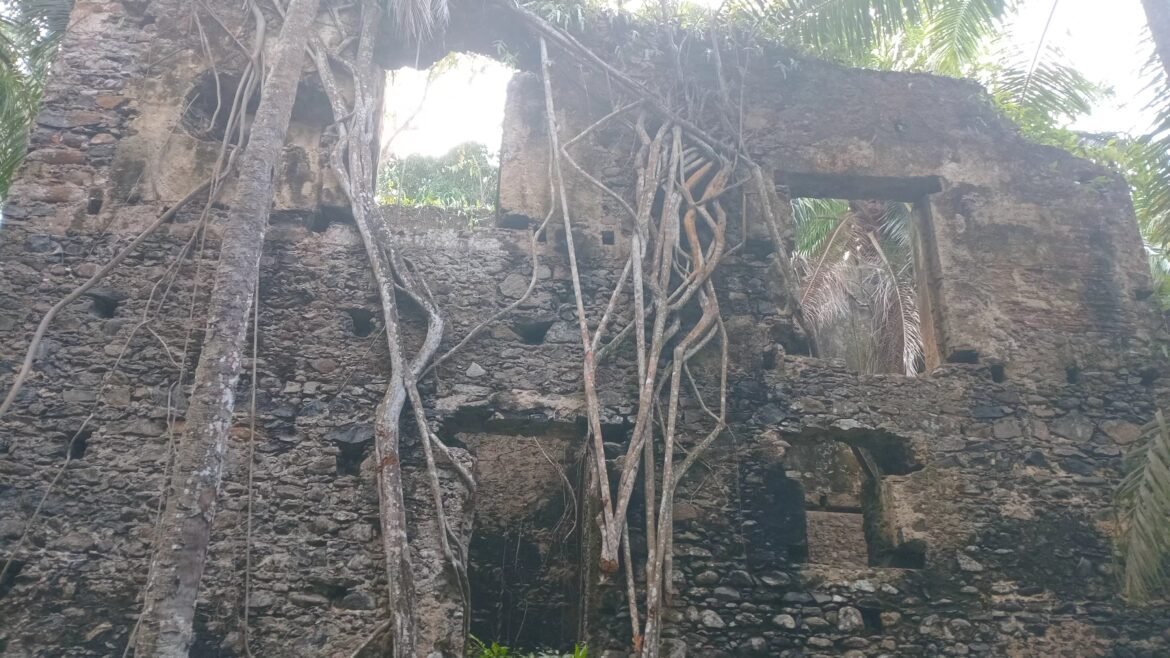
São Tomé’s tropical climate means that abandoned or partially abandoned historical areas can gradually become surrounded by vegetation. Trees, plants and roots may grow around old structures, creating a distinctive atmosphere in which nature and history coexist.
This combination makes Praia Melão particularly attractive for travelers interested in São Tomé cultural heritage.
Rather than visiting a conventional museum, travelers can experience history directly within the landscape.
Archaeological Heritage of Praia Melão
The archaeological dimension of Praia Melão deserves particular attention.
Archaeology is not limited to famous monuments or spectacular ruins. Small structural remains, foundations, fragments of industrial installations and the layout of historical agricultural spaces can all contribute to our understanding of the past.
At Praia Melão, the historical landscape can be interpreted as part of the wider evolution of São Tomé’s plantation economy.
The remains associated with agricultural and industrial activities can help explain how production was organized and how plantations interacted with settlements, transportation routes and the surrounding environment.
For visitors, this makes a guided tour especially valuable.
A professional local guide can explain what travelers are seeing, distinguish historical structures from later modifications and provide information about the broader context of the site.
Understanding São Tomé Through Its Plantation Heritage
To understand São Tomé today, it is important to understand its plantation history.
The island’s economy was shaped by different agricultural cycles. Sugar was particularly important during the early colonial period, while coffee and cocoa later became central to the plantation economy.
The famous roças of São Tomé and Príncipe became large and complex agricultural systems.
Many included administrative buildings, workers’ housing, hospitals, churches, warehouses, agricultural facilities and processing installations.
Some plantation complexes have survived relatively well, while others are now partially ruined or integrated into modern communities.
Praia Melão contributes to this wider historical story.
Visiting the site allows travelers to look beyond São Tomé’s beaches and discover the economic and cultural forces that shaped the island.
Why Visit Praia Melão With a Local Guide?
Exploring historical sites without interpretation can sometimes be difficult.
An old wall may simply look like an old wall. A foundation may appear to be little more than stones covered by vegetation. However, when a guide explains its possible function and historical context, the same structure can become part of a much larger story.
A local guide can help visitors understand:
– The history of sugar production in São Tomé
– The development of plantation agriculture
– The importance of the roça system
– Traditional agricultural practices
– The relationship between plantations and local communities
– Historical architecture and industrial remains
– The cultural transformation of São Tomé
– The importance of preserving historical heritage
This makes a guided Praia Melão tour particularly suitable for travelers interested in history, culture, photography and educational experiences.
Praia Melão for Cultural Tourism
Cultural tourism is becoming increasingly important for travelers looking for authentic experiences.
Many visitors to São Tomé arrive because of the country’s tropical beaches, biodiversity and beautiful landscapes. However, the island also offers a deep cultural and historical experience.
Praia Melão provides an opportunity to combine nature with history.
Visitors can explore the landscape, learn about the island’s agricultural past and understand how historical economic activities influenced local communities.
This type of experience is different from a standard sightseeing tour.
It encourages travelers to slow down, observe the environment and listen to the stories connected with the place.
A Different Experience From São Tomé’s Beaches
São Tomé is internationally appreciated for its beaches and tropical landscapes.
Places such as Praia Jalé, Praia Inhame and other coastal destinations offer opportunities for swimming, relaxation and nature experiences.
Praia Melão offers something different.
Instead of focusing primarily on the sea, the experience is centered on history, agriculture, archaeology and cultural heritage.
For travelers staying several days on São Tomé Island, combining a historical visit with beach excursions can create a more complete itinerary.
A day can include cultural attractions in the morning, a plantation or historical site during the afternoon and a coastal destination later in the day.
Photography at Praia Melão
Historical sites surrounded by tropical vegetation can provide excellent opportunities for photography.
The contrast between old structures and the green environment creates a distinctive visual atmosphere.
Travelers interested in documentary photography may also find the site interesting because it illustrates the relationship between human activity and the tropical environment.
However, visitors should photograph respectfully and avoid climbing unstable structures or removing archaeological objects.
Historical remains are part of the cultural heritage of São Tomé and should be preserved for future generations.
Responsible Tourism at Historical Sites
Responsible tourism is particularly important when visiting archaeological and historical locations.
Visitors should avoid damaging walls, moving stones, collecting fragments or entering unsafe structures.
It is also important to respect local communities living around historical areas.
Traveling with a local tourism company can help visitors understand appropriate behavior and support the local economy.
Responsible tourism also means recognizing that historical sites may contain difficult aspects of the past.
The history of plantation agriculture in São Tomé includes subjects such as forced labor, colonial exploitation and social inequality. These subjects should be approached with respect and historical context rather than treated simply as tourist attractions.
A responsible guided tour can acknowledge the complexity of this history while helping visitors understand how São Tomé developed into the country it is today.
How to Include Praia Melão in a São Tomé Tour
Praia Melão can be incorporated into a wider cultural and historical itinerary.
For example, a private tour can combine Praia Melão with other attractions related to São Tomé’s plantation history, colonial heritage, local communities and natural landscapes.
A customized itinerary may include:
São Tomé City – Discover the capital, historic buildings, markets and local culture.
Praia Melão – Explore the historical landscape and remains associated with sugar production.
Plantation heritage – Learn about the development of the roças and the agricultural economy.
Local villages – Experience contemporary life and interact respectfully with local communities.
Nature attractions – Combine cultural tourism with São Tomé’s forests, waterfalls and viewpoints.
Coastal areas – Finish the day at one of the island’s beautiful beaches.
The exact itinerary can be adapted according to the interests, available time and mobility of each traveler.
Praia Melão as an Educational Experience
Praia Melão can also be valuable for students, researchers and travelers with a particular interest in African history and colonial heritage.
The site offers an opportunity to connect historical information with physical evidence in the landscape.
Instead of learning only through books or photographs, visitors can observe the environment in which historical economic activities took place.
This creates a more tangible understanding of São Tomé’s past.
For schools, universities, cultural organizations and specialized travel groups, historical tours can be organized around themes such as plantation archaeology, colonial history, agricultural development and cultural heritage.
Best Way to Experience Praia Melão
For a first-time visitor, a private guided tour of Praia Melão can provide a more informative experience than simply visiting the location independently.
A private tour allows the itinerary to be adapted to the traveler’s interests and schedule.
Visitors can ask questions, stop for photographs and spend more time at places that interest them.
For international travelers, having a guide who speaks English or another international language can also make historical explanations easier to understand.
Local knowledge is especially valuable because São Tomé’s history is deeply connected to its landscape, communities and oral traditions.
Discover Praia Melão With Voltours
For travelers looking for an authentic cultural experience in São Tomé, Voltours can organize private and guided excursions that include historical and cultural attractions such as Praia Melão.
The objective is to provide visitors with more than transportation from one location to another. A well-organized tour should help travelers understand the places they visit.
A Praia Melão experience can be adapted for couples, families, private travelers, small groups, photographers, cultural tourists and travelers interested in the history of São Tomé and Príncipe.
Depending on the itinerary, the experience can include transportation, a professional local guide and visits to additional attractions.
Travelers can contact Voltours before arrival to discuss their interests and create an itinerary according to their available time.
Why Praia Melão Deserves a Place on Your São Tomé Itinerary
Praia Melão represents an important part of São Tomé’s historical landscape.
The destination provides an opportunity to explore the island’s agricultural past, understand the importance of sugar production and observe the remains of a historical economic system.
For travelers interested in history, archaeology, cultural tourism and authentic experiences in São Tomé, Praia Melão offers a different perspective on the island.
The experience becomes even more meaningful when combined with the stories of the plantations, the evolution of agriculture and the people who shaped São Tomé’s history.
São Tomé is not only a destination of beaches and tropical forests. It is also an island of historical memory.
From old plantations to archaeological remains, from colonial architecture to local communities, every part of the island can reveal another chapter of its story.
Praia Melão São Tomé is one of those places where history and nature meet.
If you want to discover this lesser-known side of São Tomé and Príncipe, consider adding Praia Melão to your itinerary and exploring it with a knowledgeable local guide.
Book your private Praia Melão tour with Voltours and discover the historical and cultural heritage of São Tomé through a local perspective.
Praia Melão Sugar Mill: A Journey Through the Archaeological History of São Tomé and Príncipe
São Tomé and Príncipe is widely known for its tropical landscapes, volcanic mountains, beautiful beaches, cocoa plantations and lush rainforests. However, beyond its natural beauty lies another extraordinary dimension of the country: a rich history shaped by Portuguese colonisation, sugar production, plantation agriculture, Atlantic trade, African cultures and the lives of thousands of people who contributed to the development of the islands.
One of the most fascinating places to discover this history is the Praia Melão Sugar Mill, an archaeological site located on São Tomé Island, close to the coast and near the Manuel Jorge River.
The ruins of Praia Melão provide an exceptional opportunity to understand the early sugar plantation system of São Tomé and its connection with the wider Atlantic world. Archaeological research identifies Praia Melão as the largest known plantation and sugar mill on the island, active from the 16th to the 18th century. It is also the subject of the first archaeological project carried out in São Tomé and Príncipe.
Today, a visit to Praia Melão is much more than a sightseeing experience. It is a journey into the history of sugar, colonialism, technology, archaeology, African societies and the formation of the modern Atlantic world.
Where Is Praia Melão Sugar Mill?
The archaeological site of Praia Melão is located near the Manuel Jorge River, south of the fishing village of Praia Melão and approximately five kilometres south of São Tomé city.
Its location is particularly important because water played a central role in the operation of many historical sugar mills on the island.
Most of São Tomé’s early sugar mills were associated with rivers and streams descending from the central highlands towards the coast. Water could be channelled and used as a source of mechanical energy, making it possible to operate machinery for processing sugar cane.
This relationship between the river, landscape and mill is one of the most interesting aspects to explore during a historical tour.
Instead of seeing the ruins simply as an abandoned stone building, visitors can begin to understand them as part of a much larger agricultural and industrial landscape.
The Origins of Sugar Production in São Tomé
Sugar production became increasingly important in São Tomé after Portuguese colonisation.
During the 16th century, the island developed a plantation economy based largely on sugar cane. The production system required agricultural land, labour, water, transportation, processing facilities and access to international markets.
The sugar produced on São Tomé became connected to commercial networks extending across the Atlantic.
Historical research indicates the enormous scale of the sugar industry on the island. By 1595, there were reportedly around 95 sugar mills, and by 1600 the number had reached approximately 120. Some mills employed more than 200 enslaved workers.
Praia Melão developed within this wider sugar-producing landscape and eventually became one of the most important estates on the island.
Praia Melão: A Major Sugar Plantation
Praia Melão was not simply a small agricultural property.
Archaeological and historical research describes it as the largest plantation and sugar mill on São Tomé, operating from the 16th to the 18th century.
The estate combined agricultural production with industrial processing.
Sugar cane had to be cultivated, harvested and transported to the mill. Once there, the cane was processed to extract its juice, which could then be transformed into sugar through several stages.
The mill was therefore the industrial centre of the plantation.
The surrounding agricultural landscape supplied the raw material, while the mill provided the technology necessary to transform cane into a valuable commercial product.
This combination of agriculture, technology, labour and trade made places such as Praia Melão important elements in the development of the early Atlantic plantation system.
How Did the Sugar Mill Work?
One of the most remarkable features of Praia Melão is its hydraulic technology.
Archaeological investigations have identified remains associated with a water channel, or levada, positioned above the building. Evidence suggests that water was directed towards a vertical water wheel, which supplied mechanical power to the mill.
In simplified form, the system can be imagined as:
River → water channel → water wheel → mechanical power → sugar-processing machinery
This technology allowed the natural energy of flowing water to be transformed into mechanical energy.
For visitors interested in engineering and historical technology, Praia Melão offers an extraordinary opportunity to understand how people adapted the island’s natural environment to support industrial production centuries ago.
The river was not merely part of the landscape. It was an essential component of the production system.
The Architecture of Praia Melão
The surviving building is another important element of the archaeological site.
The structure was built in stone and developed over time through modifications and extensions. It has a rectangular layout and two floors, with internal stairs connecting the levels.
Archaeological research has found substantial quantities of roof-tile fragments, indicating that the building was roofed with tiles. Excavations carried out in 2023 recovered approximately 105 kilograms of roofing ceramics, mostly from the upper layers of the excavation.
The surviving walls are remarkably substantial, with many sections reaching several metres in preserved height.
However, the building is in a vulnerable condition. Parts of the walls and entrances have collapsed, and the original roof is no longer present.
This makes archaeological research and heritage conservation especially important.
The People Behind the Sugar
The history of Praia Melão cannot be understood solely through its architecture or technology.
The sugar economy of São Tomé was deeply connected to the enslavement of African people.
Enslaved people performed much of the agricultural and industrial labour required to maintain the plantation system. Archaeological research at Praia Melão therefore investigates not only sugar-production infrastructure but also structures and material evidence associated with the control of enslaved populations.
This part of the site’s history deserves particular attention.
A responsible historical tour should explain that the wealth generated by sugar production came within a system involving forced labour, violence and severe restrictions on human freedom.
Understanding this difficult history is essential to understanding São Tomé’s past.
Resistance and Social Change
The history of São Tomé’s sugar plantations also includes resistance.
During the late 16th and early 17th centuries, several sugar mills were affected by uprisings and revolts involving enslaved people. These conflicts contributed to the decline of São Tomé’s central role in the sugar economy.
The archaeological landscape therefore represents more than economic success.
It also contains evidence of a society marked by unequal power relationships, resistance and profound social transformation.
For modern visitors, this provides an opportunity to learn about the different communities and experiences that shaped São Tomé and Príncipe.
The Decline of the Sugar Industry
São Tomé’s sugar industry declined significantly during the 17th century.
Several factors contributed to this transformation, including competition from other Atlantic sugar-producing regions, economic changes and social conflicts.
However, Praia Melão did not simply disappear when sugar production declined.
The plantation adapted to changing circumstances and continued to be used for other activities. Research indicates that the estate later became associated with the production of sugar-cane spirit and cassava flour.
This transformation demonstrates how historical plantations could change their economic functions over time.
The ruins we see today are therefore the result of several periods of occupation and adaptation.
Archaeology at Praia Melão
One of the most important chapters in the recent history of Praia Melão began with archaeological research in the 21st century.
The project represents a major development in the study of São Tomé’s material history.
According to the research published in 2025, Praia Melão is the subject of the first archaeological project in São Tomé and Príncipe. Excavation campaigns, including work undertaken in 2022 and 2023, have provided new information about the structure of the mill and its relationship with sugar production and plantation society.
Archaeology is particularly valuable because written documents tell only part of the story.
Buildings, ceramics, water-management systems, architectural remains and other objects can provide evidence about how people actually lived and worked.
At Praia Melão, archaeology helps bring together these different sources of information.
Why Is Praia Melão Important?
Praia Melão is important not only because it is an old building.
Its significance extends far beyond the physical ruins.
The site helps researchers understand the development of plantation agriculture in Africa and the role of São Tomé in the emergence of the early modern Atlantic world.
The history of Praia Melão connects several themes:
Portugal → São Tomé → sugar → plantation agriculture → forced labour → Atlantic trade → African societies → the modern Atlantic world
This makes the site relevant not only to visitors interested in São Tomé’s history but also to travellers interested in African history, archaeology, colonial heritage and the history of global trade.
A Historical Tour to Praia Melão
A Praia Melão Sugar Mill Tour can be an excellent addition to a cultural itinerary in São Tomé.
The experience can begin in São Tomé city, travelling towards Praia Melão with a professional local guide.
During the journey, visitors can learn about the island’s colonisation, the introduction and development of sugar production, the plantation system and the importance of rivers to the old mills.
At Praia Melão, the guide can introduce the archaeological site and explain the surviving structures.
The tour can focus on:
– The history of Praia Melão;
– The development of sugar production;
– The architecture of the old mill;
– The hydraulic system;
– The Manuel Jorge River;
– The plantation landscape;
– Archaeological discoveries;
– The history of enslaved labour;
– Resistance and social change;
– The decline of the sugar economy;
– The importance of heritage preservation.
This approach transforms a simple visit into an educational cultural experience.
Who Should Visit Praia Melão?
Praia Melão is particularly interesting for travellers who want to experience a different side of São Tomé.
The site is ideal for people interested in:
– Archaeology;
– African history;
– Colonial history;
– Sugar production;
– Cultural tourism;
– Heritage tourism;
– Historical architecture;
– Plantation landscapes;
– Photography;
– Educational travel.
It can also be an interesting experience for students, researchers, historians, photographers and travellers who want to move beyond conventional beach tourism.
São Tomé has extraordinary natural attractions, but understanding its history makes the destination even richer.
Responsible Heritage Tourism
Because Praia Melão is an archaeological site, visitors should treat the location with care.
The ruins are vulnerable, and archaeological materials should never be removed from the site.
Visitors should avoid climbing unstable walls, moving stones, collecting ceramics or damaging surfaces.
They should also avoid writing on the walls or leaving any marks.
A responsible visitor understands that archaeological remains belong to the cultural heritage of the country and should be protected for future generations.
Tourism can contribute positively to this process by increasing awareness of the site’s importance and encouraging interest in preservation.
Discover São Tomé Beyond the Beaches
Many travellers arrive in São Tomé looking for tropical beaches, forests and adventure.
These experiences are an important part of the destination, but the island has another story waiting to be discovered.
The ruins of Praia Melão reveal a chapter of São Tomé’s history that connects the island to major transformations in the Atlantic world.
Here, the visitor can see how water, agriculture, architecture and technology were brought together to create an early sugar-processing system.
At the same time, the site encourages reflection on the human cost of that economic system and the experiences of the people who lived and worked within it.
This combination of history, archaeology and landscape makes Praia Melão a distinctive cultural destination.
Plan Your Praia Melão Historical Experience
A visit to the Praia Melão Sugar Mill is an opportunity to discover a lesser-known side of São Tomé and Príncipe.
Instead of simply passing through the landscape, visitors can learn how the island was transformed by sugar production and how São Tomé became connected to wider Atlantic networks.
With a local professional guide, the experience becomes much more meaningful. Historical information, archaeological evidence and local knowledge can be brought together to explain what happened at the site and why it remains important today.
For travellers looking for an authentic cultural experience, Praia Melão offers something different: a journey through the archaeological history of São Tomé and Príncipe.
Conclusion
The Praia Melão Sugar Mill is one of the most significant archaeological heritage sites associated with the history of sugar production in São Tomé and Príncipe.
Active from the 16th to the 18th century, it was once the island’s largest known plantation and sugar mill. Its surviving architecture, hydraulic infrastructure and archaeological remains provide valuable evidence about sugar production and plantation society.
But Praia Melão is also a place of human history.
Its story includes colonial expansion, African societies, forced labour, resistance, technological adaptation, economic transformation and the development of the Atlantic world.
The archaeological research carried out in recent years is helping to recover this history and protect a fragile heritage that might otherwise disappear.
Today, visiting Praia Melão offers travellers an opportunity to look beyond the postcard image of São Tomé and discover the deeper story of the island.
Explore Praia Melão, walk through its historic landscape and discover the archaeological heritage of São Tomé and Príncipe.
A journey to Praia Melão is not simply a visit to an old sugar mill.
It is a journey through centuries of history.
Private Tours in São Tomé and Príncipe: Discover the Islands Your Way
São Tomé and Príncipe is one of Africa’s most fascinating island destinations, offering visitors an extraordinary combination of tropical beaches, volcanic landscapes, lush forests, colonial history, cocoa plantations, coffee culture and authentic local experiences. For travelers who want more than a standard sightseeing program, private tours in São Tomé and Príncipe provide the freedom to discover the country at their own pace, with a personalized itinerary and professional local support.
A private tour allows you to experience São Tomé with greater flexibility. Instead of following a fixed group schedule, you can choose where to go, how long to stay, what to photograph and which experiences matter most to you. Whether you are traveling as a couple, family, small group, business traveler or cruise passenger, a private tour can be adapted to your interests and schedule.
BOOK YOUR PRIVATE TOURS
With the assistance of a local tour operator and professional guide, visitors can discover not only the famous attractions but also the landscapes, communities and cultural stories that make São Tomé and Príncipe unique.
Why Choose Private Tours in São Tomé and Príncipe?
One of the main advantages of choosing a private tour is flexibility.
Every traveler has different expectations. Some visitors want to spend more time on beaches, while others are interested in history, nature, photography, plantations or local culture. A private tour makes it possible to create an experience around your interests rather than simply following a predetermined program.
Private tours are particularly suitable for travelers who value:
– Personalized itineraries
– Flexible departure times
– Private transportation
– Professional local guides
– More time at each destination
– Comfortable sightseeing
– Authentic local experiences
– Small groups and families
– Photography and nature experiences
– Cruise passengers with limited time
– Customized excursions
Instead of rushing from one attraction to another, you can enjoy the journey and have more opportunities to understand the destination.
Explore São Tomé City with a Private Guide
A private tour can begin in the capital, São Tomé city, where visitors can discover an important part of the country’s history and culture.
The city offers a mixture of Portuguese colonial architecture, local markets, churches, historic buildings, coastal landscapes and everyday island life.
A private city tour can include visits to important cultural and historical locations while allowing travelers to interact with their guide and ask questions throughout the experience.
Walking through the city with a knowledgeable local guide provides a different perspective. Instead of simply taking photographs, visitors can learn about the historical development of São Tomé, the influence of the Portuguese colonial period, the importance of cocoa and coffee production and the cultural identity of the São Toméan people.
For travelers interested in photography, a private city tour also offers the flexibility to stop whenever an interesting scene appears.
Discover the Cocoa Route
Cocoa is an important part of São Tomé and Príncipe’s history and identity.
The country’s plantations tell stories about agriculture, colonial history and the development of the islands’ economy. A private cocoa tour offers visitors the opportunity to explore plantation landscapes and understand how cocoa became such an important product.
The Cocoa Route can be especially interesting for travelers who want to combine nature, history and gastronomy.
During a private experience, the guide can explain the cultivation process, the history of cocoa production and the relationship between plantations and local communities.
For photographers and travelers looking for authentic experiences away from conventional tourist attractions, plantation visits can become one of the most memorable parts of a trip to São Tomé.
Experience the Coffee Route
São Tomé is also associated with coffee production, making the Coffee Route another interesting experience for visitors.
The island’s tropical climate and mountainous landscapes create excellent conditions for coffee cultivation. Exploring coffee-growing areas provides an opportunity to see a different side of São Tomé.
A private coffee tour can combine plantation visits with scenic landscapes, forest areas and local communities.
Because the experience is private, travelers can have more time to learn about the production process, ask questions and take photographs.
For coffee lovers, this is an excellent opportunity to connect the beverage they know at home with the landscapes and people responsible for producing it.
Discover the South of São Tomé
The southern part of São Tomé is famous for its dramatic natural scenery, tropical beaches, forests and remote landscapes.
A private tour of the south can include several stops depending on the traveler’s interests and available time.
Among the experiences that can be considered are visits to beautiful beaches, coastal viewpoints, plantations, natural attractions and other places of interest.
The advantage of a private excursion is that the itinerary can be adapted. Travelers who prefer beaches can spend more time enjoying the coastline, while those interested in nature can prioritize forests and natural attractions.
The southern region is also particularly attractive to photographers because of its combination of tropical vegetation, volcanic landscapes, ocean views and traditional communities.
Visit the Beaches of São Tomé
São Tomé offers a remarkable variety of beaches, from long stretches of tropical coastline to more secluded locations.
Some visitors want to relax, swim and enjoy the landscape, while others prefer to photograph the coastline or combine a beach visit with cultural and natural attractions.
With a private tour, there is no need to treat every stop as a fixed timetable. The experience can be organized according to your preferences.
Depending on the route and conditions, travelers may explore beaches such as Jalé, Inhame, Piscina, Cabana and Praia das Sete Ondas.
Each location has its own character, and the journey itself is part of the experience.
Explore the Equator and Ilhéu das Rolas
One of the most memorable experiences available to visitors is a journey toward the Equator and Ilhéu das Rolas.
Located south of São Tomé Island, Ilhéu das Rolas is famous for its position near the Equator. Visiting the island allows travelers to experience one of the geographical features that makes São Tomé and Príncipe particularly fascinating.
A private excursion can combine transportation, boat crossing, guided sightseeing and time to enjoy the island.
The experience is particularly attractive for travelers who want something different from a conventional beach excursion.
Standing near the Equator, enjoying the tropical landscape and learning about the geography of the region can create lasting memories.
Nature and Adventure in São Tomé
São Tomé is a destination for nature lovers.
The island contains dense tropical forests, mountains, waterfalls, volcanic formations and areas of exceptional biodiversity.
Private tours can be adapted for travelers interested in hiking and outdoor activities.
Depending on fitness levels, weather and local conditions, visitors may explore areas around Bom Sucesso, Bombaim and other natural attractions.
Hiking with a professional local guide is particularly valuable because the guide can help visitors understand the environment, identify plants and animals and navigate the route safely.
For travelers who enjoy adventure, nature and photography, São Tomé provides an excellent opportunity to explore landscapes that remain relatively untouched.
Private Dolphin and Marine Experiences
The waters surrounding São Tomé and Príncipe are home to diverse marine life.
For visitors interested in the ocean, marine excursions can provide opportunities to observe dolphins and experience the natural beauty of the Atlantic.
Wildlife observation should always be conducted responsibly, respecting animals and following local guidance.
A private excursion can provide greater flexibility regarding the experience and allow travelers to enjoy the marine environment in a more personalized way.
For families and photographers, these experiences can be particularly memorable.
Private Tours for Cruise Passengers
São Tomé is also becoming an interesting destination for cruise travelers.
Cruise passengers often have only a limited number of hours to explore the island. For this reason, a private cruise shore excursion in São Tomé can be an excellent solution.
Instead of joining a large group, cruise passengers can arrange an itinerary based on their available time.
A private cruise excursion may include:
– Port pickup
– Private transportation
– Professional tour guide
– São Tomé city sightseeing
– Plantation visits
– Beach experiences
– Cultural attractions
– Local lunch
– Return to the cruise port
Time management is especially important for cruise passengers. A professional local operator can organize the excursion around the ship’s arrival and departure schedule.
Private Tours for Families
Families often benefit significantly from private tours.
Children may need more breaks, parents may prefer a slower itinerary and different members of the family may have different interests.
With a private tour, the program can be adapted to the family’s needs.
A family itinerary can combine beaches, nature, cultural attractions, short walks and interesting stops without forcing everyone to follow the pace of a large group.
Private transportation also provides greater comfort for families traveling with children.
Private Tours for Couples
São Tomé and Príncipe is an attractive destination for couples looking for a peaceful tropical experience.
A private tour can be designed around beaches, scenic viewpoints, cultural experiences, nature and romantic moments.
Couples can choose a slower pace and spend more time in locations they enjoy.
For honeymooners and couples celebrating special occasions, customized private excursions can provide a more intimate way to discover the islands.
Professional Local Guides Make a Difference
A destination becomes much more interesting when experienced through the knowledge of a local guide.
A professional guide does more than take visitors from one place to another. A good guide explains the history, culture, environment and traditions of the destination.
Local knowledge can also make the journey smoother by helping travelers understand local customs, choose suitable routes and make better use of their time.
For international visitors, having an English-speaking guide can be particularly valuable. Communication becomes easier, questions can be answered naturally and travelers can learn more about São Tomé and Príncipe.
Customized Private Tours
There is no single perfect itinerary for every traveler.
That is why customized private tours are an important part of discovering São Tomé and Príncipe.
A customized itinerary can be created around:
– Number of days available
– Arrival and departure times
– Cruise schedules
– Interests
– Fitness level
– Family requirements
– Photography interests
– Beach preferences
– Cultural interests
– Budget
– Transportation needs
For example, a traveler with only one day could choose a city and cultural tour, while someone staying several days could combine the Cocoa Route, Coffee Route, southern beaches, nature experiences and Ilhéu das Rolas.
Comfortable Transportation and Local Support
Transportation is an important part of any tour in São Tomé.
Distances, road conditions and travel times should be considered when planning an itinerary. Private transportation allows visitors to travel more comfortably and efficiently.
A professional local operator can coordinate transportation, guides, boat crossings and other services required for the experience.
This is particularly important when several activities are combined into one itinerary.
Why Book a Private Tour with Voltours?
Choosing a local tourism company provides an important advantage: direct knowledge of the destination.
Voltours is an inbound travel and tourism agency based in São Tomé and Príncipe, providing local tourism services for individual travelers, families, groups, travel agencies and international partners.
The objective is to provide visitors with organized, reliable and personalized experiences while helping them discover the authentic character of São Tomé and Príncipe.
From private sightseeing tours and professional tour guides to transportation, excursions and cruise-related services, the experience can be adapted to the needs of each client.
The focus is not simply on taking visitors to tourist attractions. It is about helping travelers experience the country with comfort, local knowledge and personal attention.
Plan Your Private Tour in São Tomé and Príncipe
Whether you are visiting São Tomé for one day, several days or as part of a cruise itinerary, a private tour can make your experience more flexible and memorable.
You can explore the capital, discover historic plantations, walk through tropical landscapes, relax on beautiful beaches, experience local culture, visit the Equator, explore Ilhéu das Rolas or combine several experiences into one personalized itinerary.
São Tomé and Príncipe is a destination best experienced at your own pace.
If you are looking for private tours in São Tomé and Príncipe, contact Voltours and discuss your travel plans with a local tourism team. Your itinerary can be organized according to your interests, schedule and expectations.
Discover São Tomé Your Way
Private Tour. Local Guide. Personal Experience.
Explore São Tomé and Príncipe with the freedom to choose your route, your experiences and your pace.
Contact Voltours to plan your private tour and start discovering São Tomé and Príncipe.
São Tomé e Príncipe é um destino turístico único no Golfo da Guiné, conhecido pelas suas paisagens tropicais, praias de águas cristalinas, antigas roças de cacau e café, florestas exuberantes, cultura, gastronomia e hospitalidade. Para quem visita o arquipélago pela primeira vez, uma das melhores formas de conhecer o país é através de uma visita guiada em São Tomé e Príncipe.
Uma visita guiada não significa apenas deslocar-se de um ponto turístico para outro. Trata-se de uma experiência organizada em que o visitante tem a oportunidade de conhecer a história, a natureza, a cultura e as tradições locais com o acompanhamento de um guia que conhece o território e pode explicar os lugares visitados.
Dependendo do interesse do viajante, a visita pode ser realizada na cidade de São Tomé, no norte, centro ou sul da ilha, ou ainda incluir experiências em outras zonas do arquipélago. Pode durar algumas horas, um dia inteiro ou fazer parte de um programa de vários dias.
O que é uma visita guiada em São Tomé e Príncipe?
Uma visita guiada é uma atividade turística realizada com o acompanhamento de um profissional ou conhecedor local que orienta os visitantes durante o percurso.
Em São Tomé e Príncipe, esse tipo de experiência pode combinar diferentes elementos: transporte, acompanhamento de guia, visitas culturais, contacto com comunidades locais, observação da natureza, praias, gastronomia e atividades ao ar livre.
O grande benefício é que o visitante não precisa simplesmente observar uma paisagem ou um edifício histórico. O guia pode explicar a sua origem, importância e relação com a história do país.
Por exemplo, ao visitar uma antiga roça de cacau, o turista pode conhecer a importância que a produção de cacau teve para a economia de São Tomé e Príncipe, observar a arquitetura colonial e compreender melhor a realidade histórica dessas comunidades.
Como organizar uma visita guiada?
O primeiro passo é definir o objetivo da visita. Nem todos os viajantes procuram a mesma experiência.
Alguns querem conhecer a cidade de São Tomé e os principais monumentos. Outros preferem praias, natureza e aventura. Há também visitantes interessados em cacau, café, história, fotografia, observação de aves, caminhadas ou gastronomia.
Depois de identificar os interesses do visitante, pode ser criado um itinerário adequado ao tempo disponível.
Uma visita de meio dia pode concentrar-se na cidade ou numa determinada região. Uma visita de dia inteiro permite combinar vários pontos turísticos. Para quem permanece vários dias no arquipélago, pode ser criado um programa mais completo, distribuindo as experiências entre diferentes regiões.
Visita guiada pela cidade de São Tomé
Para muitos turistas, a cidade de São Tomé é o primeiro contacto com o país.
Uma visita guiada pela capital pode começar pelo centro histórico, onde o visitante encontra importantes edifícios, igrejas, mercados, praças e espaços relacionados com a história do arquipélago.
O percurso pode incluir locais de interesse histórico e cultural, permitindo ao visitante compreender a evolução da cidade e observar a influência portuguesa na arquitetura.
O mercado local também pode fazer parte da experiência. É um espaço interessante para observar produtos locais, frutas tropicais, peixe, especiarias e outros elementos da vida quotidiana.
Durante o passeio, o guia pode explicar os costumes locais, a gastronomia, as tradições e aspetos importantes da sociedade são-tomense.
Para quem dispõe de pouco tempo, um city tour em São Tomé pode ser uma excelente maneira de conhecer a essência da capital.
Visita às roças de São Tomé e Príncipe
As roças são uma das principais atrações culturais e históricas do arquipélago.
São Tomé e Príncipe possui uma história profundamente ligada à produção de cacau e café. As antigas plantações deixaram um importante património arquitetónico e cultural.
Uma visita guiada a uma roça permite observar edifícios históricos, antigas estruturas agrícolas, caminhos, plantações e comunidades.
A experiência pode tornar-se ainda mais interessante quando o visitante tem a oportunidade de conhecer a produção de cacau ou café e conversar com pessoas envolvidas nessas atividades.
A Rota do Cacau é uma possibilidade particularmente interessante para quem deseja compreender a relação entre São Tomé e o cacau.
Já a Rota do Café pode proporcionar uma experiência diferente, permitindo conhecer zonas de produção e paisagens do interior da ilha.
Explorar o norte da ilha
O norte de São Tomé oferece uma combinação interessante de cultura, história e paisagens.
Uma visita guiada pode passar por antigas roças, plantações, comunidades e zonas costeiras.
O percurso deve ser organizado de acordo com o tempo disponível e as condições das estradas.
Uma das vantagens de viajar com um guia local é poder descobrir lugares que muitas vezes não aparecem nos roteiros turísticos mais tradicionais.
Além dos principais pontos turísticos, o visitante pode conhecer pequenas comunidades, ouvir histórias locais e observar aspetos da vida quotidiana que dificilmente seriam percebidos numa visita independente.
Conhecer o centro de São Tomé
O centro da ilha é marcado por uma paisagem mais verde e montanhosa.
Esta região é especialmente interessante para quem procura natureza, caminhadas e contacto com a floresta.
Locais como Bom Sucesso e áreas próximas do Parque Natural Obô podem fazer parte de determinados itinerários, dependendo das condições e do nível físico dos visitantes.
Uma visita guiada nesta região deve ser cuidadosamente preparada, especialmente quando envolve caminhadas.
O guia pode orientar o grupo, explicar as características da floresta, identificar espécies de plantas e aves e ajudar os visitantes a compreender a importância da conservação ambiental.
Para quem gosta de fotografia, esta região oferece excelentes oportunidades para captar paisagens tropicais.
Visita guiada pelo sul da ilha
O sul de São Tomé apresenta algumas das paisagens mais impressionantes do arquipélago.
As praias, a floresta tropical, as roças e as comunidades tornam esta região particularmente atrativa.
Uma visita pode incluir paragens em praias como Jalé, Inhame ou outras zonas costeiras, de acordo com o programa escolhido.
O objetivo não deve ser simplesmente visitar várias praias no mesmo dia. Uma boa visita guiada deve permitir ao turista aproveitar cada lugar, tirar fotografias, descansar e compreender o ambiente que está a conhecer.
O guia também pode fornecer informações sobre segurança, condições do mar e regras de preservação ambiental.
Marco do Equador e Ilhéu das Rolas
Para muitos visitantes, conhecer o Marco do Equador é uma experiência especial.
O local está associado à passagem da linha do Equador e tornou-se um dos pontos de interesse turístico mais conhecidos de São Tomé e Príncipe.
A visita ao Ilhéu das Rolas pode ser organizada como uma excursão de um dia ou integrada num programa de vários dias.
A travessia de barco acrescenta uma dimensão especial à experiência.
No ilhéu, além da visita ao marco, o viajante pode apreciar praias, paisagens tropicais e o ambiente tranquilo da região.
Como as condições marítimas podem variar, é importante considerar o estado do mar e organizar previamente os horários de transporte.
Natureza, cascatas e caminhadas
São Tomé é um destino particularmente interessante para turistas que gostam de natureza.
Uma visita guiada pode incluir caminhadas por trilhos, cascatas, florestas e miradouros.
Locais como a Cascata de São Nicolau, a Cascata N’Gola e outras áreas naturais podem fazer parte de determinados programas, dependendo da acessibilidade e das condições locais.
Para caminhadas mais exigentes, é importante avaliar previamente a condição física dos participantes.
O guia deve explicar o nível de dificuldade, duração aproximada, tipo de terreno e o que levar.
Calçado adequado, água, proteção contra chuva e roupa confortável são normalmente importantes para atividades na natureza.
Observação de golfinhos e experiências marítimas
O mar de São Tomé e Príncipe também oferece oportunidades para experiências relacionadas com a vida marinha.
Dependendo da época, das condições do mar e da disponibilidade das operações locais, podem ser organizadas atividades de observação de golfinhos e outros animais marinhos.
Estas experiências devem ser realizadas de maneira responsável, respeitando as regras de proteção da vida selvagem.
O objetivo é observar os animais sem provocar alterações no seu comportamento natural.
Para o visitante, pode ser uma das experiências mais memoráveis da viagem, especialmente quando combinada com uma paisagem costeira tropical.
Como deve ser o transporte durante uma visita guiada?
O transporte é um elemento importante de uma visita guiada em São Tomé e Príncipe.
Dependendo do itinerário e do tamanho do grupo, pode ser utilizado carro, veículo 4×4, minibus ou outro meio de transporte adequado.
Para determinadas zonas, especialmente áreas rurais e alguns acessos de natureza, um veículo apropriado pode proporcionar maior conforto e segurança.
Uma boa organização deve considerar os horários, distância entre os pontos turísticos, condições das estradas e tempo necessário para cada visita.
Para grupos privados, o itinerário também pode ser adaptado ao ritmo dos participantes.
O papel do guia turístico
O guia é uma das partes mais importantes da experiência.
Um bom guia não deve apenas indicar o nome dos lugares. Deve saber comunicar, contar histórias, responder a perguntas e adaptar a explicação ao perfil dos visitantes.
Um casal, uma família com crianças, um grupo de amigos, um fotógrafo profissional ou um grupo corporativo podem ter necessidades completamente diferentes.
O guia também pode ajudar o visitante a compreender determinados costumes e comportamentos locais.
Além disso, a presença de um profissional local pode facilitar a comunicação com comunidades, restaurantes, operadores marítimos e outros prestadores de serviços.
Visitas guiadas para turistas de diferentes nacionalidades
São Tomé e Príncipe recebe visitantes de diferentes países.
Por isso, a possibilidade de contar com guias que falem diferentes idiomas pode melhorar significativamente a experiência.
Uma equipa turística pode disponibilizar visitas em português, inglês, francês ou outros idiomas, conforme a disponibilidade.
Para turistas internacionais, ter um guia de turismo que fale inglês pode ser particularmente importante, sobretudo em visitas relacionadas com história, cultura e natureza.
A comunicação clara também ajuda a explicar regras de segurança, horários e informações práticas.
Visita guiada privada ou em grupo?
O turista pode escolher entre uma visita privada e uma visita em grupo.
Na visita privada, o itinerário pode ser mais flexível. O grupo pode decidir quanto tempo pretende permanecer em determinado local e adaptar o ritmo da viagem.
Esta opção é interessante para famílias, casais, fotógrafos, viajantes que procuram privacidade ou clientes com necessidades específicas.
As visitas em grupo podem ser uma alternativa mais económica e também permitem conhecer outros viajantes.
A escolha depende do orçamento, do perfil do visitante e do tipo de experiência desejada.
Quanto tempo deve durar uma visita guiada?
Não existe uma duração única.
Uma visita pode durar três ou quatro horas, meio dia, um dia completo ou vários dias.
Para quem está em São Tomé apenas durante uma escala de cruzeiro, por exemplo, pode ser criado um programa mais curto, concentrado nos principais pontos de interesse próximos do porto.
Já para turistas que permanecem uma semana ou mais, pode ser desenvolvido um itinerário completo pela ilha.
Uma boa programação evita excesso de deslocações e permite aproveitar melhor cada experiência.
O que levar para uma visita guiada?
Antes da saída, o visitante deve receber informações básicas sobre o que levar.
Dependendo do programa, podem ser recomendados:
– Água;
– Protetor solar;
– Chapéu ou boné;
– Repelente;
– Calçado confortável;
– Roupa leve;
– Capa de chuva;
– Fato de banho para atividades de praia;
– Máquina fotográfica ou smartphone;
– Pequena mochila.
Para caminhadas, devem ser considerados requisitos adicionais, como calçado apropriado e quantidade suficiente de água.
Uma visita guiada também pode ser uma experiência gastronómica
A gastronomia são-tomense pode complementar perfeitamente um roteiro turístico.
Dependendo do itinerário, o visitante pode experimentar pratos preparados com produtos locais, peixe fresco, frutas tropicais e outros ingredientes tradicionais.
Uma visita a uma comunidade ou restaurante local pode transformar o almoço numa parte importante da experiência cultural.
Mais do que simplesmente comer, o visitante pode conhecer os ingredientes, métodos de preparação e tradições associadas à gastronomia local.
Turismo responsável em São Tomé e Príncipe
Uma visita guiada deve contribuir para um turismo responsável.
Isso significa respeitar a natureza, evitar deixar lixo, respeitar comunidades locais, não danificar património histórico e seguir as orientações dos guias.
Também é importante valorizar os serviços e produtos locais.
Quando o turista utiliza guias locais, restaurantes, transportadores, artesãos e outros pequenos negócios, uma parte maior dos benefícios do turismo permanece na economia local.
Dessa forma, a experiência turística pode contribuir para o desenvolvimento sustentável de São Tomé e Príncipe.
Por que escolher uma visita guiada?
Viajar sozinho pode proporcionar liberdade, mas uma visita guiada oferece conhecimento, organização e acompanhamento.
O visitante pode economizar tempo na preparação do roteiro, receber informações locais e ter apoio durante a atividade.
Além disso, um guia experiente pode adaptar o programa quando surgem alterações nas condições meteorológicas, no trânsito ou na acessibilidade de determinados locais.
O resultado é uma viagem mais organizada e, muitas vezes, mais enriquecedora.
Como pode ser um roteiro completo?
Para quem pretende conhecer diferentes aspetos de São Tomé, uma visita guiada pode ser organizada em vários dias.
Um exemplo seria:
Dia 1 – Cidade de São Tomé: centro histórico, mercado, monumentos e cultura local.
Dia 2 – Rota do Cacau: visita a roças, plantações e experiências relacionadas com o cacau.
Dia 3 – Rota do Café: exploração do interior da ilha e contacto com a produção de café.
Dia 4 – Sul da ilha: praias, paisagens costeiras e comunidades locais.
Dia 5 – Marco do Equador e Ilhéu das Rolas: travessia de barco, visita ao marco e exploração do ilhéu.
O programa pode ser adaptado ao número de dias, interesses e condições dos viajantes.
Conclusão
Fazer uma visita guiada em São Tomé e Príncipe é uma das melhores formas de descobrir o arquipélago de maneira organizada, segura e enriquecedora.
Desde a cidade de São Tomé às antigas roças de cacau e café, passando pelas praias do sul, florestas, cascatas, comunidades, experiências gastronómicas e pelo Marco do Equador, existem muitas possibilidades para criar uma experiência personalizada.
O verdadeiro valor de uma visita guiada está na combinação entre os lugares visitados e o conhecimento de quem acompanha o viajante. Um bom guia ajuda a transformar uma simples excursão numa experiência que permite compreender melhor a história, a cultura, a natureza e as pessoas de São Tomé e Príncipe.
Para quem pretende conhecer o país de forma autêntica, uma visita guiada pode ser organizada de acordo com o tempo disponível, interesses e perfil do viajante.
São Tomé e Príncipe não é apenas um destino para visitar. É um destino para descobrir, sentir e viver.
São Tomé Transportation: A Complete Guide to Getting Around São Tomé and Príncipe
São Tomé Transportation is an essential part of planning a successful trip to São Tomé and Príncipe. This small island nation in the Gulf of Guinea offers spectacular beaches, tropical forests, historic plantations, volcanic landscapes and authentic local communities. However, discovering these attractions requires choosing the right means of transportation.
Unlike large tourist destinations, São Tomé and Príncipe does not have an extensive public transportation network, railway system or modern ride-sharing infrastructure. Most journeys are made by road, taxi, private vehicle, rental car or organized tour. For visitors who want to explore remote beaches, plantations, waterfalls and nature trails, reliable transportation can make a significant difference.
The transportation experience is also part of the destination itself. Travelling through São Tomé allows visitors to move from the lively capital to rural villages, cocoa plantations, rainforest-covered mountains and secluded southern beaches while experiencing the island’s landscapes and local culture.
Understanding Transportation in São Tomé and Príncipe
São Tomé and Príncipe is an island country consisting of two main islands: São Tomé and Príncipe. Because of its geography, transportation is divided into several categories: international air travel, domestic flights, road transportation, taxis, rental vehicles, private transfers and maritime transportation.
For international visitors, flying is currently the principal way to reach the country. São Tomé International Airport is the main gateway, with connections to destinations in Europe and Africa. The official tourism authority indicates that regional connections include routes associated with cities such as Lisbon, Accra, Libreville and Luanda.
Once visitors arrive, the airport is only a short drive from São Tomé city. The official tourism information indicates that the airport is approximately 10 minutes from the capital, making airport transfers relatively convenient.
For tourists, however, arriving in the country is only the first step. The real transportation challenge—and opportunity—is exploring beyond the capital.
Airport Transfers in São Tomé
RESERVE YOUR CAR
Airport transportation is one of the first services international visitors need after arriving in São Tomé.
Many hotels and tourism companies can arrange airport transfers in advance. This is particularly useful for visitors arriving for the first time, families carrying luggage, business travellers and tourists who want a private and organized arrival experience.
A pre-arranged airport transfer can provide several advantages:
– A driver waiting at the airport
– Assistance with luggage
– Direct transportation to the hotel
– Better time management
– Greater comfort after a long international flight
– Assistance for visitors unfamiliar with the island
– Possibility of combining airport transfer with a private tour
For travel agencies and international tour operators, airport transfers can also be incorporated into complete São Tomé packages. A professional incoming operator can coordinate airport pickup, accommodation transfers, excursions and return transportation.
This creates a smoother experience from the moment the traveller lands.
Taxis in São Tomé
Taxis are one of the most common transportation options for visitors and residents.
Shared taxis are widely used in São Tomé. Official travel advice from the United States notes that shared taxis are an important form of transportation, while individual transportation can also be arranged through hotels and other local providers.
Taxis can be particularly practical for:
– Short journeys around São Tomé city
– Hotel transfers
– Restaurant visits
– Airport transportation
– Transportation to nearby towns
– Private day trips when arranged in advance
Visitors should clarify the fare before starting a journey, especially when taking private transportation. This avoids misunderstandings and makes the experience more comfortable for both the passenger and driver.
For longer journeys outside the capital, a private vehicle with a professional driver or guide can be more convenient than relying on shared transportation.
Shared Transportation and Local Travel
Shared taxis and minibus-style transportation are part of everyday life in São Tomé.
They can provide an inexpensive way to travel between communities, particularly for visitors who are comfortable travelling in a more local style. However, shared vehicles operate according to local demand and may not provide the flexibility required by tourists following a detailed sightseeing itinerary.
For example, a traveller wanting to visit a cocoa plantation, a waterfall, a viewpoint and a remote beach in one day may find shared transportation inconvenient.
This is where private transportation becomes particularly valuable.
Tourists should also remember that road conditions vary significantly. International travel advice warns about potholes, insufficient lighting, pedestrians, cyclists, livestock and the absence of road shoulders. Heavy rainfall can also affect road conditions.
Car Rental in São Tomé
Car rental is an attractive option for independent travellers who want to explore São Tomé at their own pace.
A rental vehicle provides flexibility to stop at viewpoints, villages, plantations and beaches without depending on public transportation schedules.
However, visitors should carefully consider the type of vehicle they rent.
While some main roads are paved, road quality can change considerably outside urban areas. Some rural routes may contain potholes, uneven surfaces, steep sections or unpaved stretches. For visitors planning to explore more remote areas, a vehicle with greater ground clearance can be advantageous.
A 4×4 or SUV can be especially useful for itineraries involving remote beaches, forest roads, plantations and rural areas.
Drivers should also take road safety seriously. The United States travel advisory recommends defensive driving and warns travellers to avoid driving outside cities at night. It also notes that roadside assistance networks are limited.
Before starting a self-drive journey, travellers should check their fuel level, inspect the vehicle and confirm insurance and driving-document requirements.
Private Driver and Guided Transportation
For many international visitors, hiring a vehicle with a professional driver or guide can be one of the most comfortable ways to explore São Tomé.
This option combines transportation with local knowledge.
Instead of concentrating on navigation and road conditions, visitors can focus on the experience. A professional local guide can explain the history of former plantations, introduce local communities, identify tropical plants and wildlife, and provide information about São Tomé’s culture and geography.
Private transportation is particularly suitable for:
– Couples
– Families
– Small groups
– Senior travellers
– Luxury travellers
– Photography groups
– Business visitors
– Cruise passengers
– Travel agencies
– Corporate groups
– International tour operators
It can also be adapted to different itineraries, from half-day city tours to full-day island excursions.
Transportation for São Tomé Tours
Transportation is a fundamental part of sightseeing in São Tomé.
Many of the island’s attractions are located outside the capital. Visitors interested in nature, history and culture may want to travel to cocoa and coffee plantations, waterfalls, viewpoints, beaches and rural communities.
Popular sightseeing experiences can include routes through the north, central region and south of São Tomé.
A northern itinerary can combine plantation visits, coastal landscapes and local communities. Central routes can introduce travellers to the country’s mountains, rainforest and coffee-growing traditions. Southern excursions may focus on beaches, tropical forests and spectacular coastal scenery.
Because these destinations are geographically dispersed, organized transportation can save considerable time.
Rather than spending the day trying to locate transportation between individual attractions, travellers can use a planned itinerary with a dedicated vehicle and driver.
Transportation to Remote Beaches
São Tomé is famous for beaches that range from easily accessible coastal areas to more isolated locations.
Some of the island’s most memorable beach experiences require travelling considerable distances from the capital. In these cases, transportation planning becomes particularly important.
Remote beach excursions should take road conditions into account. During periods of heavy rain, certain rural routes can become more difficult to access. Canadian travel advice also warns that roads may become impassable during the rainy season.
For this reason, visitors planning excursions to less accessible beaches should consider using an experienced local driver who understands the roads and seasonal conditions.
Transportation for Hiking and Nature Tourism
São Tomé is also a destination for hiking and ecotourism.
Visitors may want to explore rainforest trails, volcanic landscapes, waterfalls and mountain areas. Transportation for these activities often involves reaching a trailhead by vehicle before continuing on foot.
A professional local operator can coordinate the complete experience, including:
1. Hotel pickup
2. Transportation to the starting point
3. Professional guide
4. Hiking assistance
5. Lunch or refreshments when included
6. Return transportation
This type of service is particularly useful for international travellers unfamiliar with São Tomé’s rural roads.
Travelling Between São Tomé and Príncipe
Transportation between the two main islands requires additional planning.
Domestic air travel provides the principal connection for visitors travelling from São Tomé to Príncipe. The official tourism authority describes domestic flights between the islands and indicates that the flight itself takes approximately 40 minutes.
Príncipe is smaller, quieter and known for its exceptional natural environment. After arriving at Príncipe Airport, travellers still need ground transportation to reach their accommodation and explore the island.
Because transportation options on Príncipe are more limited, arranging transfers before arrival can be especially useful.
Visitors can consider private vehicles, local drivers and organized excursions depending on their itinerary.
Maritime Transportation
As an island nation, São Tomé and Príncipe also has maritime transportation.
However, travellers should distinguish between commercial, logistical and tourism-related maritime services. Not every boat connection operates like a conventional tourist ferry, and schedules and conditions can change.
For visitors interested in boat excursions, fishing, dolphin observation or coastal experiences, it is generally preferable to use an organized local operator familiar with the area’s conditions.
Boat transportation can transform a simple trip into a tourism experience, particularly when combined with marine wildlife observation or coastal sightseeing.
Transportation for Cruise Passengers
São Tomé has considerable potential as a cruise destination because cruise passengers usually have limited time on shore.
For cruise travellers, transportation must be efficient.
A cruise passenger may have only several hours to discover the destination before returning to the ship. Therefore, private transportation and carefully planned shore excursions can provide significant advantages.
A professional cruise ground-handling service can organize:
– Port pickup
– Private vehicles
– Professional guides
– Shore excursions
– City sightseeing
– Cultural visits
– Beach excursions
– Restaurant stops
– Shopping visits
– Return transportation to the port
The key objective is simple: maximize the passenger’s experience while ensuring a timely return to the ship.
This is also an important opportunity for international cruise travel agencies and tour operators looking for local partners in São Tomé.
Transportation for Travel Agencies and Tour Operators
For international travel companies, São Tomé transportation is more than simply moving passengers from one location to another.
It is an essential component of destination management.
A reliable local transportation partner can help international agencies build complete packages that include:
– Airport transfers
– Hotel transfers
– Private tours
– Group transportation
– Vehicle rental
– Professional drivers
– Tour guides
– Cruise excursions
– Port transfers
– Corporate transportation
– Emergency transportation assistance
For B2B tourism, reliability, communication and flexibility are particularly important.
International operators need a local partner capable of responding quickly to changes in flight schedules, group sizes, excursion requirements and customer needs.
Road Safety and Practical Advice
Travellers should approach transportation in São Tomé with realistic expectations.
Road conditions outside the capital can be challenging. Some roads have potholes, limited lighting and insufficient shoulders, while pedestrians, cyclists and animals may share the road.
Practical recommendations include:
– Avoid unnecessary night driving in rural areas.
– Check the condition of the vehicle before departure.
– Keep sufficient fuel for longer journeys.
– Drive defensively.
– Reduce speed on unfamiliar roads.
– Be cautious around pedestrians, motorcycles and animals.
– Check weather conditions before travelling to remote areas.
– Use experienced local drivers for difficult routes.
– Confirm transportation arrangements before travelling to isolated destinations.
Travellers should also check current entry and driving requirements applicable to their nationality.
Why Local Transportation Matters
Transportation in São Tomé is not simply a logistical necessity. It connects visitors with the real identity of the country.
A journey from the capital towards the south can reveal a completely different side of the island. Roads pass through villages, forests, plantations and coastal landscapes. A trip to a former plantation can become a cultural experience. A transfer to a hiking trail can become the beginning of an adventure.
The right transportation provider can therefore contribute directly to the quality of the holiday.
For visitors who want convenience, private transfers and guided tours offer comfort and local expertise. For adventurous independent travellers, rental cars can provide freedom. For budget-conscious visitors, shared transportation offers a more local experience.
The best solution depends on the traveller’s itinerary, budget, comfort level and destinations.
Choosing the Right Transportation in São Tomé
There is no single transportation solution that is perfect for every visitor.
For short journeys in the capital, taxis may be sufficient. For independent exploration, a rental car can provide flexibility. For remote destinations, a 4×4 and experienced driver may be more appropriate. For families and groups, private transportation can be more comfortable and efficient.
For international tour operators, the ideal solution is often a professional local transportation partner capable of managing the complete ground operation.
São Tomé and Príncipe remains a destination where authentic experiences are one of its greatest attractions. Good transportation makes those experiences easier to reach.
Conclusion: Discover São Tomé with the Right Transportation
Understanding São Tomé Transportation before travelling can make a major difference to the quality of your holiday.
The country offers taxis, shared transportation, rental cars, private transfers, professional drivers, domestic flights and maritime services. Each option has its own advantages, depending on the destination and type of traveller.
For visitors staying mainly in São Tomé city, taxis and short private transfers may be enough. For travellers who want to discover plantations, beaches, waterfalls, forests and rural communities, organized transportation or a suitable rental vehicle can provide much greater flexibility.
For families, groups, travel agencies, cruise passengers and international tour operators, professional transportation offers an additional level of comfort, organization and reliability.
São Tomé is a destination made for exploration. From the historic capital to the cocoa plantations, from tropical forests to remote beaches, transportation is the bridge connecting travellers with the country’s natural and cultural treasures.
Choosing the right transportation provider is therefore not simply about getting from point A to point B. It is about travelling safely, comfortably and efficiently while discovering the authentic beauty of São Tomé and Príncipe.
São Tomé Local Operational Support: Reliable On-the-Ground Assistance for Travel Partners
Planning and operating travel services in São Tomé and Príncipe requires more than simply selling a tour or booking accommodation. International travel agencies, tour operators, cruise companies, destination management companies and corporate travel planners need a reliable local partner capable of handling the practical details on the ground.
São Tomé Local Operational Support provides the local knowledge, coordination and operational assistance that international travel partners need to deliver smooth experiences for their clients in São Tomé and Príncipe.
From airport and port assistance to transportation, guides, excursions, local coordination and emergency support, professional local operational assistance can make a significant difference to the quality and reliability of a destination service.
For international companies that do not have their own operational team in São Tomé, working with an experienced local tourism partner can provide a practical and efficient way to manage clients while they are in the country.
What Is São Tomé Local Operational Support?
São Tomé Local Operational Support refers to the range of services provided by a local tourism professional or destination partner to assist international travel businesses with their operations in São Tomé and Príncipe.
The objective is simple: to make sure that travel arrangements planned abroad are properly implemented locally.
An international travel agency may organize a holiday for its clients from Europe, North America, Brazil or another destination. However, once those clients arrive in São Tomé, someone on the ground needs to coordinate transportation, activities, guides, schedules, local suppliers and unexpected situations.
This is where local operational support becomes valuable.
A local partner can act as the connection between the international travel company and the destination itself. Instead of the foreign company trying to coordinate every local detail remotely, the local operator can manage the practical elements directly.
This can include:
– Airport assistance
– Hotel and accommodation coordination
– Private transfers
– Port transfers
– Cruise passenger assistance
– Private tours
– Group excursions
– Professional local guides
– Vehicle arrangements
– Driver services
– Restaurant coordination
– Activity coordination
– Shore excursions
– Last-minute operational assistance
– Local supplier coordination
– Emergency support
– Guest communication
– Itinerary implementation
The exact services can be adapted according to the requirements of each international partner.
Why International Travel Companies Need Local Support
São Tomé and Príncipe is a relatively small island destination, but its tourism environment has its own operational characteristics.
Distances, road conditions, local availability, weather, boat schedules, communication with suppliers and other practical considerations can affect the execution of an itinerary.
An international company may have excellent knowledge of its clients, sales channels and international travel markets, but local operational knowledge is different.
A local partner understands how the destination works in practice.
For example, an itinerary may look straightforward on paper. However, transportation times, road conditions, access to attractions, local opening schedules and weather conditions can influence the real experience.
A local operational team can identify these issues before they become problems.
This creates an important advantage for international partners: they can sell São Tomé with greater confidence because they know that someone reliable is available locally to implement the service.
Local Knowledge Makes a Difference
One of the most important advantages of local operational support is destination knowledge.
São Tomé is not simply a place to visit. It is a destination with different geographical areas, cultural experiences, beaches, plantations, historic sites, forests and communities.
A professional local operator can help international partners understand how to combine these experiences according to the client’s interests and available time.
For example, visitors may be interested in:
– São Tomé city
– Historical and cultural attractions
– Cocoa plantations
– Coffee plantations
– Tropical forests
– Waterfalls
– Beaches
– The south of the island
– The north of São Tomé
– Equator experiences
– Príncipe Island
– Nature and wildlife
– Boat experiences
– Local cuisine
– Photography
– Hiking
– Private excursions
Local operational support helps transform these interests into practical itineraries.
Airport Transfer and Arrival Assistance
The arrival experience is one of the first moments that can influence a traveller’s perception of a destination.
International travel partners may therefore require reliable airport assistance for their clients.
Local operational support can include welcoming passengers, confirming transportation, assisting with transfers and ensuring that clients know how to proceed to their accommodation.
For private travellers, families, executives and VIP guests, this additional level of assistance can create a more professional arrival experience.
For groups, coordination becomes even more important.
A group arriving at the same time may require multiple vehicles, luggage coordination, guide assistance and communication between the local team and the international tour operator.
Having a local operational contact can make the process significantly easier.
Port and Cruise Operational Support
Cruise tourism represents another important area where local operational support can be valuable.
Cruise passengers often have limited time ashore. Their excursions must therefore be organized carefully around the ship’s arrival and departure schedule.
A local cruise support partner can assist with:
– Cruise passenger transfers
– Shore excursions
– Port coordination
– Local guides
– Transportation
– Sightseeing tours
– Private cruise excursions
– Group excursions
– Timing management
– Return-to-ship coordination
– Last-minute operational adjustments
The objective is to provide an efficient experience while respecting the passenger’s limited time in the destination.
For cruise companies and cruise travel agents, reliability is particularly important. A tour that runs late can create serious operational concerns.
Local knowledge and careful timing can therefore become a critical part of cruise ground handling.
Transportation Coordination
Transportation is one of the fundamental components of tourism operations.
A beautiful itinerary cannot work properly if transportation is not reliable.
Local operational support can coordinate appropriate transportation according to the size and requirements of the group.
Services may include:
– Airport transfers
– Hotel transfers
– Private transportation
– Group transportation
– Tour vehicles
– Driver services
– Port transfers
– Full-day transportation
– Multi-day transportation
– Special transportation requirements
The choice of vehicle can depend on the number of passengers, itinerary, road conditions and type of experience required.
International partners benefit from having one local point of coordination instead of communicating separately with multiple transport providers.
Professional Guide Coordination
A professional local guide can transform a standard excursion into a meaningful destination experience.
International visitors often want more than photographs. They want to understand the history, culture, environment and people of São Tomé and Príncipe.
Local guides can provide information about the country’s history, cocoa and coffee production, Portuguese colonial heritage, biodiversity, local traditions and everyday life.
For international tour operators, guide coordination also helps ensure that the service matches the language requirements of their clients.
English-speaking support can be particularly valuable for international markets where English is the preferred communication language.
Other language requirements can be assessed according to availability and the specific needs of each group.
Tailored Support for Travel Agencies and Tour Operators
Every travel company operates differently.
Some agencies sell individual holidays. Others specialize in groups, luxury travel, adventure tourism, corporate travel or cruise passengers.
For this reason, local operational support should not be limited to a standard package.
A professional destination partner can work according to the requirements of the international company.
For example, a travel agency may request a private airport transfer and city tour.
A tour operator may require transportation, guides, meals and excursions for a group.
A cruise company may need port transfers and shore excursions.
A corporate client may require discreet transportation and professional assistance.
The local partner’s role is to understand the operational requirement and coordinate the necessary services.
B2B Local Support for International Partners
São Tomé Local Operational Support is particularly relevant for B2B tourism partnerships.
International companies may already have their own sales teams, websites, customer databases and travel products.
What they may not have is a permanent operational structure in São Tomé.
A local B2B partner can fill this gap.
Instead of establishing an office, recruiting local employees and developing relationships with multiple suppliers, an international company can work with an established local tourism operator.
This can reduce operational complexity while giving the international company access to local expertise.
The relationship can be structured around agreed services, net rates, commissions, individual bookings, groups, cruise operations or customized programs.
Emergency and Last-Minute Assistance
Travel does not always go according to plan.
Flights can be delayed. Guests can arrive late. Vehicles may need to be changed. Weather can affect outdoor activities. A client may require assistance outside the original itinerary.
For international travel companies, dealing with these situations remotely can be difficult.
A local operational partner can provide a point of contact capable of responding to situations within the destination.
Emergency assistance does not necessarily mean medical or security services. In tourism operations, it can also mean practical support such as helping reorganize transportation, contacting suppliers, assisting guests or adapting an itinerary.
The ability to react quickly can protect the traveller’s experience and the international company’s reputation.
Supporting Destination Management
Local operational support is closely connected to Destination Management Company, or DMC, services.
A strong DMC does more than sell tours. It helps international partners operate effectively within the destination.
This can involve combining accommodation, transportation, activities, guides, meals, excursions and local experiences into one coordinated program.
For companies looking to develop São Tomé as a destination product, local operational support can therefore become the foundation for a longer-term partnership.
Instead of purchasing isolated services, an international partner can develop a complete destination program with local assistance.
Why Reliability Matters
International travel companies are ultimately responsible for the experience they sell to their clients.
When something goes wrong in the destination, the traveller may not distinguish between the international agency and the local supplier. The entire travel product can be affected.
This is why choosing the right local partner is important.
A professional local operator should understand the importance of:
– Punctuality
– Clear communication
– Professional conduct
– Reliable transportation
– Proper itinerary planning
– Guest safety
– Supplier coordination
– Fast response
– Flexibility
– Transparency
– Consistent service quality
The objective should always be to protect the client’s experience while maintaining a strong relationship with the international partner.
São Tomé as a Growing Tourism Destination
São Tomé and Príncipe offers an attractive combination of nature, culture, history and tropical landscapes.
The destination can appeal to different tourism segments, including leisure travellers, adventure travellers, nature enthusiasts, couples, families, photographers, cultural travellers and cruise passengers.
Its cocoa and coffee heritage provides opportunities for specialized experiences, while its beaches and forests create possibilities for nature and leisure tourism.
For international travel companies searching for new destinations, São Tomé can offer an opportunity to develop products with a strong local identity.
However, successful destination development requires reliable local execution.
That is why local operational support should be considered an essential part of the B2B tourism structure.
Working With a Local Partner in São Tomé
For an international company considering São Tomé as a new destination product, the first step is to establish clear communication with a reliable local tourism partner.
The partnership can begin with a specific request, such as an airport transfer, private tour, group excursion or cruise shore excursion.
Over time, the relationship can develop into a broader operational partnership.
The local operator can gradually understand the international company’s expectations, preferred service standards, target markets and client profiles.
This creates the possibility of building customized products and long-term cooperation.
Voltours: Your Local Operational Partner in São Tomé and Príncipe
For international travel agencies, tour operators, DMCs, cruise companies and other tourism businesses looking for local assistance, Voltours can serve as a local operational contact in São Tomé and Príncipe.
As a tourism operator based in São Tomé, Voltours can support partners with local tourism services designed around the needs of international visitors and B2B clients.
The objective is to create a practical bridge between international tourism companies and local destination services.
Whether the requirement involves airport transfers, private tours, sightseeing, cruise shore excursions, transportation, professional guides, group services or customized travel programs, local coordination can help international partners operate with greater confidence.
For B2B partners, the most important benefit is having someone locally available who understands the destination and can coordinate the practical aspects of the client’s experience.
Build a Stronger São Tomé Travel Product
Selling São Tomé from another country is one thing. Operating São Tomé successfully for international clients is another.
A reliable local operational partner can connect these two sides.
International travel companies bring the clients, markets, sales expertise and international relationships.
The local tourism operator brings destination knowledge, supplier relationships, transportation coordination, guides and on-the-ground support.
Together, these capabilities can create a stronger and more reliable tourism product.
For travel agencies, tour operators, cruise companies and DMCs interested in expanding their São Tomé portfolio, local operational support can be the key to delivering a smoother experience from arrival to departure.
São Tomé and Príncipe has the potential to become an increasingly attractive destination for international travellers. Developing that potential requires partnerships based on professionalism, communication, flexibility and trust.
São Tomé Local Operational Support is not simply about providing a service. It is about being the local connection that helps international tourism businesses deliver their promises in São Tomé and Príncipe.
For companies looking to establish or expand their presence in the destination, working with a dependable local tourism partner can provide the operational foundation needed to serve clients confidently, develop new travel products and build long-term B2B cooperation.