Praia Melão Historical Site: Discovering São Tomé’s Forgotten Sugar Heritage
São Tomé and Príncipe is internationally admired for its tropical forests, volcanic landscapes, beaches and unique culture. Yet beyond its natural beauty lies another extraordinary story: the history of sugar plantations that helped connect this small island in the Gulf of Guinea to Europe, Africa and the wider Atlantic world.
One of the most important places for understanding this history is the Praia Melão Historical Site, located on the island of São Tomé. Today, the site consists largely of impressive ruins surrounded by tropical vegetation, but centuries ago Praia Melão was the largest known sugar plantation and sugar mill on the island.
Praia Melão is much more than an abandoned historical building. It is an archaeological site that provides evidence of the early development of the plantation system, the production of sugar, the lives of enslaved Africans, resistance, economic change and the emergence of a distinctive Santomean society.
Archaeological research has identified Praia Melão as the first archaeological site investigated in São Tomé and Príncipe. The surviving ruins include structures associated with a water-powered sugar mill and an estate complex. Research indicates that the plantation originated in the sixteenth century and continued in different forms for centuries.
The Origins of Praia Melão
The history of Praia Melão is closely connected to the early Portuguese colonisation of São Tomé.
The Portuguese claimed the islands of São Tomé and Príncipe in the late fifteenth century. During the following decades, São Tomé became increasingly connected to commercial networks involving Europe and the African coast.
The island possessed several characteristics that made it suitable for sugar cultivation. Its tropical climate, fertile soils, abundant rainfall, rivers and forests provided favourable conditions for growing sugarcane and operating mills.
Sugar cultivation began to develop on a significant scale during the sixteenth century. Plantations were established, forests were cleared, sugarcane was cultivated and mills were constructed close to water sources.
Praia Melão became one of the most important examples of this early plantation economy.
Historical and archaeological research indicates that the plantation was already established by the sixteenth century. Documentary references later identify Praia Melão as one of the island’s largest and most important estates.
Praia Melão and the Sugar Plantation System
The term engenho refers to a sugar mill and, more broadly, the complex of buildings and activities associated with sugar production.
At Praia Melão, the sugar mill was designed to transform sugarcane into products that could enter wider commercial networks.
The process required several stages. Sugarcane had to be cultivated and harvested before being transported to the mill. The cane was then crushed to extract its juice. The juice was processed through heating and other stages before becoming sugar or related products.
The location of mills near rivers and streams was particularly important because water could provide power for machinery.
Archaeological research at Praia Melão has identified evidence of a hydraulic mill. The surviving stone structures therefore provide an opportunity to understand how early sugar production operated on the island.
The importance of Praia Melão is therefore not limited to the ruins themselves. The site represents a physical connection between agricultural production, industrial technology, colonial expansion and international commerce.
The People Behind the Sugar
The history of Praia Melão cannot be understood without discussing the people who worked there.
The plantation system depended heavily on enslaved African labour. Enslaved people were brought to São Tomé from the African mainland and other regions connected to Portuguese commercial networks.
Historical research indicates that Praia Melão could have had between approximately 200 and 300 enslaved workers during some periods of its history. One seventeenth-century account described the estate as having around 300 enslaved people and extensive production facilities.
These people were not simply an anonymous workforce. They lived, worked, formed families and communities, maintained cultural practices and developed strategies of survival and resistance.
Archaeology can help researchers recover fragments of these everyday experiences.
Objects found during archaeological investigations can reveal aspects of food, trade, domestic life, technology and cultural interaction. Even small objects can contribute to a much larger historical picture.
This is one of the reasons Praia Melão is so important. Written historical sources often focus on plantation owners, administrators and economic production. Archaeology can help bring greater attention to the lives of the people whose labour sustained the plantation system.
A Site Connected to Resistance
Praia Melão’s history was not simply a story of production and economic expansion.
The plantation system created conditions of extreme inequality, and enslaved people resisted their situation in different ways.
Historical documentation associated with Praia Melão includes references to resistance and armed revolts. Research also connects the wider history of the plantation system in São Tomé with the formation of communities of escaped enslaved people in the island’s more difficult interior landscapes.
These communities are often associated with the broader history of resistance to plantation slavery.
Praia Melão therefore represents two interconnected aspects of São Tomé’s past: the development of a plantation economy and the resistance of people subjected to that system.
Modern archaeological research is particularly interested in understanding these experiences because they form an essential part of the island’s social history.
From Sugar to Other Products
The history of Praia Melão changed over time.
The sugar industry of São Tomé experienced periods of expansion and decline. Competition, economic changes, environmental conditions, production difficulties and wider developments in the Atlantic economy affected the island’s plantations.
By the middle of the seventeenth century and later periods, Praia Melão was adapted for other forms of production.
Research indicates that the plantation was restructured for the production of products including aguardente, or sugar-cane spirit, and cassava flour. Palm oil was also associated with production at the estate in later periods.
By around 1770, historical documentation described the sugar mill as being in ruins, although the estate continued to have an important presence in historical records.
This transformation demonstrates that Praia Melão was not a static place. Its role changed according to economic circumstances and the changing agricultural landscape of São Tomé.
The Architecture of Praia Melão
One of the most remarkable characteristics of the Praia Melão Historical Site is the survival of substantial stone ruins.
The tropical environment of São Tomé has affected the preservation and visibility of historical structures. Dense vegetation can cover archaeological remains, while humidity and biological growth contribute to deterioration.
The surviving structures at Praia Melão nevertheless provide valuable evidence of early plantation architecture.
The ruins are associated with an imposing building that housed the hydraulic sugar mill and other facilities connected with the estate.
For archaeologists, these structures are especially important because they can reveal how industrial and domestic spaces were organised.
The physical layout of the site can help researchers ask questions such as:
– Where was sugar processed?
– How was water used to power the mill?
– Where did workers live?
– How were different areas of the plantation connected?
– What materials were used to construct the buildings?
– How did the plantation change over time?
Many of these questions are still being investigated.
Archaeological Research at Praia Melão
Modern archaeological research at Praia Melão represents an important development for heritage studies in São Tomé and Príncipe.
The site became the focus of archaeological surveys and excavation work beginning in the early 2020s. Research teams have worked to document the ruins, recover artefacts and better understand the historical landscape.
Fieldwork in 2022 and 2023 contributed to a growing understanding of the site and its role in the early plantation economy.
The archaeological project also involved Santomean students and members of the local community. A field school helped train students from the University of São Tomé and Príncipe in archaeological methods.
This is important because archaeological heritage is not only about studying the past. It is also about developing local knowledge, education and professional capacity for protecting cultural heritage in the future.
What Archaeology Can Tell Us
Archaeology can provide information that written documents cannot.
Historical documents may tell us who owned an estate, how much land it contained or how many enslaved people were recorded. Archaeological evidence can provide another perspective.
Fragments of ceramics, glass, metal objects, food remains and other materials can help researchers reconstruct everyday life.
A small artefact recovered from the soil may reveal connections with other regions. Ceramic styles can indicate trade networks. Animal remains can provide information about diet. Building materials can reveal construction techniques.
Together, these discoveries can create a more complete picture of life at Praia Melão.
Recent archaeological work has also revealed the importance of understanding local craft traditions and oral histories. Research connected with the project has identified evidence concerning local ceramic production, opening new possibilities for studying continuity and change between the past and the present.
Praia Melão and the Atlantic World
The significance of Praia Melão extends far beyond São Tomé.
During the early modern period, the island occupied an important position in the Atlantic world. Its location in the Gulf of Guinea connected it to networks involving Africa, Portugal and other parts of Europe.
Sugar produced in São Tomé entered wider commercial systems.
The plantation economy developed on the island was part of a much larger historical transformation. Plantation agriculture, forced labour and international trade became interconnected systems that later expanded dramatically in other parts of the Atlantic.
Researchers therefore describe São Tomé as an important early setting in the development of the plantation system.
Praia Melão offers physical evidence of this transformation.
Standing among the ruins today, visitors can see how a small tropical island became part of economic and social processes that had consequences far beyond its shores.
A Difficult History That Deserves to Be Remembered
Visiting Praia Melão is different from visiting a traditional monument.
There are no grand restored palaces or perfectly preserved colonial buildings. Instead, visitors encounter ruins surrounded by vegetation and a landscape that requires imagination and historical context.
The site also represents a difficult chapter in human history.
The production of sugar was connected to the forced labour of enslaved Africans. Therefore, Praia Melão should be understood not only as an example of historical technology or colonial architecture but also as a place connected to slavery, exploitation and resistance.
Responsible cultural tourism can help visitors understand this complexity.
Learning about Praia Melão means recognising both the technological and economic history of the plantation and the human suffering associated with the system that supported it.
It also means recognising the resilience and agency of the people who lived through that period.
Why Praia Melão Matters Today
Praia Melão has considerable potential as a cultural and archaeological tourism destination in São Tomé.
The site can contribute to a broader tourism experience that goes beyond beaches and tropical landscapes.
Visitors interested in history, archaeology, heritage, African history, colonial history and the Atlantic world can find a different perspective on São Tomé here.
A visit to Praia Melão can also be combined with other cultural experiences on the island, including historic plantations, traditional communities, museums and architectural heritage.
For tourism professionals, the site provides an opportunity to develop educational experiences based on interpretation rather than simply sightseeing.
A guided visit can explain the sugar-production process, the plantation landscape, the lives of enslaved workers, resistance, archaeological discoveries and the site’s connection to global history.
Protecting Praia Melão for Future Generations
One of the major challenges facing Praia Melão is preservation.
The tropical environment, vegetation, weathering and human activity can all threaten archaeological remains.
Researchers have highlighted the vulnerability of the site and the importance of continued investigation and conservation. The surviving sixteenth-century architectural remains are particularly valuable because comparable structures are rare.
Protecting Praia Melão requires cooperation between researchers, government institutions, local communities, universities, tourism professionals and heritage organisations.
Archaeological research should continue, but preservation must remain a central priority.
The site should be documented, interpreted and managed in a way that protects its physical remains while making its history accessible to future generations.
Visiting Praia Melão as a Cultural Experience
For travellers exploring São Tomé and Príncipe, Praia Melão offers an opportunity to discover a lesser-known side of the island.
A visit is particularly meaningful when accompanied by a knowledgeable local guide who can explain the historical context of the ruins.
Rather than simply taking photographs of old stone walls, visitors can learn how the plantation worked, why the location was important, how sugar production developed and how the experiences of enslaved Africans shaped the history of the island.
This transforms the visit from ordinary sightseeing into a cultural and educational experience.
Praia Melão can be especially interesting for travellers who want to understand São Tomé beyond its beaches and natural attractions.
Conclusion: Discover the History Beneath the Forest
The Praia Melão Historical Site is one of São Tomé’s most important archaeological places.
Its ruins preserve evidence of an early sugar plantation and hydraulic mill that formed part of the development of the Atlantic plantation economy. The site also provides an opportunity to investigate the experiences of enslaved Africans, local resistance, technological change, cultural interaction and the emergence of Santomean society.
Research has demonstrated that Praia Melão was once the largest known sugar plantation and mill on São Tomé and that its history extended across several centuries. Archaeological investigations are now helping to recover parts of this history that were previously poorly understood.
For travellers, Praia Melão offers something different from the island’s famous beaches and forests. It offers a journey into the deep history of São Tomé.
The stone ruins may appear quiet today, surrounded by tropical vegetation, but they preserve memories of a period when sugar, forced labour, commerce and resistance transformed the island.
To visit Praia Melão is therefore to encounter an important chapter of São Tomé’s past — a chapter that deserves careful study, responsible interpretation and preservation for future generations.
Discover São Tomé through its history, archaeology and people. Explore Praia Melão and experience one of the island’s most fascinating historical landscapes.
blog
São Tomé Sugar Plantations: The History of Sugar, Plantations and the Atlantic World
São Tomé Sugar Plantations are an important part of the history of São Tomé and Príncipe and of the wider Atlantic world. Long before the islands became internationally known for coffee and cocoa, São Tomé developed an intensive sugar economy based on sugarcane plantations, mills known as engenhos, international trade and, tragically, the forced labour of enslaved Africans.
Today, the remains of this early plantation economy provide an opportunity to understand a crucial period in the history of São Tomé. Among the most important archaeological sites is Praia Melão, associated with one of the largest sugar estates on the island. Archaeological research there is helping to reveal how sugar was produced, how plantations were organised and how São Tomé became connected to wider commercial networks between Africa, Europe and the Americas.
For visitors interested in history, archaeology, culture and heritage tourism, exploring the story of São Tomé’s sugar plantations offers a different perspective on the island—one that goes beyond its beaches and tropical forests.
The Beginning of Sugar Production in São Tomé
The Portuguese began settling São Tomé in the late fifteenth century. The island’s tropical climate, fertile volcanic soils, abundant freshwater and forests provided favourable conditions for agricultural production.
Sugarcane was identified as a potentially important crop very early. Historical evidence indicates that sugarcane fields were documented by 1506, while by 1517 sugar production was already developing rapidly, with two sugar mills operating and plans for additional mills.
Sugar was not simply an agricultural product. It required an entire production system. Large areas of land had to be cleared, sugarcane planted and harvested, and the cane transported quickly to mills where it could be crushed and processed.
This created a plantation economy in which agricultural land, industrial installations, housing and labour were closely connected.
São Tomé therefore became one of the early locations where the plantation system was developed in the Atlantic. Its experience would later form part of the broader history of plantation agriculture in other Atlantic territories.
The Sugar Plantation System
A sugar plantation in São Tomé was more than a field of sugarcane. It was a complex economic organisation.
The plantation generally included:
Sugarcane fields
The engenho, or sugar mill
Water-management infrastructure
Storage facilities
Housing and working areas
Transport routes
Agricultural tools and equipment
Areas associated with food production
Facilities connected with processing sugar
The engenho was particularly important because it transformed harvested sugarcane into a commercial product.
Many of the early mills were located close to rivers and streams. Water was essential for agricultural production and, in many cases, for powering the machinery used in processing. Archaeological and historical research indicates that São Tomé’s sugar mills were often associated with waterways descending from the mountainous interior towards the coast.
This relationship between geography, water and plantation technology can still be appreciated when travelling through the island’s rural landscapes.
São Tomé and the Atlantic Sugar Economy
During the sixteenth century, São Tomé became an important producer and exporter of sugar.
The island’s geographical position in the Gulf of Guinea connected it to commercial routes between Africa and Europe. Sugar produced in São Tomé entered international markets, while the island itself was connected to the movement of people, goods and capital across the Atlantic.
Research on the early sugar economy shows that São Tomé developed a substantial number of sugar mills. A historical study of the sixteenth- and seventeenth-century economy describes the rapid expansion of sugar production and the establishment of numerous engenhos.
This development transformed São Tomé’s landscape.
Forests were cleared for agriculture, plantations expanded and mills were constructed. The island became increasingly organised around agricultural production and export.
But this economic development came at a profound human cost.
Enslaved Labour and the Human Cost of Sugar
The history of São Tomé’s sugar plantations cannot be separated from the history of slavery.
Sugar production required large numbers of workers, particularly because planting, maintaining and harvesting sugarcane was labour-intensive. Historical research indicates that the expansion of sugar production contributed to the increased importation of enslaved Africans, including people from regions associated with present-day Benin, the Kongo region and Angola.
Enslaved people performed agricultural and industrial work under coercive conditions. Their labour was fundamental to the operation of the plantations.
The plantation economy therefore produced wealth for landowners and merchants while imposing violence, exploitation and loss of freedom on the people who worked within it.
Modern archaeological research at Praia Melão is particularly important because it helps investigate this history through physical evidence, complementing written documents.
Understanding São Tomé’s sugar plantations therefore requires more than looking at old buildings or agricultural landscapes. It requires recognising the people whose forced labour made the plantation economy possible.
Praia Melão: A Window into the Sugar Past
Among the most important places for understanding São Tomé’s sugar history is Praia Melão.
Archaeological research identifies Praia Melão as the largest known sugar mill and estate on São Tomé and as an important site for understanding the early plantation system. The estate was active from the sixteenth century and continued in some form for several centuries.
The site contains substantial remains associated with an industrial complex, including the ruins of a building connected with a hydraulic mill.
Praia Melão is especially significant because it demonstrates that São Tomé was not simply an agricultural colony producing raw materials. It had its own processing infrastructure and participated in an organised agro-industrial economy.
Historical references to Praia Melão appear in documents from the late sixteenth century. Later records describe it as a major estate with sugarcane plantations and a significant workforce.
For historians and archaeologists, the site provides an opportunity to study how plantation production actually functioned on the ground.
For visitors, it offers an opportunity to connect São Tomé’s present landscape with a much older history.
Why Archaeology Matters
Much of the history of plantation societies has traditionally been reconstructed through written documents. However, written records were frequently produced by colonial administrators, owners, merchants or other people with power.
Archaeology can provide another perspective.
Buildings, foundations, tools, ceramics, industrial remains, landscape features and other physical evidence can help researchers understand everyday life in ways that written documents sometimes cannot.
The archaeological investigation of Praia Melão is particularly significant because it has been described as the first archaeological site investigated on São Tomé. Researchers are examining the remains to better understand sugar production, plantation organisation, enslaved labour and local resistance.
This makes archaeology an important part of São Tomé’s cultural heritage.
The Decline of the Sugar Economy
The success of São Tomé’s sugar economy did not last indefinitely.
Several factors contributed to its decline. These included competition from other sugar-producing regions, problems associated with the organisation of plantation production, political instability, resistance by enslaved people and the growing importance of Brazil in the Atlantic sugar economy.
Research on Praia Melão and the wider sugar economy shows that the plantation system experienced significant difficulties over time. The island’s sugar industry gradually lost its earlier importance.
By the seventeenth century, sugar was no longer the dominant force it had once been.
São Tomé’s economic landscape subsequently changed.
From Sugar to Coffee and Cocoa
The decline of sugar did not mean the end of plantation agriculture in São Tomé.
During the nineteenth century, coffee and cocoa became increasingly important. Large agricultural estates known as roças developed across São Tomé and Príncipe.
These later plantations were different from the early sugar estates in many respects, but they inherited important characteristics of plantation agriculture: large-scale production, export orientation, industrial processing and highly organised labour systems.
The history of sugar is therefore an essential part of the story that preceded the famous coffee and cocoa roças of São Tomé and Príncipe.
Today, places such as Monte Café, Água Izé, Diogo Vaz and São João demonstrate the importance of this later plantation landscape. In 2026, UNESCO inscribed a serial group of six roças—Monte Café, Água Izé, Diogo Vaz, São João, Sundy and Belo Monte—on the World Heritage List under the title “The Roças of São Tomé and Príncipe: Colonial Agricultural System and Forced Migration.”
Although these UNESCO-recognised sites are primarily associated with coffee and cocoa rather than the earlier sugar industry, they help visitors understand the broader plantation history of the islands.
Sugar Plantations and the Landscape of São Tomé
One of the fascinating aspects of São Tomé’s sugar history is the connection between industry and landscape.
The island’s mountains, rivers, forests and coastal plains influenced where plantations could be established.
Sugarcane required suitable agricultural land and water, while mills needed access to energy and transport. Consequently, plantations were not randomly distributed.
The remains of old plantation landscapes can therefore be understood as part of a larger geographical system.
Travelling through São Tomé today, visitors may encounter old agricultural estates, ruins, forest-covered structures, bridges, pathways and buildings that provide clues about earlier economic activities.
The tropical vegetation can sometimes obscure these historical remains, making archaeological research especially valuable.
Visiting São Tomé’s Sugar Heritage
For travellers interested in heritage tourism, the story of São Tomé’s sugar plantations can be incorporated into a broader cultural itinerary.
A São Tomé Sugar Plantations Tour could combine historical interpretation with visits to archaeological and plantation sites.
Possible themes include:
Praia Melão Archaeology – Discover the history of one of São Tomé’s most important early sugar estates and learn about archaeological research into the site’s remains.
São Tomé Colonial History – Explore the island’s transformation during the Portuguese colonial period and its role in Atlantic commerce.
Plantation Heritage – Connect the early sugar economy with the later coffee and cocoa roças.
African and Atlantic History – Learn about the movement of people, goods and cultures between Africa, Europe and the Americas.
Industrial Archaeology – Understand how sugarcane was processed and how mills used technology and water.
Cultural Landscapes – Discover how centuries of plantation agriculture transformed São Tomé’s environment.
Such a tour should approach the subject responsibly. The history of slavery and forced labour should not be presented simply as an attraction. It is an important part of the island’s history that deserves accurate interpretation and respect for the people who suffered under the plantation system.
A Different Way to Discover São Tomé
São Tomé is often promoted for its beaches, rainforest, waterfalls, biodiversity and tropical landscapes. These attractions are undoubtedly important, but the island has another remarkable asset: its history.
The story of sugar reveals São Tomé as a place where Africa, Europe and the Atlantic world became deeply interconnected.
The ruins of an old sugar mill may appear quiet today, surrounded by vegetation. Yet centuries ago, such places were centres of intense agricultural and industrial activity.
They were also places where people experienced exploitation, resistance, cultural change and profound social transformation.
That combination of archaeology, landscape and human history makes São Tomé’s sugar heritage particularly valuable for cultural tourism.
Why São Tomé Sugar Plantations Matter Today
The history of São Tomé Sugar Plantations is not simply a story about an old agricultural product.
It is a story about the emergence of plantation agriculture in the Atlantic, the development of international commodity markets, colonial expansion, slavery, African resistance, technological change and the transformation of island landscapes.
Praia Melão provides an especially important archaeological connection to this past. Its remains allow researchers to investigate the material history of sugar production and the people who lived and worked within the plantation system.
The later roças demonstrate how plantation agriculture continued to shape São Tomé and Príncipe long after the decline of sugar.
For visitors, discovering this history adds depth to a journey through the islands. A trip to São Tomé can become more than a holiday in a tropical destination—it can also become an opportunity to explore the historical forces that shaped the country.
Explore São Tomé’s Sugar and Plantation Heritage
If you are interested in history, archaeology, colonial heritage, sugar plantations, old estates and cultural tourism, a São Tomé heritage itinerary can include places connected with the island’s plantation past.
Discover the story of Praia Melão, learn about the origins of sugar production, explore the legacy of the roças and experience the landscapes that preserve traces of São Tomé’s agricultural history.
Book a private cultural and historical tour in São Tomé and discover the island beyond its beaches—through its archaeology, plantations, people and history.
Suggested SEO keyword: São Tomé Sugar Plantations
Secondary keywords: São Tomé sugar plantation history, Praia Melão Sugar Mill, sugar plantations in São Tomé, São Tomé plantation tours, São Tomé archaeology tours, São Tomé colonial history, São Tomé heritage tours, sugar mill São Tomé.
Aluguer de carro e Excursão em São Tomé: Guia Completo para Explorar a ilha
São Tomé é um destino que combina praias tropicais, florestas exuberantes, antigas roças de cacau e café, cascatas, comunidades locais e paisagens naturais únicas. Para quem visita a ilha pela primeira vez, uma das principais decisões é escolher a melhor forma de conhecer o destino: alugar um carro em São Tomé, contratar uma excursão guiada ou combinar as duas opções.
A escolha depende do tipo de viagem, do tempo disponível e dos lugares que pretende visitar. Enquanto o aluguer de carro oferece liberdade para explorar a ilha ao seu próprio ritmo, uma excursão com guia local permite conhecer a história, a cultura, a natureza e os lugares menos conhecidos de São Tomé com maior contexto e acompanhamento.
Neste guia, encontrará informações úteis sobre aluguer de carro e excursões em São Tomé, incluindo vantagens, tipos de experiências, itinerários, segurança, estradas, praias, roças e dicas para organizar a sua viagem.
Aluguer de carro em São Tomé
Alugar um carro pode ser uma solução interessante para viajantes que desejam ter maior autonomia durante a estadia. Com um veículo disponível, é possível organizar os horários de acordo com os seus interesses e fazer paragens em diferentes pontos da ilha.
São Tomé possui várias estradas que ligam a capital a diferentes regiões. Ao sair da cidade, a paisagem transforma-se rapidamente: surgem plantações, comunidades, florestas, montanhas, praias e antigas propriedades agrícolas.
O carro permite, por exemplo, combinar várias paragens no mesmo dia, dependendo das condições da estrada e do itinerário escolhido.
Entre os locais que podem fazer parte de uma viagem de carro estão:
– Cidade de São Tomé;
– Lagoa Azul;
– Praia dos Tamarindos;
– Neves;
– Roça Agostinho Neto;
– Roça São João;
– Monte Café;
– Cascata de São Nicolau;
– Boca do Inferno;
– Praia Piscina;
– Praia das Sete Ondas;
– Praia Jalé;
– Praia Inhame;
– Porto Alegre;
– outras comunidades, praias e roças da ilha.
Antes de alugar um carro, é importante verificar as condições do veículo, documentação, seguro, política de combustível e condições de utilização.
Excursão em São Tomé: uma forma prática de conhecer a ilha
Para quem prefere viajar acompanhado, uma excursão em São Tomé pode tornar a experiência mais simples e enriquecedora.
Um guia local conhece as estradas, os principais pontos turísticos, os horários mais adequados para determinadas visitas e muitos lugares que não aparecem necessariamente nos roteiros turísticos tradicionais.
Além disso, uma excursão permite compreender melhor aquilo que está a observar.
Uma antiga roça, por exemplo, não é apenas um conjunto de edifícios antigos. Está relacionada com a história económica e social de São Tomé e Príncipe, especialmente com a produção de cacau e café.
Da mesma forma, uma floresta tropical não representa apenas uma paisagem bonita. É também parte importante do património natural da ilha.
Por isso, uma excursão guiada pode transformar uma simples visita numa experiência de natureza, cultura, história e aventura.
Aluguer de carro ou excursão: qual escolher?
A melhor opção depende do perfil do viajante.
Aluguer de carro
O aluguer de carro pode ser adequado para quem procura:
– liberdade de horários;
– autonomia;
– possibilidade de fazer paragens espontâneas;
– viagens independentes;
– exploração de diferentes regiões;
– maior flexibilidade durante a estadia.
No entanto, quem conduz deve estar preparado para as condições das estradas e para conduzir num ambiente diferente daquele a que está habituado.
Excursão privada
Uma excursão privada é uma opção interessante para quem prefere:
– motorista e guia local;
– maior comodidade;
– explicações durante o percurso;
– itinerário personalizado;
– apoio durante o passeio;
– visitar vários locais sem se preocupar com a condução.
Para famílias, casais, pequenos grupos e viajantes que visitam São Tomé pela primeira vez, esta pode ser uma forma prática de organizar os dias de viagem.
Combinar aluguer de carro com excursões
Não é necessário escolher apenas uma opção.
Uma estratégia interessante é combinar aluguer de carro e excursões em São Tomé.
Por exemplo, durante alguns dias o visitante pode utilizar um carro para explorar a ilha de forma independente. Em outros dias, pode contratar um guia local para visitar áreas naturais, realizar trekking ou conhecer locais históricos.
Esta combinação permite aproveitar a liberdade do carro e, ao mesmo tempo, beneficiar do conhecimento de profissionais locais.
Excursões pelo norte de São Tomé
A região norte apresenta uma combinação interessante de paisagens costeiras, comunidades, plantações e património histórico.
Um passeio pode incluir a Lagoa Azul, Praia dos Tamarindos, Neves e antigas roças.
A Lagoa Azul é conhecida pelas suas águas e pela paisagem costeira envolvente. É também uma das zonas procuradas para fotografia.
Durante o percurso, é possível observar diferentes aspetos da vida local e conhecer comunidades fora da capital.
Dependendo do programa, o visitante pode ainda visitar antigas estruturas agrícolas e conhecer melhor a história da produção de cacau e café.
Excursões pelo centro da ilha
O centro de São Tomé oferece experiências ligadas principalmente à natureza, montanhas, floresta tropical e antigas plantações.
Uma visita a Monte Café, por exemplo, pode ser integrada num roteiro dedicado ao café e à história agrícola da ilha.
Para os amantes da natureza, existem também percursos relacionados com o Parque Natural Obô de São Tomé.
As excursões de natureza devem ser planeadas de acordo com as condições do terreno, clima e nível físico dos participantes.
Para caminhadas mais exigentes, é recomendável contar com acompanhamento local.
Excursões pelo sul de São Tomé
O sul da ilha é conhecido pelas suas praias, floresta tropical e paisagens mais remotas.
Uma viagem pode incluir zonas como Porto Alegre, Praia Jalé, Praia Inhame e outras praias do litoral sul.
Esta região é especialmente interessante para quem procura uma experiência mais ligada à natureza.
Durante uma excursão pelo sul, o visitante pode combinar praia, gastronomia local, comunidades, paisagens costeiras e observação da natureza.
Por causa das distâncias e das condições das estradas, é importante organizar o percurso antecipadamente.
Excursões às roças de São Tomé
As roças são uma das principais características do património histórico de São Tomé e Príncipe.
Durante décadas, estas propriedades estiveram associadas à produção agrícola, especialmente cacau e café.
Atualmente, muitas antigas roças apresentam diferentes estados de conservação e algumas continuam a ter atividades agrícolas, culturais ou turísticas.
Visitar uma roça acompanhado por um guia local permite compreender melhor a arquitetura, a produção agrícola e a relação destas propriedades com a história de São Tomé.
Para quem se interessa por história, fotografia, arquitetura e cultura, as excursões às roças de São Tomé podem ser uma das experiências mais interessantes da viagem.
Excursões de praia em São Tomé
São Tomé possui várias praias com características diferentes.
Algumas são facilmente acessíveis a partir da capital, enquanto outras ficam em regiões mais afastadas.
Entre as praias que podem fazer parte de diferentes roteiros encontram-se Praia dos Tamarindos, Praia Piscina, Praia das Sete Ondas, Praia Jalé e Praia Inhame.
Um roteiro de praia pode ser combinado com visitas culturais ou gastronómicas.
Por exemplo, o viajante pode sair de São Tomé pela manhã, visitar uma roça, continuar para uma praia e regressar à cidade no final do dia.
A organização depende do tempo disponível e das condições do percurso.
Excursões de natureza e aventura
Para quem procura aventura, São Tomé oferece várias possibilidades.
Trekking, observação de aves, caminhadas na floresta, visitas a cascatas e exploração de áreas naturais podem ser integrados em programas personalizados.
Uma das grandes vantagens de contratar um guia local é poder adaptar a atividade ao nível físico do grupo.
Algumas caminhadas são relativamente simples, enquanto outras exigem mais tempo, preparação e resistência física.
Antes de iniciar uma atividade de trekking, é importante informar o guia sobre a experiência e condição física dos participantes.
Excursões culturais e históricas
São Tomé também pode ser explorado através da sua história e cultura.
Na capital, o visitante pode conhecer monumentos, mercados, igrejas, edifícios históricos e espaços relacionados com a formação da cidade.
Fora da capital, as roças oferecem outra perspetiva da história da ilha.
Uma excursão cultural pode ainda incluir contacto com comunidades locais e experiências gastronómicas.
Para muitos visitantes, esta combinação permite conhecer São Tomé para além das praias e das paisagens tropicais.
É seguro conduzir em São Tomé?
Quem pretende alugar um carro deve conduzir com atenção e adaptar-se às condições locais.
É aconselhável evitar velocidades elevadas, respeitar os outros utilizadores da estrada e ter atenção especial em zonas rurais.
Durante a época de chuva, algumas estradas podem apresentar condições diferentes das encontradas durante o período seco.
Quem não conhece a ilha pode considerar a opção de contratar motorista ou escolher uma excursão privada.
Desta forma, pode concentrar-se na experiência e na paisagem sem ter de se preocupar com a navegação e a condução.
O que verificar antes de alugar um carro
Antes de confirmar o aluguer, verifique:
1. Estado do veículo: observe pneus, travões, luzes e carroçaria.
2. Seguro: confirme exatamente o que está incluído.
3. Combustível: pergunte qual é a política de combustível.
4. Documentação: confirme os documentos necessários para conduzir.
5. Limites de utilização: verifique se existem restrições para determinadas estradas ou regiões.
6. Assistência: pergunte o que acontece em caso de avaria.
7. Condições de devolução: confirme local, horário e procedimentos.
Estas verificações ajudam a evitar problemas durante a viagem.
Como organizar uma excursão em São Tomé
Para organizar uma excursão, comece por definir os seus interesses.
Quer conhecer praias? Prefere história? Natureza? Roças? Gastronomia? Trekking? Fotografia? Ou pretende combinar tudo?
Depois, indique quantos dias possui.
Um visitante com dois dias terá de escolher algumas áreas, enquanto alguém com cinco ou sete dias poderá explorar a ilha de forma mais completa.
Também é importante informar o número de pessoas, idade dos participantes e eventuais necessidades especiais.
Com essas informações, uma agência local pode preparar um programa adequado.
Por que contratar uma agência local?
Uma agência de turismo local conhece melhor o destino e pode ajudar a organizar transporte, guias, excursões e atividades.
A Voltours trabalha com experiências turísticas em São Tomé e Príncipe, oferecendo apoio a visitantes que desejam conhecer a ilha através de excursões privadas, roteiros personalizados e serviços de transporte.
O objetivo é proporcionar uma experiência organizada, confortável e adaptada aos interesses de cada viajante.
Em vez de tentar organizar todos os detalhes sozinho, o visitante pode apresentar as suas preferências e receber uma proposta de itinerário.
Planeie a sua viagem com antecedência
Embora seja possível organizar algumas atividades durante a estadia, reservar antecipadamente pode facilitar a organização, especialmente para grupos, famílias ou viajantes com datas específicas.
Ao solicitar uma excursão, envie:
– data da viagem;
– número de pessoas;
– duração da estadia;
– locais que pretende visitar;
– tipo de atividade desejada;
– necessidade de transporte;
– preferência por excursão privada ou grupo.
Com essas informações, será mais fácil preparar um programa adequado.
Aluguer de carro e excursão: descubra São Tomé ao seu ritmo
São Tomé é um destino que merece ser explorado para além da capital.
As praias, florestas, roças, cascatas, comunidades e paisagens costeiras fazem da ilha um lugar com experiências muito diferentes.
O aluguer de carro em São Tomé oferece liberdade e autonomia. As excursões guiadas em São Tomé oferecem conhecimento local, comodidade e acompanhamento profissional.
Para muitos viajantes, combinar as duas opções pode ser uma excelente forma de aproveitar a estadia.
Se procura aluguer de carro, excursões, transporte privado ou roteiros personalizados em São Tomé, a Voltours pode ajudar a organizar a sua experiência de acordo com o seu tempo, interesses e orçamento.
Reserve a sua experiência em São Tomé
Está a planear visitar São Tomé?
Não precisa de organizar tudo sozinho.
Contacte a Voltours para solicitar informações sobre aluguer de carro, excursões privadas, tours de natureza, tours culturais, visitas às roças, praias, trekking e roteiros personalizados em São Tomé e Príncipe.
Envie a data da sua viagem, número de pessoas e os lugares que gostaria de conhecer. A equipa poderá ajudar a preparar uma experiência adaptada ao seu programa.
São Tomé espera por si. Explore a ilha, conheça a sua história, descubra a sua natureza e viva experiências autênticas com apoio local.
Historic Sites in São Tomé: A Journey Through History, Culture and Heritage
Historic Sites in São Tomé
São Tomé is a destination where tropical landscapes, African culture, Portuguese heritage and centuries of history come together. Beyond its beaches, rainforests and volcanic scenery, the island offers an impressive collection of historic sites that tell the story of its people, plantations, colonial architecture, religious traditions and connections with the wider Atlantic world.
For travelers interested in history and culture, exploring the historic sites in São Tomé is an opportunity to discover a different side of the island. From the historic center of São Tomé city to former plantation estates, churches, old railway structures and archaeological remains, every location provides a piece of the story of São Tomé and Príncipe.
A historical tour of São Tomé can be combined with cultural experiences, local gastronomy, nature excursions and visits to traditional communities. With a knowledgeable local guide, visitors can better understand not only what they see, but also the historical context behind the buildings, landscapes and communities.
1. São Tomé City Historic Center
The best place to begin exploring the history of the island is the historic center of São Tomé city. Located along the Gulf of Guinea, the capital preserves important examples of Portuguese-influenced architecture and buildings connected with the political, religious and commercial development of the islands.
Walking through the city allows visitors to observe historic streets, colonial-era buildings, churches, public institutions and traditional urban spaces. The architecture reflects several periods of São Tomé’s history and demonstrates how the city developed as an important center of trade and administration.
A walking tour through the historic center is particularly interesting because many important landmarks are located relatively close to one another. Visitors can explore the city at a relaxed pace while learning about local traditions and historical events.
2. São Sebastião Fortress
One of the most recognizable historic monuments in São Tomé is São Sebastião Fortress, located near the waterfront of the capital.
The fortress was constructed during the Portuguese colonial period as part of the defensive system of the island. Its location was strategically important because the coastal position provided an opportunity to monitor maritime approaches to the city.
Today, the fortress is one of the most important heritage attractions in São Tomé. Its walls, architectural features and position beside the ocean provide visitors with an opportunity to understand the strategic importance of the island during the colonial era.
The site is also associated with the National Museum, making it possible to combine the visit with an exploration of objects and information related to the history and culture of São Tomé and Príncipe.
3. São Tomé Cathedral
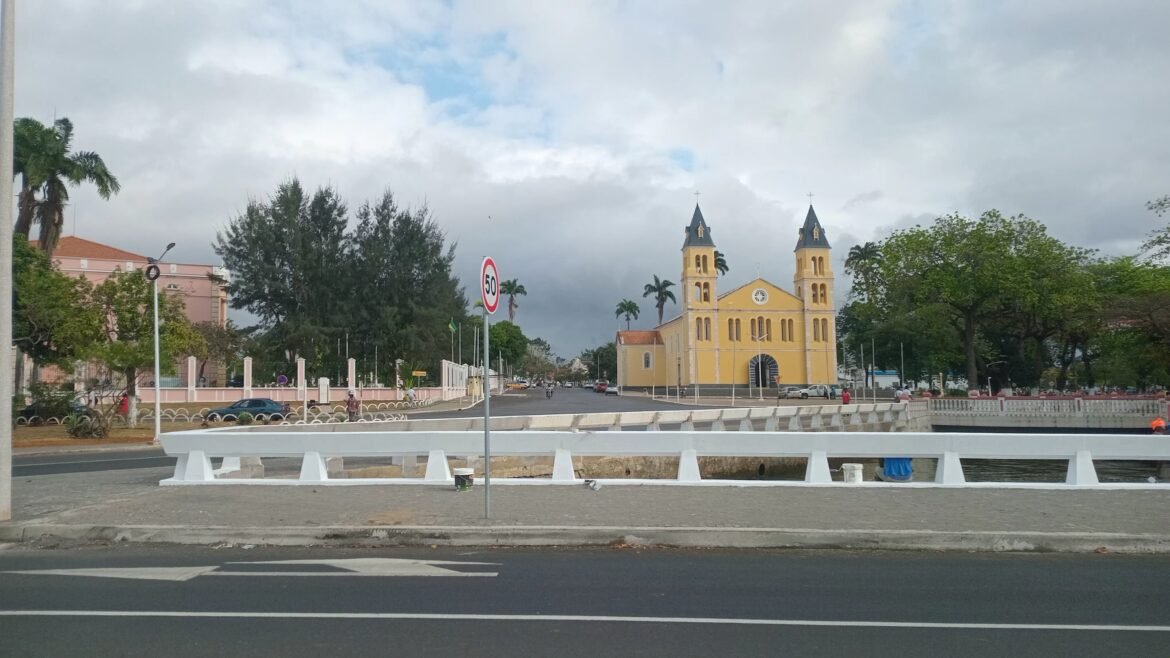
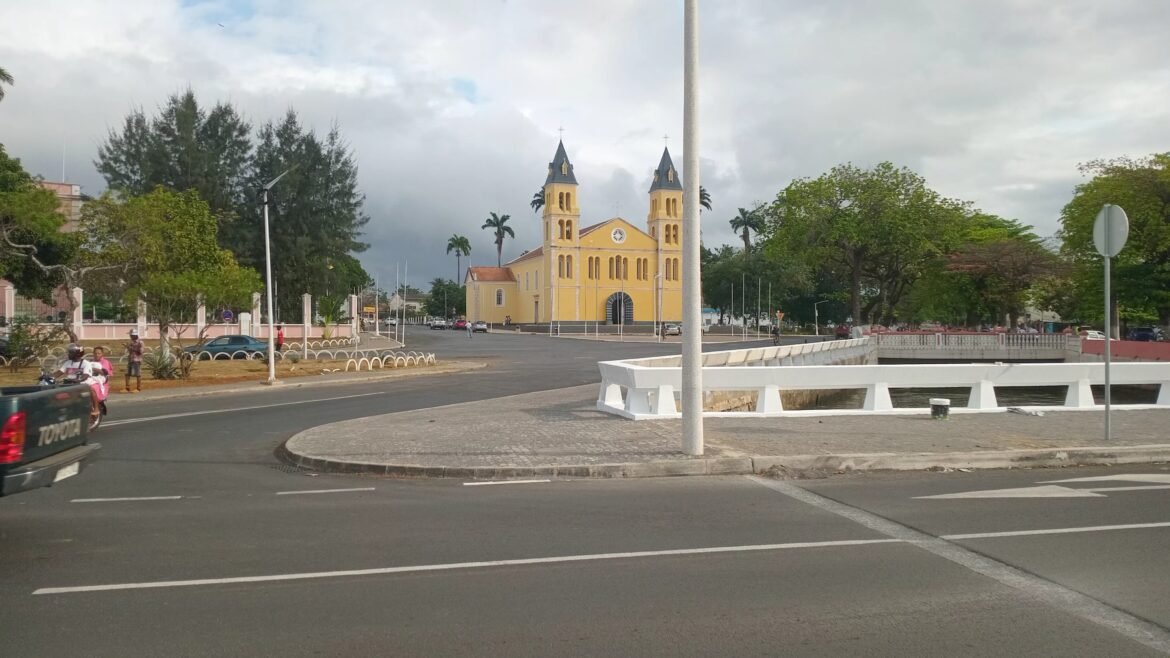
The Cathedral of São Tomé, located in the center of the capital, is another important historic landmark.
Religious institutions played a major role in the development of São Tomé from the early Portuguese period onward. The cathedral is therefore not only a religious building but also part of the broader historical landscape of the city.
Visitors interested in architecture can observe the building’s traditional features and its relationship with the surrounding historic center. The cathedral also provides an opportunity to learn about the role of Christianity and Catholic traditions in São Tomé and Príncipe.
A visit to the cathedral can easily be included in a walking tour of the capital together with the fortress, National Museum and other historic buildings.
4. National Museum of São Tomé and Príncipe
For travelers who want a deeper understanding of the country’s history, the National Museum of São Tomé and Príncipe is an important stop.
Located within São Sebastião Fortress, the museum preserves and presents objects associated with the cultural and historical development of the islands.
Museum visits are particularly valuable before or after exploring the historic plantations and rural areas because they provide context for understanding the different stages of São Tomé’s history.
Visitors can learn about traditional life, colonial history, plantation society, religious culture and aspects of the country’s social development.
5. Roça Agostinho Neto
São Tomé’s history cannot be understood without exploring its roças, the large plantation estates that played a central role in the island’s economy.
One of the best-known plantation sites is Roça Agostinho Neto, formerly known as Roça Rio do Ouro.
The plantation was historically associated with agricultural production and the development of the plantation system. Its large buildings, old structures and surrounding landscape provide an impressive insight into the scale of plantation operations.
Today, visiting the roça allows travelers to see architectural remains while also learning about the people who lived and worked within the plantation system.
A guided visit is recommended because the historical significance of the buildings and spaces is much easier to understand when explained within the wider history of São Tomé.
6. Roça São João dos Angolares
Located in the southern part of the island, Roça São João dos Angolares is another important cultural and historical destination.
The former plantation estate has become associated with tourism, gastronomy and cultural experiences. Its location provides visitors with an opportunity to combine plantation history with the natural beauty of southern São Tomé.
The area is especially interesting for travelers who want to experience São Tomé beyond the capital. The surrounding landscape, local communities and plantation heritage create a distinctive cultural experience.
A visit can be combined with southern attractions, beaches and traditional food experiences.
7. Roça Água Izé
Roça Água Izé is another significant plantation complex on São Tomé Island.
The plantation landscape illustrates the importance of agriculture and export production in the island’s economic history. Walking through the area allows visitors to observe historic structures and understand how plantation estates functioned as organized communities.
Roça Água Izé is particularly interesting for visitors studying the architectural and social history of São Tomé. The remaining structures offer visual evidence of an economic system that shaped the island’s landscape for generations.
8. Praia Melão and Its Archaeological Heritage
For travelers interested in archaeology, Praia Melão offers an opportunity to explore another dimension of São Tomé’s past.
The area is associated with the remains of a historic sugar-production complex. Sugar production formed an important part of the early economic history of São Tomé, particularly during the island’s early colonial period.
The archaeological remains at Praia Melão help illustrate the development of plantation agriculture and industrial activity on the island.
A Praia Melão archaeological tour can therefore be an excellent choice for visitors interested in history, archaeology and heritage tourism.
Instead of simply visiting a monument, travelers can explore the landscape and learn how archaeological evidence helps researchers understand earlier periods of São Tomé’s history.
9. Monte Café and Coffee Heritage
The history of São Tomé is also strongly connected to coffee production.
The Monte Café area is one of the best places to discover this agricultural heritage. Coffee cultivation became an important part of the island’s economy, and the plantation landscape remains an important element of São Tomé’s cultural identity.
Visitors can learn about coffee production, plantation life and traditional agricultural practices while enjoying the mountainous landscape.
A visit to Monte Café can be combined with nature activities, including excursions into the central part of the island.
For travelers interested in food and cultural tourism, coffee experiences provide a direct connection between São Tomé’s agricultural history and its modern tourism industry.
10. Roça Monte Forte
Another plantation heritage site worth exploring is Roça Monte Forte.
Like other roças on the island, Monte Forte provides insight into the plantation system and the rural communities that developed around agricultural production.
The architecture and landscape are important components of São Tomé’s heritage. Exploring these locations with a local guide allows visitors to understand how plantation estates were organized and how agriculture influenced settlement patterns.
Roça tours are especially valuable because they move beyond the capital and introduce visitors to the rural historical landscape of São Tomé.
11. Old Railway Heritage
Another fascinating element of São Tomé’s historical landscape is the remains of the old railway infrastructure associated with plantation transportation.
Railways were developed to support the movement of agricultural products, equipment and people between plantation areas and other parts of the island.
Although much of the original railway system has disappeared or fallen into disuse, traces of this infrastructure remain part of the island’s heritage.
For history enthusiasts, these remnants provide an opportunity to understand how transportation supported the plantation economy.
12. Boca do Inferno and Historical Landscapes
São Tomé’s heritage is not limited to buildings. Some natural landscapes are also connected to local history and cultural traditions.
Boca do Inferno, located on the southern coast, is a dramatic coastal attraction where the ocean enters a volcanic formation with considerable force.
Although primarily a natural attraction, the site can be incorporated into cultural and historical itineraries that explore southern São Tomé.
Combining natural landmarks with historic plantations gives travelers a more complete understanding of how people interacted with the island’s environment.
13. Cultural Heritage in Local Communities
Historic sites in São Tomé are not limited to monuments and ruins. The island’s living culture is itself an important part of its heritage.
Traditional music, dance, cuisine, crafts, local stories and community traditions have been passed from generation to generation.
Visitors who take the time to interact respectfully with local communities can discover aspects of São Tomé’s history that cannot be found inside a museum.
Food is particularly important. Traditional dishes reflect the island’s African, Portuguese and maritime influences and form part of its cultural identity.
14. Why Explore São Tomé with a Local Guide?
Historic places can be visited independently, but a local guide can significantly improve the experience.
A knowledgeable guide can explain the meaning of buildings, identify architectural details, describe plantation history and connect individual sites with broader historical events.
For international visitors, local guides also provide cultural context that may not be available through guidebooks or online information.
A professional São Tomé historical tour can therefore combine transportation, guided visits, cultural interpretation and local experiences into one organized itinerary.
15. Planning a Historic Tour of São Tomé
Travelers interested in history can create a one-day or multi-day itinerary depending on their interests.
A city-focused itinerary could include the historic center, São Sebastião Fortress, the National Museum and São Tomé Cathedral.
A plantation-focused tour could include destinations such as Roça Agostinho Neto, Monte Café, Água Izé or São João dos Angolares.
For visitors interested in archaeology, a program can include Praia Melão together with other historical locations.
History can also be combined with nature. São Tomé’s relatively compact geography makes it possible to visit historic plantations, waterfalls, forests, beaches and cultural communities within the same trip.
Discover the Historic Side of São Tomé
The historic sites in São Tomé offer much more than old buildings. They tell stories about migration, agriculture, religion, architecture, trade, plantation life, resistance, cultural transformation and the development of modern São Tomé and Príncipe.
From the historic streets of São Tomé city to the remains of plantation estates and archaeological landscapes such as Praia Melão, the island provides a remarkable variety of heritage experiences.
For travelers who want to understand the destination beyond its beaches, a historical and cultural tour is an excellent way to discover the island.
The combination of local guides, historic monuments, plantation landscapes, archaeological sites and living traditions creates a travel experience that connects the past with the present.
Whether you are interested in São Tomé history tours, historic plantations, archaeology, colonial architecture, cultural tourism or heritage travel, São Tomé offers many opportunities to explore its past while experiencing the natural beauty and hospitality of the island.
A well-planned Historic Sites in São Tomé Tour can transform a simple visit into a deeper cultural journey—one that allows travelers to see not only the places themselves, but also the stories, people and traditions that shaped São Tomé and Príncipe.
São Tomé Heritage Tours: Discover the History, Culture and Hidden Stories of São Tomé and Príncipe
São Tomé and Príncipe is a destination where tropical landscapes, African culture, Portuguese heritage and centuries of history come together. Beyond its beautiful beaches, volcanic mountains and lush rainforests, the islands offer a fascinating heritage waiting to be discovered.
São Tomé Heritage Tours provide travelers with an opportunity to explore the historical and cultural side of the country through old plantations, colonial buildings, churches, traditional communities, archaeological sites, local food and stories passed down through generations.
For visitors who want to experience more than a conventional holiday, a heritage tour in São Tomé offers a deeper connection with the destination. Instead of simply seeing beautiful places, travelers can learn how São Tomé and Príncipe developed, how plantation society shaped the islands, how African and European influences interacted, and how local communities continue to preserve their traditions.
Discover the Heritage of São Tomé and Príncipe
São Tomé and Príncipe has a distinctive historical identity shaped by its location in the Gulf of Guinea. The islands were uninhabited before Portuguese exploration and settlement in the late fifteenth century. São Tomé subsequently became an important center of plantation agriculture and maritime activity.
Over the centuries, sugar and later cocoa and coffee became central to the economic development of the islands. The plantation system created a landscape filled with roças, agricultural estates that became one of the most recognizable elements of São Tomé’s cultural heritage.
Today, many of these historic properties remain scattered across the island. Some have been restored and adapted for tourism, while others survive as atmospheric ruins surrounded by tropical vegetation.
Exploring these places with a local guide allows visitors to understand the connection between the landscape and the people who lived and worked there.
Heritage Tours Beyond the Beaches
São Tomé is often promoted for its beaches, turquoise waters and tropical scenery. These attractions are important, but the island’s heritage offers another dimension to the visitor experience.
A heritage tour can combine:
– Historic plantations and roças
– Colonial architecture
– Churches and religious heritage
– Archaeological locations
– Former sugar estates
– Cocoa and coffee plantations
– Local communities
– Traditional food and customs
– Museums and historical collections
– Portuguese and African cultural influences
– Stories connected to the island’s past
This combination makes heritage tourism an excellent choice for travelers interested in history, photography, architecture, anthropology, archaeology and cultural experiences.
Explore the Historic Roças of São Tomé
One of the most important elements of São Tomé’s heritage is the roça.
A roça was much more than a plantation. Many large estates operated almost like small communities, with agricultural areas, workers’ accommodation, administrative buildings, hospitals, schools, churches, warehouses and railway systems.
Some estates became important centers of cocoa and coffee production.
Walking through a historic roça today can reveal traces of this complex past. Buildings, railway lines, walls, warehouses and old machinery can provide clues about how plantation life was organized.
For visitors interested in architecture and history, these locations offer remarkable photographic opportunities.
A heritage guide can explain the function of different buildings and place them within the broader history of São Tomé.
São Tomé City Heritage Tour
The capital city is an ideal starting point for discovering the country’s cultural heritage.
A São Tomé City Heritage Tour can introduce travelers to historic streets, churches, colonial-era buildings, markets and important public spaces.
The city reflects several layers of history. Portuguese architectural influences can be seen alongside African cultural traditions and modern São Toméan life.
Walking through the historic center provides an opportunity to observe details that can easily be missed when traveling by vehicle.
Old façades, balconies, churches, squares and streets tell part of the story of the capital.
The experience becomes even richer when accompanied by a local guide who can explain the historical background of important locations.
São Tomé Churches and Religious Heritage
Religious buildings form another important part of the country’s heritage.
Churches and chapels can be found in São Tomé City and throughout the island. Some have historical connections extending back several centuries.
The Cathedral of São Tomé, located in the capital, is one of the most recognizable religious landmarks in the country.
Religious heritage also reflects the interaction between European Christianity and African society.
During a heritage tour, visitors can learn about the role that churches played in communities and how religious traditions developed over time.
Archaeological Heritage in São Tomé
São Tomé also has an important archaeological dimension.
Old plantation sites, industrial remains, abandoned structures, foundations, roads, railway traces and other physical evidence can help researchers and visitors understand the historical development of the islands.
Places such as the former Praia Melão sugar estate are particularly interesting for travelers interested in industrial and archaeological heritage.
The remains of old sugar-production infrastructure provide an opportunity to discuss the early plantation economy and the transformation of São Tomé’s landscape.
An archaeological heritage tour does not simply focus on ruins. It helps visitors understand what these remains reveal about technology, agriculture, trade, settlement and everyday life.
Praia Melão Heritage Experience
A visit to Praia Melão can be incorporated into a cultural and archaeological itinerary.
The site is associated with the historical development of sugar production in São Tomé. Although much of the original industrial landscape has changed over time, surviving traces can help visitors imagine the scale and organization of plantation activity.
For travelers interested in São Tomé archaeology tours, Praia Melão provides an opportunity to connect physical remains with historical narratives.
A local guide can explain the significance of the location, the role of sugar production and the transition of the plantation economy toward other agricultural products.
Combining Praia Melão with other historic sites creates a broader understanding of São Tomé’s heritage.
Cocoa Heritage and the Birth of the “Chocolate Islands”
São Tomé and Príncipe became internationally important for cocoa production during the nineteenth and twentieth centuries.
The fertile volcanic soils and tropical climate created favorable conditions for cocoa cultivation.
Large plantations expanded across São Tomé, transforming the agricultural landscape and contributing to the country’s reputation as one of the world’s important cocoa-producing regions.
Today, cocoa remains an important part of the country’s identity.
A heritage tour can include a visit to a cocoa plantation where travelers learn about cultivation, harvesting, fermentation and drying.
This is more than an agricultural experience. Cocoa tourism connects the modern visitor with the economic and social history of the islands.
Coffee Heritage in São Tomé
Coffee is another important part of São Tomé’s agricultural heritage.
Plantations in the interior of the island benefited from the tropical climate and fertile volcanic soils.
Visitors can explore traditional plantation landscapes and learn about coffee cultivation while experiencing the natural environment surrounding the historic estates.
Combining coffee, cocoa and heritage tourism provides a different perspective on São Tomé.
Instead of seeing agriculture simply as an economic activity, visitors can understand how crops influenced settlement patterns, transportation networks, architecture and international trade.
Culture and Local Communities
Heritage is not limited to buildings and archaeological remains.
The living culture of São Tomé and Príncipe is equally important.
Music, dance, cuisine, language, festivals, traditional knowledge and community life form part of the country’s intangible heritage.
A good heritage tour should therefore create opportunities for visitors to meet local people and experience everyday São Toméan culture respectfully.
Traditional dishes can also become part of the experience.
Fresh fish, seafood, tropical fruits, bananas, breadfruit, cassava, cocoa and locally grown vegetables are part of the country’s culinary identity.
Food provides another way of understanding the relationship between people, agriculture and the natural environment.
São Tomé Heritage and African Identity
Although Portuguese influence is visible throughout the country’s historical architecture, São Tomé and Príncipe is fundamentally shaped by African culture and the experiences of its people.
The history of the islands includes forced migration, plantation labor, resistance, cultural adaptation and the development of distinct Creole communities.
These historical experiences continue to influence São Toméan identity.
Heritage tourism can provide a space for visitors to learn about this complex history in a respectful and balanced way.
Understanding the past helps travelers appreciate the cultural richness of modern São Tomé.
Heritage and Nature: A Unique Combination
One of the most remarkable characteristics of São Tomé is the proximity between historical sites and nature.
A visitor can explore a historic plantation in the morning and continue into rainforest, mountains or coastal landscapes in the afternoon.
This makes it possible to design combined heritage and nature tours in São Tomé.
For example, an itinerary can include:
São Tomé City → Historic Roça → Cocoa Plantation → Waterfall → Local Lunch
or:
Praia Melão → Archaeological Heritage → Plantation Landscape → Coastal Village
These combinations allow visitors to experience several dimensions of the island during a single journey.
Why Choose a Private Heritage Tour?
Private tours offer greater flexibility than standard group excursions.
Travelers can choose the sites they are most interested in and adjust the pace of the experience.
Photography enthusiasts may want additional time at historic buildings. History enthusiasts may prefer longer explanations at archaeological locations. Families may want a combination of culture, nature and local food.
A private heritage tour can be adapted according to these preferences.
Travelers can also combine heritage experiences with other activities, including beaches, hiking, birdwatching, cocoa experiences and city sightseeing.
What to Expect from a São Tomé Heritage Tour
Depending on the itinerary, a heritage tour may include:
– Professional local guiding
– Transportation
– Visits to historic sites
– Plantation and roça experiences
– Archaeological locations
– Cultural explanations
– Local communities
– Photography opportunities
– Cocoa or coffee experiences
– Traditional food experiences
– Historical storytelling
The exact itinerary can be adapted according to the duration of the visit and the interests of the travelers.
Half-day, full-day and multi-day heritage itineraries can all be developed.
Best Time for Heritage Tours in São Tomé
São Tomé can be visited throughout the year.
Because the island has a tropical climate, travelers should be prepared for changing weather conditions, particularly when visiting inland areas.
Comfortable clothing, suitable walking shoes, sun protection, insect repellent and drinking water are recommended.
For outdoor heritage locations, visitors should also be prepared for muddy or uneven surfaces depending on the weather.
The reward is the opportunity to explore historic places surrounded by extraordinary tropical landscapes.
Responsible Heritage Tourism
Visiting historical sites requires respect for both the places and the communities connected to them.
Travelers should avoid damaging structures, removing archaeological objects or entering restricted areas.
Photography should also be respectful, particularly when photographing local residents.
Choosing local guides and tourism operators can help ensure that tourism contributes directly to the local economy.
Responsible tourism also helps preserve São Tomé’s cultural heritage for future generations.
Plan Your São Tomé Heritage Tour
A journey to São Tomé and Príncipe can be much more than a beach holiday.
Through heritage tourism, travelers can discover the stories behind the island’s historic buildings, plantations, archaeological remains, churches, agricultural landscapes and communities.
A São Tomé Heritage Tour offers the opportunity to travel through different periods of the country’s history while experiencing the natural beauty that surrounds these locations.
Whether you are interested in archaeology, colonial architecture, cocoa, coffee, plantation history, local culture or photography, São Tomé offers a wide range of experiences.
The most memorable journeys are often those that allow travelers to understand a destination rather than simply see it.
Discover the heritage of São Tomé and Príncipe with a local guide, explore historic roças and archaeological sites, meet local communities, learn the stories behind the plantations and experience the cultural identity of one of Africa’s most fascinating island destinations.
Book Your São Tomé Heritage Tour
Ready to discover the historical and cultural side of São Tomé?
Contact Voltours to plan your private heritage tour in São Tomé and Príncipe.
From São Tomé City heritage walks and historic roças to archaeological sites, cocoa plantations, coffee estates and cultural experiences, your itinerary can be organized according to your interests, schedule and travel style.
São Tomé Heritage Tours — Discover the history. Experience the culture. Explore the island.
São Tomé Archaeology Tours: Discover the Archaeological Heritage of São Tomé and
São Tomé and Príncipe is widely known for its tropical beaches, volcanic landscapes, lush rainforests, cocoa plantations and extraordinary biodiversity. However, beyond its natural beauty lies another fascinating dimension of the islands: a rich archaeological and historical heritage shaped by centuries of exploration, colonisation, agriculture, trade, migration and cultural exchange.
For travellers interested in history and heritage, São Tomé Archaeology Tours offer an opportunity to discover a different side of the country. Instead of simply visiting beautiful landscapes, archaeological tours connect visitors with the places, ruins, plantations, churches, old settlements and historic structures that tell the story of São Tomé and Príncipe.
From abandoned sugar plantations and former agricultural estates to historic city buildings and archaeological remains, the island provides a fascinating journey through different periods of its past.
Why Choose an Archaeology Tour in São Tomé?
An archaeology tour is more than a sightseeing excursion. It is a journey into the history of a destination and an opportunity to understand how people lived, worked and interacted with the environment over generations.
São Tomé’s history is closely connected with the development of plantation agriculture. Sugar was one of the first major agricultural products cultivated on the island on a large scale. Later, cocoa and coffee became particularly important to the economy.
The remains of these agricultural systems can still be found throughout the island.
Old plantation houses, agricultural buildings, stone structures, roads, bridges, churches, warehouses and other ruins provide physical evidence of the island’s complex past.
Walking through these locations with a knowledgeable local guide allows visitors to understand that the ruins are not simply old buildings. They are part of a much larger historical landscape.
The Archaeological Heritage of São Tomé
The archaeological heritage of São Tomé includes both visible structures and less obvious traces of human activity.
Some sites are associated with the colonial period and plantation economy, while others reveal information about settlement patterns, architecture, agriculture and the relationship between people and the island’s natural environment.
Historic structures can be found in and around São Tomé city as well as in rural areas.
The island’s old roças, or plantation estates, are particularly important. These complexes were not simply farms. Many operated as self-contained communities, with accommodation, administrative buildings, agricultural facilities, churches, workshops, hospitals, schools and other structures.
Today, some roças remain active communities, while others survive partly or completely in ruins.
Their architecture and layout provide important clues about the organisation of plantation society.
São Tomé’s Historic Roças
One of the most distinctive features of São Tomé’s cultural landscape is the network of historic roças.
The Portuguese term “roça” is commonly used to describe the plantation estates that played an important role in the island’s agricultural history.
During different periods, these estates produced crops such as sugar, coffee and cocoa.
A visit to a historic roça can reveal how agricultural production was organised and how these large estates influenced the development of São Tomé.
Visitors may see old plantation houses, workers’ quarters, warehouses, railway-related infrastructure, drying areas, agricultural buildings and religious structures.
Each site has its own character.
Some are relatively well preserved, while others have been affected by time, vegetation and weather. In many places, nature is gradually reclaiming the architecture, creating a striking combination of tropical vegetation and historic ruins.
Praia Melão and Its Archaeological Heritage
Among the places that can be included in a São Tomé archaeology experience is Praia Melão, an area associated with the island’s historic sugar production.
The archaeological remains connected with old sugar production provide an opportunity to investigate an important period in São Tomé’s history.
Sugar played a major role in the early economic development of the island. Historical remains associated with sugar production can help visitors understand the technology, organisation and infrastructure required by the plantation economy.
At Praia Melão, the combination of archaeological remains and the surrounding landscape creates an interesting setting for heritage tourism.
An archaeological visit should not simply focus on taking photographs of ruins. A local guide can explain what the structures may have been used for, how production was organised and how the site fits into the broader history of São Tomé.
For visitors interested in industrial archaeology, plantation history and cultural heritage, Praia Melão can therefore become an important part of a historical itinerary.
Archaeology and the History of Sugar
The history of sugar in São Tomé is essential for understanding the island’s early development.
Sugar cultivation expanded during the Portuguese colonial period, and São Tomé became an important centre of sugar production in the Atlantic world.
The plantation system required land, agricultural infrastructure, processing facilities and labour.
Archaeological remains can help researchers and visitors understand this system through physical evidence.
Old foundations, walls, processing areas and other structures can provide information about how plantations functioned.
The landscape itself can also be considered part of the archaeological heritage.
Old agricultural areas, paths, water systems and settlement patterns may preserve traces of activities that took place centuries ago.
This makes an archaeology tour especially interesting because the visitor is not simply exploring individual buildings. The entire landscape can become part of the historical story.
The Archaeology of Cocoa and Coffee Plantations
Although sugar represents an important earlier chapter, cocoa and coffee later transformed São Tomé’s agricultural landscape.
The islands became internationally associated with cocoa production, and large plantation estates expanded across São Tomé.
Many historic roças still reflect this period.
A cultural and archaeological tour can introduce visitors to the architecture and organisation of these estates while explaining the importance of cocoa and coffee to the island’s economy.
Visitors can learn about cocoa cultivation, plantation processing and the lives of the communities connected with these estates.
Some tours can combine historical exploration with visits to agricultural areas where cocoa and other crops are still cultivated.
This creates a connection between the archaeological past and the living agricultural traditions of modern São Tomé.
Archaeology in São Tomé City
The capital city is another important starting point for understanding the country’s heritage.
São Tomé city contains historic buildings, religious monuments, streets and other structures that reflect different periods of the island’s development.
A walking heritage tour can introduce visitors to historic areas while explaining the evolution of the city.
Churches and other religious buildings are particularly significant because Christianity became deeply connected with the colonial history of the islands.
The city’s architecture also reflects different influences, including Portuguese colonial traditions and local adaptations.
Exploring the historic centre with a local guide allows visitors to see details that might otherwise be overlooked.
A building may appear simple at first glance, but its architecture, location and historical function can reveal important information about the city’s past.
Archaeology, Culture and Local Communities
Archaeological tourism should not be separated from the people who live around historic sites.
Many archaeological and plantation landscapes are part of living communities.
People continue to live, work, farm and maintain their traditions in areas that also contain historic structures.
For this reason, responsible archaeology tourism should respect local communities and their relationship with heritage sites.
Visitors should avoid climbing fragile ruins, removing objects or stones, damaging structures or disturbing archaeological remains.
Photography should also be conducted respectfully, especially when visiting communities, religious buildings or privately managed locations.
A good local guide helps visitors understand these cultural considerations.
What Can You Expect from a São Tomé Archaeology Tour?
A typical archaeology tour can be adapted according to the visitor’s interests, available time and physical ability.
A full-day experience might combine several historical locations with scenic landscapes and cultural attractions.
For example, an itinerary could include:
– Historic São Tomé city
– Former plantation estates
– Archaeological remains
– Praia Melão
– Historic churches
– Cocoa and coffee plantations
– Old agricultural infrastructure
– Traditional communities
– Local cultural experiences
– Scenic viewpoints and natural landscapes
The exact itinerary can be adapted according to the interests of each group.
History enthusiasts may prefer a tour focused primarily on archaeological and colonial heritage, while travellers looking for a broader experience can combine archaeology with nature, gastronomy and local culture.
Why a Local Archaeological Guide Matters
Exploring archaeological sites without interpretation can be interesting, but having a knowledgeable local guide can transform the experience.
A guide can explain the historical context of a building, identify different types of structures and describe how a plantation operated.
More importantly, a guide can connect individual locations into a coherent story.
Instead of seeing an abandoned building, the visitor begins to understand its function.
Instead of seeing a ruined plantation, the visitor learns about the agricultural system, transportation, architecture and communities associated with it.
Local guides also provide practical information about access, terrain, weather and appropriate behaviour at heritage locations.
Responsible Archaeological Tourism
São Tomé’s archaeological heritage is valuable and, in many places, fragile.
Responsible tourism is therefore essential.
Visitors should never remove pottery fragments, stones, metal objects or other materials from archaeological sites. Even apparently insignificant objects may contain information that is important for researchers.
Visitors should also avoid damaging walls or entering unstable structures.
Following marked paths and local instructions helps protect both the visitor and the archaeological site.
Tour operators have an important role in promoting sustainable heritage tourism.
By encouraging responsible behaviour and supporting local communities, tourism can contribute to the long-term preservation of São Tomé’s historical heritage.
Combining Archaeology with Nature
One of the advantages of exploring São Tomé is the possibility of combining archaeology with nature.
A historical site may be surrounded by rainforest, plantations, mountains or tropical vegetation.
This creates a distinctive travel experience in which cultural heritage and natural heritage are experienced together.
A day might begin with a visit to a historic plantation and continue through cocoa-growing areas before reaching a waterfall, forest trail or coastal viewpoint.
For travellers who want more than conventional sightseeing, this combination offers a deeper understanding of the island.
The landscape becomes part of the story.
Who Should Take a São Tomé Archaeology Tour?
São Tomé archaeology tours are suitable for a wide variety of travellers.
They can be particularly interesting for:
– History enthusiasts
– Archaeology enthusiasts
– Cultural travellers
– Photographers
– Students and researchers
– Heritage tourism visitors
– Architecture enthusiasts
– Cocoa and coffee enthusiasts
– Cruise passengers
– Private travellers
– Couples and families
– Travellers looking for authentic local experiences
The experience can be adapted for individuals or private groups.
A private tour can also provide greater flexibility, allowing travellers to spend more time at locations that interest them most.
Best Way to Experience São Tomé’s History
The best way to understand São Tomé’s archaeological heritage is to combine historical evidence with local knowledge.
A historic building tells part of the story. The surrounding landscape tells another part. Oral traditions, local communities and agricultural practices can provide additional context.
Together, these elements create a much richer picture of São Tomé’s past.
This is why archaeology tourism can be an excellent complement to beach holidays and nature excursions.
Instead of simply visiting São Tomé, travellers can begin to understand how the island developed and how its history continues to influence life today.
Book Your São Tomé Archaeology Experience
If you are planning a trip to São Tomé and want to explore the island beyond its beaches and natural attractions, a São Tomé Archaeology Tour can offer a memorable journey through history.
Explore historic plantations, archaeological remains, old agricultural landscapes, colonial architecture and cultural sites while learning about the people and events that shaped São Tomé and Príncipe.
A local tour operator can help organise a personalised itinerary according to your interests, available time and preferred level of activity.
Whether you are interested in plantation archaeology, sugar history, cocoa heritage, historic architecture or the broader cultural history of the islands, São Tomé offers many opportunities for discovery.
The ruins and historic landscapes are more than reminders of the past. They are part of the identity and cultural heritage of São Tomé and Príncipe.
Discover the archaeological side of São Tomé. Walk through historic landscapes, explore forgotten plantation sites, learn about the island’s sugar, cocoa and coffee heritage, and experience the stories behind the ruins with a local guide.
Your journey through São Tomé’s history can begin with a single archaeological site—and continue across an entire island shaped by centuries of human activity.
São Tomé Archaeology Tours – Explore the Past, Understand the Island
From historic São Tomé city to old plantation estates and the archaeological heritage of Praia Melão, every site offers another piece of the country’s story.
Explore. Discover. Learn. Experience São Tomé through its archaeology and history.
São Tomé and Príncipe Archaeology Tours: Discover the islands Through History and Heritage
São Tomé and Príncipe is an extraordinary destination for travellers interested in nature, culture and history. Known for its volcanic landscapes, tropical forests, cocoa plantations, beautiful beaches and rich biodiversity, the archipelago also preserves a fascinating cultural and archaeological heritage.
For travellers who want to go beyond conventional sightseeing, São Tomé and Príncipe Archaeology Tours provide an opportunity to discover the historical landscapes, old plantations, architectural remains and cultural sites that have shaped the identity of the islands.
The archaeological heritage of São Tomé and Príncipe is closely connected to the history of settlement, Portuguese colonial expansion, plantation agriculture, sugar production, cocoa and coffee cultivation, maritime trade and the development of local communities.
From historic plantations on São Tomé Island to the cultural landscape of Príncipe Island, archaeology tours reveal another side of the destination—one that cannot be fully understood simply by visiting beaches and natural attractions.
What Makes São Tomé and Príncipe Archaeology Tours Special?
Archaeology tourism is about more than visiting ancient ruins. It is about understanding the relationship between people, buildings, landscapes and historical events.
In São Tomé and Príncipe, many historic sites are integrated into tropical landscapes. Old plantation buildings may be surrounded by enormous trees, rainforest vegetation, cocoa plantations or rural communities. Former agricultural estates can appear partly abandoned, while others continue to have a role in contemporary life.
This creates a unique experience for visitors.
A historic building is not simply an old structure. It can provide evidence of how an agricultural estate operated, how goods were processed, where people lived and how transportation and administration were organised.
With a local guide, visitors can connect these physical remains with the broader history of the islands.
The Historical Background of the Islands
São Tomé and Príncipe has a complex history shaped by European exploration, settlement, plantation agriculture, international trade and cultural exchange.
The Portuguese established settlements on the islands during the late fifteenth century. Over time, agricultural production became central to the development of São Tomé.
Sugar production played an important role in the early colonial economy. Later, coffee and especially cocoa became major agricultural products.
The development of plantations transformed the landscape.
Large estates, known locally as roças, were established across São Tomé and later became important centres of agricultural production.
These plantations required extensive infrastructure, including houses, administrative buildings, workers’ accommodation, processing facilities, warehouses, roads and other structures.
Many traces of this historical landscape remain visible today.
The Roças: Living Archaeological Landscapes
One of the most important elements of São Tomé and Príncipe’s heritage is the network of historic roças.
A roça was more than a plantation. Many were organised as complex communities with different areas dedicated to administration, agriculture, processing, housing, religion and social activities.
Walking through a historic roça can therefore feel like entering an open-air historical landscape.
Visitors may encounter old plantation houses, agricultural buildings, warehouses, workshops, churches, workers’ quarters and other structures.
Some buildings have been restored or adapted to modern uses, while others remain in various stages of deterioration.
The contrast between historical architecture and tropical vegetation makes these locations particularly fascinating for photography and heritage exploration.
Archaeological Heritage of São Tomé Island
São Tomé Island contains many locations where visitors can explore the relationship between history, agriculture and architecture.
A heritage itinerary can include historical areas around São Tomé city, old plantations, agricultural landscapes and archaeological remains connected with sugar, cocoa and coffee production.
The island’s tropical environment also contributes to the character of its archaeological heritage.
In some locations, vegetation has grown around old structures, creating a dramatic visual combination of architecture and rainforest.
Rather than treating these places as isolated ruins, archaeology tours can interpret them as parts of a larger historical network.
The roads, agricultural areas, water systems, buildings and surrounding settlements can all contribute to understanding how the island functioned in the past.
Praia Melão and the History of Sugar
One of the interesting locations for an archaeological and historical tour is Praia Melão, associated with São Tomé’s early sugar-producing history.
Sugar production was an important part of the island’s early economic development, and archaeological remains connected with this period provide clues about the organisation of plantation production.
Exploring Praia Melão with a guide allows visitors to examine the physical remains while learning about the historical importance of sugar in São Tomé.
The site can be particularly interesting for travellers interested in industrial archaeology and the history of agricultural technology.
Instead of simply looking at ruins, visitors can learn how sugar production influenced settlement patterns, infrastructure and the development of the island.
Praia Melão can therefore form an important component of a broader São Tomé archaeology tour.
São Tomé City: History and Architecture
The capital, São Tomé, is another important starting point for understanding the historical development of the archipelago.
The city contains historic churches, colonial-era buildings, public spaces and residential architecture that reflect different periods of its development.
A walking tour through the historic centre can reveal architectural details that may otherwise be overlooked.
Religious buildings are particularly significant because Christianity became an important part of the islands’ colonial history.
Historic urban architecture also demonstrates how European architectural traditions were adapted to a tropical environment.
For visitors interested in architectural archaeology and cultural heritage, São Tomé city provides an accessible introduction to the history of the country.
Cocoa and Coffee Heritage
The development of cocoa and coffee production created another major chapter in São Tomé and Príncipe’s history.
The islands became internationally associated with cocoa, while coffee also played an important role in plantation agriculture.
Many historic estates were designed around agricultural production.
Visitors exploring these areas can see how agricultural landscapes were connected to processing facilities, transportation routes, housing and administrative buildings.
A cocoa or coffee heritage experience can therefore combine archaeology, agriculture and gastronomy.
Travellers may visit a plantation, learn about traditional cultivation, explore historical structures and discover how cocoa continues to form part of the cultural identity of São Tomé and Príncipe.
Príncipe Island and Its Cultural Heritage
Although São Tomé Island contains many of the archipelago’s larger historical plantation landscapes, Príncipe Island offers a different heritage experience.
Príncipe is smaller, more secluded and characterised by spectacular tropical landscapes.
Its history is also closely connected with plantation agriculture and colonial settlement.
The island contains historic buildings and plantation landscapes that reflect its agricultural past.
Exploring Príncipe through a heritage tour allows visitors to combine history with the island’s exceptional natural environment.
Historic settlements, plantation remains and traditional communities can be interpreted alongside forests, mountains and coastal landscapes.
This combination makes Príncipe particularly attractive for travellers who want to experience cultural heritage in a quieter and more intimate environment.
Santo António and the History of Príncipe
The town of Santo António is an important cultural and historical centre on Príncipe Island.
A walking tour can introduce visitors to the town’s architecture, churches, streets and cultural traditions.
The small scale of Santo António makes it possible to explore much of the historic environment on foot.
The town also provides an opportunity to understand how the island developed as a centre of administration, religion and commerce.
Combining a visit to Santo António with nearby plantation landscapes can provide a broader perspective on Príncipe’s history.
Archaeology, Plantation Architecture and Nature
One of the defining characteristics of archaeology tourism in São Tomé and Príncipe is the close relationship between historic sites and nature.
The islands are covered by tropical vegetation, and many historical structures are surrounded by forests, gardens and agricultural areas.
This means that an archaeology tour can also become a nature experience.
A visitor might explore an old plantation in the morning, walk through a cocoa-growing area and later visit a waterfall, forest or coastal viewpoint.
The combination of cultural and natural heritage is one of the strongest features of travelling through São Tomé and Príncipe.
What Can You Discover on an Archaeology Tour?
Depending on the itinerary, an archaeology tour can introduce visitors to several types of heritage.
These may include:
– Historic plantation houses
– Old agricultural estates
– Sugar-production remains
– Cocoa and coffee plantations
– Historic churches
– Colonial-era architecture
– Workers’ quarters
– Warehouses and agricultural buildings
– Old roads and infrastructure
– Historic town centres
– Archaeological remains
– Traditional communities
– Cultural landscapes
Each location provides a different perspective on the history of the islands.
The objective is not simply to see as many places as possible but to understand how these places are connected.
The Importance of Local Guides
A local guide can make an important difference to an archaeology and heritage experience.
Without interpretation, visitors may see an old wall, abandoned building or plantation house without understanding its original function.
A knowledgeable guide can explain the historical context, architecture, agricultural systems and local traditions associated with the site.
Local guides can also explain how historic places are connected to contemporary communities.
This is particularly important because heritage in São Tomé and Príncipe is not limited to monuments. It is also present in food, agriculture, music, architecture, traditions and everyday life.
Responsible Archaeological Tourism
Archaeological and historical sites are often fragile.
Visitors should respect these places by avoiding damage to buildings, walls and archaeological remains.
Objects such as stones, pottery fragments, metal pieces or other historical materials should never be removed from a site.
Visitors should also follow local instructions and avoid entering unstable structures.
Responsible tourism helps preserve heritage for future generations while allowing local communities to benefit from tourism.
Supporting local guides, businesses and communities can also contribute to the sustainable development of heritage tourism.
Who Can Enjoy São Tomé and Príncipe Archaeology Tours?
Archaeology and heritage tours are suitable for many types of travellers.
They can be particularly interesting for:
– History enthusiasts
– Archaeology enthusiasts
– Cultural travellers
– Architecture lovers
– Photographers
– Students
– Researchers
– Heritage tourists
– Cocoa and coffee enthusiasts
– Cruise passengers
– Private travellers
– Couples
– Families
– Educational groups
The itinerary can be adapted to different interests and levels of physical activity.
A private tour can also provide greater flexibility, allowing visitors to spend additional time at locations that are particularly interesting to them.
Combining Archaeology, Culture and Adventure
A São Tomé and Príncipe archaeology tour does not need to be limited to historical buildings.
The islands offer opportunities to combine heritage with hiking, birdwatching, cocoa experiences, local cuisine, beaches and rainforest exploration.
For example, a multi-day cultural itinerary could combine São Tomé city, historic plantations, Praia Melão, cocoa-producing areas and natural attractions before continuing to Príncipe.
This creates a complete travel experience in which visitors discover not only the past but also the living culture and natural environment of the archipelago.
A Journey Through the Past
São Tomé and Príncipe’s archaeological heritage tells a story of transformation.
The islands changed from early settlements and agricultural development into important plantation landscapes connected to international trade.
Sugar, coffee and cocoa each left their mark on the land.
The architecture of the roças, the historic streets of São Tomé, the buildings of Santo António and the remains of agricultural production all contribute to this story.
Today, these places offer travellers an opportunity to look beyond the postcard image of tropical beaches and discover a deeper dimension of the destination.
Book a São Tomé and Príncipe Archaeology Tour
For travellers who want to explore history, culture and heritage, São Tomé and Príncipe Archaeology Tours provide an authentic way to discover the islands.
Explore historic roças, archaeological remains, plantation landscapes, colonial architecture, sugar heritage, cocoa and coffee traditions, historic towns and cultural communities.
With a local guide and a carefully planned itinerary, visitors can experience the stories behind the buildings and landscapes while discovering how the past continues to influence São Tomé and Príncipe today.
Whether you are visiting for a few days or planning a longer journey through both islands, an archaeology and heritage tour can add an entirely different dimension to your trip.
Discover the ruins. Explore the plantations. Walk through historic towns. Learn about sugar, cocoa and coffee. Meet local communities and experience the history of São Tomé and Príncipe.
Your journey does not have to end at the beach.
Look deeper into the islands, follow the historic landscapes and discover the archaeological heritage that helped shape São Tomé and Príncipe.
São Tomé and Príncipe Archaeology Tours — Discover the History Behind the Islands
From Praia Melão and the historic plantation landscapes of São Tomé to the cultural heritage of Príncipe and Santo António, the archipelago offers a remarkable journey through history.
Explore São Tomé and Príncipe through archaeology, heritage, culture and local knowledge.
Cultural Tours in São Tomé and Príncipe: Discover the History, Heritage and Living Traditions of the islands
São Tomé and Príncipe is a destination where tropical landscapes, African traditions, Portuguese influences and centuries of history come together. Beyond its beaches, rainforests and volcanic scenery, the islands offer visitors an opportunity to discover a fascinating cultural heritage shaped by different peoples, historical events and economic activities.
Cultural Tours in São Tomé and Príncipe are an excellent way to experience the destination beyond conventional sightseeing. Through visits to historic plantations, local communities, traditional markets, churches, museums, colonial buildings, fishing villages and cultural sites, travelers can learn about the history and daily life of the Santomean people while experiencing the authentic character of the islands.
For travelers interested in history, architecture, gastronomy, traditions and local communities, São Tomé and Príncipe provides many opportunities for meaningful cultural experiences.
Understanding the Cultural Heritage of São Tomé and Príncipe
The cultural identity of São Tomé and Príncipe has developed over centuries. The islands were uninhabited when Portuguese explorers arrived in the late 15th century, and São Tomé later became an important center of plantation agriculture.
Sugar production initially played an important role in the colonial economy. Later, cocoa and coffee became major agricultural products, transforming the islands into important producers within the Portuguese colonial system.
The plantation system brought people from different parts of Africa to the islands, creating communities with diverse cultural backgrounds. Over time, these communities developed distinctive traditions, languages, music, cuisine and social customs.
Today, this history can still be seen in the old roças, traditional houses, churches, agricultural landscapes and historic buildings scattered across São Tomé Island and Príncipe.
A cultural tour allows visitors to understand how this history continues to influence contemporary life.
Explore the Historic Roças of São Tomé
One of the most important cultural experiences in São Tomé is visiting the historic roças, or agricultural plantations.
Roças were large plantation estates that included agricultural areas, workers’ accommodation, administrative buildings, warehouses, hospitals, schools and religious structures. Many were designed as self-contained communities.
Although some plantations are now abandoned or partially ruined, their architecture and surrounding landscapes remain important elements of São Tomé’s cultural heritage.
A cultural tour can include visits to historic plantations such as Roça Agostinho Neto, Roça Água Izé, Roça Monte Café and other former agricultural estates.
These locations offer travelers the opportunity to learn about cocoa and coffee production, plantation architecture and the social history associated with the agricultural economy.
Walking through an old plantation can be particularly memorable because the experience combines history, architecture and nature.
Visit São Tomé City and Its Historic Center
The capital city of São Tomé is another important destination for cultural tourism.
A walking tour through the city provides an introduction to the history of the country and its colonial architecture. Visitors can explore historic streets, public squares, churches, markets and buildings that reflect different periods of the city’s development.
Among the places that can be included in a cultural city tour are São Sebastião Fortress, the Cathedral of São Tomé, Independence Square, the National Museum and the central market.
The city is also an excellent place to observe everyday life.
Instead of simply passing through the capital by vehicle, travelers can walk through local neighborhoods, visit markets and interact with residents. This provides a more personal understanding of how people live, work and socialize in São Tomé.
Discover São Tomé’s Cocoa Heritage
Cocoa is one of the products most closely associated with the history of São Tomé and Príncipe.
During the colonial period, cocoa production became extremely important to the islands’ economy. São Tomé was once known internationally for its cocoa production, and many plantations were established across the territory.
Today, visitors can learn about cocoa cultivation and processing by visiting plantations and agricultural communities.
A cocoa tour may include walking through plantations, observing cocoa trees, learning how cocoa pods are harvested and discovering traditional processing methods.
For food lovers, the experience can also include tasting local chocolate or cocoa-based products.
This combination of agriculture, history and gastronomy makes cocoa tourism an interesting cultural experience for international visitors.
Experience the Coffee Culture of Monte Café
Coffee is another important part of São Tomé’s agricultural heritage.
The central region of the island, particularly around Monte Café, has a long history connected with coffee cultivation.
A visit to Monte Café can introduce travelers to the history of coffee production and the communities that have worked in this sector for generations.
Visitors can learn how coffee is grown, harvested, processed and prepared.
The surrounding landscape is also spectacular, with mountains, forests and agricultural areas creating a completely different environment from the coastal beaches.
A cultural tour combining Monte Café with nearby natural attractions can provide a balanced experience of history, agriculture and nature.
Meet Local Communities
One of the most valuable aspects of cultural tourism is the opportunity to meet local people.
São Tomé and Príncipe is home to communities with distinctive traditions, occupations and lifestyles. Fishing villages, agricultural communities and urban neighborhoods each offer different perspectives on Santomean life.
Responsible cultural tours should prioritize respectful interaction.
Visitors can learn about local traditions, food, music, crafts and daily activities without treating communities simply as tourist attractions.
Depending on the itinerary, travelers may have opportunities to meet local producers, fishermen, artisans, farmers or cultural groups.
These encounters can transform a normal sightseeing trip into a more meaningful travel experience.
Discover Traditional Food in São Tomé and Príncipe
Food is an essential part of culture, and São Tomé’s cuisine reflects the islands’ history and natural environment.
Traditional dishes commonly make use of fish, seafood, plantains, breadfruit, cassava, vegetables, coconut and locally grown spices and herbs.
One of the best ways to understand local culture is to experience the food in a local environment.
A cultural tour can include a traditional lunch or visit to a local restaurant where travelers can taste Santomean dishes.
Fresh fish is particularly important in coastal communities, while agricultural products from the interior contribute to the variety of local cuisine.
For many visitors, discovering the food of São Tomé becomes one of the most memorable parts of the journey.
Traditional Music, Dance and Cultural Expressions
Music and dance are important elements of Santomean cultural identity.
Traditional performances may include styles such as Tchiloli, Dança do Congo and Ússua, each with its own historical and cultural significance.
Tchiloli is particularly distinctive and represents one of the island’s best-known traditional theatrical expressions. Its performances combine theater, music, costumes and historical narratives.
Cultural experiences involving traditional performances should be approached with respect for the communities that preserve these traditions.
When available, travelers can attend cultural presentations or local events and learn about the meaning behind the music, costumes and performances.
Explore the National Museum
The National Museum of São Tomé and Príncipe is an important stop for visitors interested in the country’s history.
Located in São Sebastião Fortress, the museum provides an opportunity to learn about the colonial period, plantation society, religious traditions and material culture.
A visit to the museum can be especially useful at the beginning of a cultural itinerary because it gives travelers historical context before they explore plantations and other heritage sites.
Understanding the historical background makes later visits much more meaningful.
Visit Traditional Markets
Markets provide another fascinating way to experience local culture.
São Tomé’s markets are places where residents buy and sell food, vegetables, fruits, fish, spices and other everyday products.
For visitors, a market visit provides an opportunity to observe local commerce and discover products that may not be familiar to international travelers.
With a knowledgeable local guide, travelers can learn the names and uses of different fruits, vegetables, spices and traditional products.
Markets are also excellent places for photography, although visitors should always ask permission before photographing individuals.
Discover the Culture of Príncipe Island
Although São Tomé is the larger and more populated island, Príncipe has its own distinctive cultural identity.
The island is known for its small communities, historic settlements, tropical environment and preserved traditions.
Santo António, the capital of Príncipe, is an excellent place to experience the island’s atmosphere.
Walking through the town allows visitors to observe historic buildings, churches, local shops and everyday community life.
Príncipe’s cultural experiences can also be combined with visits to former plantations and natural areas, creating an itinerary that connects heritage and biodiversity.
Combine Culture with Nature
One of the greatest advantages of traveling in São Tomé and Príncipe is that cultural experiences can easily be combined with nature.
A single itinerary can include a historic plantation in the morning, a rainforest walk later in the day and a traditional meal in the evening.
Travelers can visit waterfalls, plantations, villages, beaches and historic sites without having to choose between cultural tourism and nature tourism.
For example, a cultural itinerary might combine Monte Café, a plantation visit, a rainforest experience and a local lunch.
Another itinerary could combine São Tomé city, the National Museum, a traditional market and a visit to a nearby plantation.
This flexibility makes the destination suitable for travelers with different interests.
Cultural Tours for Families
Cultural tours can also be excellent experiences for families.
Children can learn about agriculture, history, local food and traditional life through practical experiences rather than only through museums or books.
Visiting a cocoa plantation, for example, allows young travelers to see where chocolate begins.
Walking through a historic plantation can also introduce children to architecture and history in an engaging way.
Family-friendly cultural tours should be adapted to the age and interests of the participants, with comfortable transportation, appropriate walking distances and sufficient time for rest.
Private Cultural Tours in São Tomé
For travelers who prefer flexibility, a private cultural tour can provide a more personalized experience.
Instead of following a fixed group schedule, private travelers can choose the sites and activities that interest them most.
A private cultural tour can include a professional local guide, private transportation, plantation visits, city sightseeing, traditional food experiences and interactions with local communities.
The itinerary can also be adjusted according to the traveler’s interests.
History enthusiasts may prefer a heritage-focused tour, while food lovers may want to emphasize cocoa, coffee and local cuisine. Families may prefer shorter visits combined with interactive experiences.
Why Choose a Local Cultural Guide?
A local guide can make a significant difference to the quality of a cultural experience.
Historic buildings and plantations can be interesting to see, but understanding their background gives them greater meaning.
A knowledgeable guide can explain the history of different locations, introduce local traditions, identify plants and agricultural products, explain cultural practices and help travelers communicate respectfully with local communities.
Local guides also contribute to the local tourism economy by ensuring that tourism benefits people living in the destination.
Responsible Cultural Tourism
Cultural tourism should be based on respect.
Travelers should respect local customs, ask permission before photographing people, avoid damaging historical structures and follow the guidance of local communities.
Responsible tourism also means supporting local businesses whenever possible.
Choosing local guides, restaurants, artisans, producers and community-based experiences can help tourism generate benefits beyond hotels and major tourism companies.
For a destination such as São Tomé and Príncipe, where cultural heritage and natural environments are closely connected, responsible tourism can contribute to the preservation of both.
Plan Your Cultural Tour in São Tomé and Príncipe
A cultural journey through São Tomé and Príncipe can be designed around the interests of each traveler.
A short cultural experience may focus on São Tomé city, the National Museum, historic churches, local markets and traditional cuisine.
A full-day tour can combine the capital with a plantation, agricultural area and local community.
For travelers with more time, a multi-day itinerary can include cocoa plantations, coffee heritage, historic roças, Príncipe Island, traditional villages, local gastronomy and nature experiences.
The most important thing is not simply to visit many places. It is to understand the stories behind them.
Experience the Real São Tomé and Príncipe with Voltours
For travelers looking for more than beaches and conventional sightseeing, Cultural Tours in São Tomé and Príncipe provide an opportunity to discover the history, people and traditions that make the islands unique.
From the historic streets of São Tomé city to the old roças, from cocoa and coffee plantations to traditional markets, villages and cultural performances, every experience reveals another part of the country’s identity.
At Voltours, cultural experiences can be organized around the interests, schedule and travel style of each visitor. Private tours, guided excursions, plantation visits, city tours, cultural experiences and combined nature-and-culture itineraries can be arranged with local support and professional guidance.
São Tomé and Príncipe is more than a tropical destination. It is a place of stories, traditions, flavors, landscapes and living heritage.
Come and discover São Tomé and Príncipe through its culture, history and people. Your journey can begin with a tour—but the memories will stay with you long after you leave the islands.
São Tomé: História e Tours – Descubra a História, Cultura e Natureza da Ilha
São Tomé é um destino onde história, natureza, cultura e aventura se encontram numa pequena ilha situada no Golfo da Guiné. Viajar para São Tomé e Príncipe não significa apenas conhecer praias tropicais de águas quentes ou caminhar por florestas exuberantes. Significa também entrar em contacto com uma história marcada pela presença portuguesa, pela produção de açúcar, café e cacau, pelas antigas roças, pela diversidade cultural e pela construção de uma identidade própria que acompanha o país desde a época colonial até à independência.
Para quem deseja conhecer verdadeiramente São Tomé, fazer um tour acompanhado por um guia local pode transformar uma simples viagem numa experiência muito mais profunda. Cada estrada, antiga roça, plantação, igreja, mercado, praia ou comunidade pode contar uma parte da história da ilha.
Uma ilha com uma história fascinante
As ilhas de São Tomé e Príncipe foram encontradas por navegadores portugueses no final do século XV. A ocupação e o povoamento começaram posteriormente, dando origem a um processo histórico que transformaria profundamente as ilhas.
São Tomé tornou-se particularmente importante devido às condições naturais favoráveis à agricultura tropical. O clima equatorial, a abundância de água, os solos vulcânicos e a localização geográfica contribuíram para o desenvolvimento de culturas agrícolas destinadas à exportação.
Durante os primeiros séculos da colonização, a produção de açúcar teve grande importância. Foram construídos engenhos e estruturas agrícolas destinadas ao processamento da cana-de-açúcar. A economia açucareira esteve ligada também à escravização e às redes comerciais atlânticas da época.
Com o passar do tempo, a produção de açúcar perdeu importância e a economia agrícola da ilha passou por diferentes transformações. No século XIX, o café e, posteriormente, o cacau tornaram-se fundamentais para São Tomé e Príncipe.
É nesse período que as grandes roças começaram a ganhar uma importância extraordinária na paisagem e na história do país.
As roças de São Tomé: uma viagem ao passado
Visitar uma roça é uma das melhores formas de compreender a história económica e social de São Tomé.
As roças eram grandes propriedades agrícolas organizadas como verdadeiros complexos produtivos. Algumas possuíam casas de administração, hospitais, escolas, igrejas, oficinas, armazéns, secadores, linhas ferroviárias, habitações dos trabalhadores e outras estruturas.
A produção de café e cacau transformou São Tomé num importante produtor de produtos tropicais para exportação.
No entanto, a história das roças também está associada a um sistema de trabalho coercivo e a condições de exploração que marcaram profundamente a sociedade santomense. Por isso, conhecer uma roça não deve ser apenas uma visita turística: é também uma oportunidade para compreender diferentes capítulos da história colonial.
Em 2026, seis roças de São Tomé e Príncipe — Monte Café, Água Izé, Diogo Vaz, São João, Sundy e Belo Monte — foram inscritas na Lista do Património Mundial da UNESCO, como conjunto denominado “The Roças of São Tomé and Príncipe: Colonial Agricultural System and Forced Migration”. Esta inscrição reconhece o valor histórico e cultural do sistema das roças e a sua importância para compreender a história agrícola e colonial do arquipélago.
Tour histórico por São Tomé
Uma visita histórica à cidade de São Tomé pode começar pelo centro urbano, onde o visitante encontra edifícios, igrejas, praças e espaços ligados à evolução da cidade.
O centro histórico permite observar diferentes períodos arquitetónicos e perceber como São Tomé se desenvolveu como cidade portuária e administrativa.
Durante um tour pela cidade, o visitante pode conhecer lugares históricos, mercados, igrejas, edifícios antigos e espaços onde a vida quotidiana dos santomenses continua a acontecer.
Mais do que simplesmente fotografar monumentos, o acompanhamento de um guia local permite compreender o significado de cada lugar.
Uma visita guiada pode explicar como a cidade cresceu, como funcionava o comércio, como diferentes comunidades contribuíram para a formação da sociedade e como a história colonial influenciou a cultura contemporânea.
Forte de São Sebastião e Museu Nacional
Entre os locais de interesse histórico da cidade encontra-se o Forte de São Sebastião, uma das construções militares mais conhecidas de São Tomé.
O espaço está ligado à história defensiva da cidade e oferece ao visitante uma oportunidade para conhecer melhor diferentes períodos da história do arquipélago.
No interior encontra-se o Museu Nacional, onde podem ser observados objetos relacionados com a história, cultura e património de São Tomé e Príncipe.
Para quem gosta de história, uma visita ao museu pode complementar perfeitamente um city tour.
Engenhos e a antiga produção de açúcar
A história de São Tomé não pode ser compreendida sem falar da produção de açúcar.
Os primeiros engenhos representaram uma transformação profunda da economia da ilha. A produção açucareira esteve ligada ao desenvolvimento das primeiras estruturas agrícolas de grande dimensão e às redes comerciais atlânticas.
Locais relacionados com essa época permitem ao visitante imaginar como funcionava uma economia baseada na produção agrícola e no processamento da cana-de-açúcar.
Um exemplo interessante é a zona de Praia Melão, onde vestígios e elementos associados à antiga produção açucareira podem ser integrados numa experiência de turismo histórico e arqueológico.
Um tour desta natureza pode combinar história, arqueologia, paisagem e interpretação cultural.
Roça Água Izé
A Roça Água Izé é outro local importante para quem deseja compreender o passado agrícola de São Tomé.
Localizada numa área de grande beleza natural, a antiga roça conserva elementos que permitem perceber a dimensão das antigas propriedades agrícolas.
Ao visitar Água Izé, o turista pode observar antigas estruturas e conhecer histórias relacionadas com a produção agrícola e com as comunidades que viveram e trabalharam na região.
O contraste entre a arquitetura histórica, a vegetação tropical e o oceano torna esta experiência especialmente interessante para fotografia e turismo cultural.
Roça Monte Café e a Rota do Café
No centro da ilha encontra-se Monte Café, uma das referências para quem deseja conhecer a história do café em São Tomé.
A região montanhosa proporciona paisagens diferentes das zonas costeiras. A vegetação, as plantações e as antigas estruturas agrícolas criam um cenário ideal para uma experiência de turismo rural e cultural.
Um tour pela Rota do Café pode incluir explicações sobre o cultivo, processamento e importância económica do café.
O visitante pode também combinar a visita à roça com outras atrações da região central, incluindo trilhos, rios, cascatas e áreas de floresta.
Rota do Cacau
São Tomé tornou-se historicamente conhecido pela produção de cacau, e a cultura do cacau continua a fazer parte da identidade agrícola do país.
Uma Rota do Cacau permite conhecer plantações, observar diferentes etapas do cultivo e compreender como o cacau influenciou a economia e a sociedade santomenses.
Para os visitantes interessados em gastronomia, esta experiência pode ser ainda mais interessante quando combinada com uma degustação de produtos locais.
O cacau pode tornar-se uma verdadeira ponte entre história, agricultura, gastronomia e turismo.
Natureza e aventura depois da história
São Tomé não é apenas um destino histórico. A ilha oferece uma enorme variedade de experiências naturais.
Depois de conhecer as roças e os monumentos históricos, o visitante pode continuar a viagem explorando florestas tropicais, rios, cascatas, montanhas e praias.
Entre as experiências possíveis encontram-se caminhadas, observação de aves, visitas a cascatas, exploração de trilhos e passeios pelas zonas costeiras.
O Pico Cão Grande é um dos símbolos naturais mais impressionantes da ilha. A sua formação vulcânica destaca-se na paisagem e tornou-se uma das imagens mais conhecidas de São Tomé.
Para quem gosta de trekking e fotografia de natureza, a região oferece excelentes possibilidades.
As praias de São Tomé
Depois de explorar a história e a natureza do interior da ilha, é possível descobrir algumas das suas praias.
Praias como Jalé, Inhame, Piscina, Praia das Sete Ondas e outras zonas costeiras apresentam diferentes paisagens e experiências.
Algumas são mais adequadas para descanso, enquanto outras permitem combinar praia com natureza, fotografia e contacto com comunidades locais.
Um roteiro bem organizado pode combinar história durante a manhã e praia durante a tarde, criando uma experiência equilibrada entre cultura e lazer.
São Tomé e a sua cultura
A cultura santomense é resultado de séculos de encontros entre diferentes povos e influências.
A música, a dança, a gastronomia, as festas tradicionais, as línguas locais e as manifestações culturais fazem parte da identidade do país.
O visitante pode conhecer pratos tradicionais como o calulu, peixe grelhado, banana-pão, banana frita e outros sabores locais.
Experimentar a gastronomia é também uma forma de conhecer a história de um país.
A cultura não está apenas nos museus. Está nas pessoas, nas comunidades, nos mercados, na música, na comida e na vida quotidiana.
Um tour personalizado em São Tomé
Uma das vantagens de visitar São Tomé com um guia local é a possibilidade de adaptar o roteiro aos interesses do visitante.
Quem gosta de história pode escolher um roteiro dedicado às cidades, fortalezas, igrejas, engenhos e roças.
Quem prefere natureza pode optar por trilhos, cascatas, florestas, montanhas e praias.
Para quem deseja conhecer um pouco de tudo, é possível criar um roteiro combinando história, cultura, natureza, gastronomia e aventura.
Um tour privado também permite adaptar o ritmo da viagem. O visitante pode passar mais tempo num determinado local, tirar fotografias, conversar com habitantes locais ou simplesmente desfrutar da paisagem sem seguir o ritmo de um grupo grande.
São Tomé em cinco dias
Para quem dispõe de vários dias, um roteiro de cinco dias pode proporcionar uma visão abrangente da ilha.
O primeiro dia pode ser dedicado à cidade de São Tomé, com visita ao centro histórico, mercado, museus e outros pontos de interesse.
O segundo dia pode explorar a Rota do Cacau e as antigas roças do norte da ilha.
O terceiro dia pode ser dedicado à Rota do Café, Monte Café, cascatas e paisagens do centro.
O quarto dia pode levar o visitante ao sul, com praias, comunidades costeiras e possibilidade de conhecer o Ilhéu das Rolas e o Marco do Equador.
O quinto dia pode ser reservado para uma experiência complementar, como trekking, observação de aves, gastronomia ou uma visita a locais que não tenham sido incluídos nos primeiros dias.
Este tipo de roteiro pode ser adaptado conforme os interesses, condição física, tempo disponível e orçamento de cada viajante.
Por que fazer tours com um guia local?
Explorar São Tomé sozinho pode ser uma experiência interessante, mas um guia local acrescenta contexto à viagem.
Um edifício antigo deixa de ser apenas uma construção quando o visitante conhece a sua história. Uma plantação deixa de ser apenas uma paisagem quando se compreende a sua importância económica. Uma praia torna-se ainda mais interessante quando se conhece a comunidade e a cultura da região.
O guia também pode ajudar na organização dos deslocamentos, na escolha dos melhores locais para visitar e na adaptação do programa às condições do dia.
Para visitantes estrangeiros, contar com uma equipa local pode ainda facilitar a comunicação e tornar a experiência mais confortável.
Descubra São Tomé através da Voltours
A Voltours é uma agência de viagens e turismo recetivo baseada em São Tomé e Príncipe, especializada em experiências que permitem aos visitantes conhecer o destino através da natureza, cultura, história e contacto com as comunidades locais.
Os tours podem ser personalizados de acordo com o perfil do viajante, incluindo city tours, visitas às roças, Rota do Café, Rota do Cacau, praias, trekking, cascatas, observação da natureza, experiências culturais e excursões privadas.
Mais do que visitar lugares, a proposta é ajudar o viajante a compreender São Tomé.
Conclusão
São Tomé é um destino que merece ser descoberto com tempo e curiosidade.
A história da ilha está presente nas antigas roças, nos engenhos, nas construções históricas, nas plantações de café e cacau e nas tradições das comunidades. Ao mesmo tempo, a natureza oferece florestas tropicais, montanhas, cascatas, praias e paisagens que tornam cada viagem diferente.
Um tour por São Tomé pode, portanto, ser muito mais do que uma excursão. Pode ser uma verdadeira viagem através do tempo.
Desde a história dos primeiros engenhos até à cultura do cacau e do café, passando pelas antigas roças, pela cidade, pelas praias e pelas florestas, São Tomé oferece ao visitante a oportunidade de conhecer um país pequeno em território, mas extraordinariamente rico em história, cultura e natureza.
Se pretende descobrir São Tomé de uma forma autêntica, organizada e personalizada, uma visita guiada com uma equipa local pode ser o ponto de partida para uma experiência inesquecível.
Está a planear uma viagem a São Tomé e Príncipe? Prepare-se para descobrir um destino onde praias tropicais, florestas exuberantes, antigas roças de cacau e café, montanhas vulcânicas, cascatas, cultura, gastronomia e paisagens únicas se encontram.
Para quem visita o arquipélago pela primeira vez, escolher as excursões certas é uma das melhores formas de aproveitar cada momento da viagem.
Entre os lugares mais procurados estão o Ilhéu das Rolas, o Pico Cão Grande, as praias do sul, as roças históricas, a Lagoa Azul, a Cascata de São Nicolau e o Parque Natural Obô. Listas de atrações e experiências turísticas publicadas em 2026 também destacam Banana Beach, Praia Piscina, Praia Jalé e outros pontos imperdíveis.
Neste guia, reunimos 10 excursões que podem tornar a sua viagem a São Tomé e Príncipe verdadeiramente inesquecível — seja para quem procura praias, natureza, aventura, história, cultura ou experiências autênticas.
1. Ilhéu das Rolas e Marco do Equador 🌍
O Ilhéu das Rolas é uma das experiências mais emblemáticas do arquipélago. Localizado no extremo sul da ilha de São Tomé, é conhecido pelo Marco do Equador, associado à linha que divide os hemisférios Norte e Sul.
A excursão começa normalmente com uma viagem até Porto Alegre, seguida de uma travessia de barco. Ao chegar, encontrará floresta tropical, praias de águas claras e uma atmosfera tranquila.
Além de visitar o Marco do Equador e tirar fotografias, poderá explorar praias, observar a vegetação tropical e, dependendo do programa, realizar atividades no mar.
Ideal para: casais, famílias, fotógrafos e viajantes interessados em geografia.
Duração recomendada: dia inteiro.
2. Rota do Sul: Pico Cão Grande, praias e paisagens vulcânicas 🌋
O sul de São Tomé reúne algumas das paisagens naturais mais impressionantes da ilha.
O grande destaque é o Pico Cão Grande, uma formação rochosa vulcânica que se eleva acima da floresta. Com cerca de 663 metros de altura, é um dos símbolos naturais de São Tomé e Príncipe.
A excursão pode incluir passagens por comunidades, plantações e praias como Praia Jalé, Praia Piscina e Praia das 7 Ondas.
O Pico Cão Grande é sobretudo um ponto de observação e fotografia. A sua escalada exige preparação e experiência especializada, não sendo uma simples caminhada turística.
Ideal para: amantes da natureza, fotografia, aventura e paisagens vulcânicas.
3. Rota do Norte: cacau, Lagoa Azul e Roça Agostinho Neto 🍫
A região norte combina história, agricultura, cultura e praias.
Uma excursão típica pode incluir antigas zonas de produção de cacau, uma roça histórica, comunidades locais e a costa.
A Roça Agostinho Neto é uma das principais referências do passado agrícola de São Tomé. O roteiro pode continuar até à Lagoa Azul, conhecida pelas suas paisagens e águas azuladas.
Esta é uma excelente opção para quem quer conhecer o país para além das praias e compreender melhor a importância do cacau na economia e na sociedade são-tomense.
Ideal para: história, cacau, cultura, fotografia e paisagens costeiras.
4. Rota do Café: Monte Café, Jardim Botânico e Cascata de São Nicolau ☕
A Rota do Café leva-o ao interior da ilha, onde a paisagem muda completamente.
Em Monte Café, poderá conhecer antigas estruturas agrícolas, aprender mais sobre o cultivo e processamento do café e descobrir a história das plantações.
O percurso pode ser complementado com uma visita ao Jardim Botânico e à Cascata de São Nicolau, uma das quedas de água mais conhecidas da ilha.
Ideal para: amantes do café, natureza, história, fotografia e caminhadas leves.
5. Parque Natural Obô e Lagoa Amélia 🌿
Para quem procura natureza e aventura, o Parque Natural Obô é uma experiência imperdível.
A floresta apresenta uma biodiversidade muito rica e oferece oportunidades para caminhadas, trekking e observação da natureza.
A região da Lagoa Amélia é especialmente procurada por quem gosta de ambientes florestais. Dependendo das condições, o percurso pode exigir preparação física, calçado adequado e acompanhamento de um guia.
Ideal para: trekking, natureza, observação de aves, fotografia e aventura.
Recomendação: contratar um guia local experiente.
6. Praias do sul de São Tomé 🏖️
O sul da ilha combina floresta tropical com praias de grande beleza.
Uma excursão pode incluir paragens na Praia Jalé, Praia Inhame, Praia Piscina, Praia Cabana e outras zonas costeiras, dependendo das condições da estrada e do tempo disponível.
Este passeio permite conhecer diferentes paisagens, tomar banho de mar, tirar fotografias e provar a gastronomia local.
Ideal para: famílias, casais, fotografia e quem procura tranquilidade.
7. Mangal de Malanza e passeio de canoa 🛶
Uma das experiências mais diferentes do sul da ilha é visitar o mangal de Malanza.
O passeio tradicional de canoa pelo rio Malanza permite conhecer o maior mangal do país, observar a vegetação característica, aves e outros elementos da fauna local.
É uma forma completamente diferente de explorar São Tomé, entrando num ambiente aquático rodeado por mangais.
Ideal para: ecoturismo, famílias, fotógrafos, observadores de aves e amantes da natureza.
8. Tour histórico e cultural pela cidade de São Tomé 🏛️
Nem todas as melhores excursões precisam de sair da cidade.
Um passeio guiado pela cidade de São Tomé pode incluir monumentos históricos, igrejas, mercados, edifícios antigos, espaços culturais e locais ligados à história do arquipélago.
No Mercado de São Tomé, poderá encontrar frutas tropicais, especiarias, peixe e outros produtos que fazem parte do quotidiano local.
Para quem tem apenas algumas horas disponíveis, este city tour é uma excelente introdução ao país.
Ideal para: primeira visita, cultura, história, gastronomia e viajantes com pouco tempo.
9. Roças históricas de São Tomé 🏚️
As antigas roças são fundamentais para compreender a história económica e social de São Tomé e Príncipe.
Uma excursão pode incluir antigas instalações agrícolas, plantações, secadores, hospitais, casas e outros elementos da arquitetura das roças.
O grande valor deste roteiro está na combinação entre história, paisagens rurais e contacto com comunidades locais.
Para aproveitar melhor a visita, é aconselhável contar com um guia local que possa explicar o significado das estruturas e a evolução da produção de cacau e café.
Ideal para: história, cultura, arquitetura, fotografia e turismo responsável.
10. Golfinhos, baleias e vida marinha 🐬
São Tomé também oferece experiências para quem quer explorar o ambiente marinho.
Dependendo da época do ano, das condições do mar e da localização, poderá ter a oportunidade de observar diferentes espécies marinhas, incluindo baleias em determinadas épocas.
As excursões devem ser realizadas com operadores experientes, respeitando as regras de segurança e de observação responsável dos animais.
O passeio pode ser combinado com snorkeling, observação da costa ou simplesmente uma viagem de barco pelas águas de São Tomé.
Ideal para: famílias, casais, fotógrafos, amantes do mar e observadores de fauna.
Como escolher a melhor excursão em São Tomé?
A escolha depende do tipo de experiência que procura:
🌊 Praia e relaxamento: praias do sul e Ilhéu das Rolas.
🏛️ História e cultura: cidade de São Tomé, roças e Rota do Cacau.
🌿 Natureza e aventura: Parque Natural Obô, Lagoa Amélia, Cascata de São Nicolau e Pico Cão Grande.
🍫 Gastronomia e produtos locais: visitas às roças de café e cacau combinadas com refeições tradicionais.
O tempo disponível também é importante. Com dois ou três dias, deverá escolher roteiros estratégicos. Com uma semana, poderá distribuir melhor as excursões e conhecer diferentes regiões da ilha.
Quantos dias são necessários para conhecer São Tomé?
Para uma primeira experiência, 4 a 5 dias permitem conhecer vários dos principais pontos da ilha.
Um programa de cinco dias pode incluir:
Dia 1: cidade de São Tomé e experiência cultural.
Dia 2: Rota do Cacau e região norte.
Dia 3: Rota do Café e interior da ilha.
Dia 4: sul, praias e Pico Cão Grande.
Dia 5: Ilhéu das Rolas e Marco do Equador.
Se tiver mais tempo, poderá acrescentar caminhadas, observação de aves, experiências gastronómicas, passeios de barco e visitas mais profundas às comunidades e roças.
Por que fazer excursões com um guia local?
Um guia local pode acrescentar muito valor à sua viagem.
Além de conhecer as estradas, condições locais, horários e pontos de interesse, o guia pode partilhar histórias, tradições e informações que dificilmente encontrará sozinho.
Um roteiro privado também permite adaptar o ritmo da viagem. As famílias podem passar mais tempo nas praias, os fotógrafos podem parar nos melhores miradouros e os viajantes interessados em história podem dedicar mais tempo às roças.
Para quem procura uma experiência personalizada, empresas locais como a e outros operadores turísticos sediados em São Tomé oferecem diferentes serviços relacionados com excursões e turismo local.
Reserve a sua excursão em São Tomé e Príncipe
São Tomé e Príncipe é muito mais do que um destino de praias tropicais. É um país onde natureza, história, cultura, cacau, café, floresta, vulcões, gastronomia e mar se encontram numa área relativamente pequena.
As 10 excursões apresentadas permitem conhecer diferentes lados do arquipélago: do Marco do Equador às montanhas do interior, das antigas roças às praias do sul, da floresta do Obô ao mangal de Malanza.
Se pretende conhecer São Tomé de forma mais completa, combine:
✅ um roteiro cultural;
✅ uma excursão de natureza;
✅ uma rota histórica;
✅ um dia de praia;
✅ uma experiência no sul ou no Ilhéu das Rolas.
Com um bom planeamento e acompanhamento local, cada dia pode transformar-se numa nova descoberta.
São Tomé e Príncipe espera por si. Explore, descubra, conheça a cultura local e leve consigo experiências que vão muito além das fotografias.