Category:

blog

As 10 Melhores Excursões em São Tomé e Príncipe

São Tomé e Príncipe é um destino que combina praias tropicais, florestas exuberantes, antigas roças de cacau e café, montanhas vulcânicas, cascatas, cultura, gastronomia e paisagens únicas. Para quem visita o arquipélago pela primeira vez, escolher as excursões certas é uma das melhores formas de aproveitar a viagem.

A ilha de São Tomé oferece diferentes experiências que podem ser organizadas em roteiros de um dia ou combinadas em programas de vários dias. Entre os lugares mais procurados estão o Ilhéu das Rolas, o Pico Cão Grande, as praias do sul, as roças históricas, a Lagoa Azul, a Cascata de São Nicolau e o Parque Natural Obô.

Listas de atrações e experiências turísticas publicadas em 2026 também destacam locais como Banana Beach, Pico Cão Grande, Praia Piscina, Praia Jalé, Ilhéu das Rolas, Cascata de São Nicolau e o Parque Natural Obô entre os principais pontos de interesse do arquipélago.

Neste guia, apresentamos 10 excursões que podem fazer parte de uma viagem inesquecível a São Tomé e Príncipe, incluindo opções para quem procura praias, natureza, aventura, história, cultura e experiências autênticas.

1. Excursão ao Ilhéu das Rolas e Marco do Equador

O Ilhéu das Rolas é uma das experiências mais emblemáticas de São Tomé e Príncipe. Localizado no extremo sul da ilha de São Tomé, o ilhéu é conhecido principalmente pelo Marco do Equador, associado à linha que divide os hemisférios Norte e Sul.

A excursão normalmente começa com uma viagem por estrada em direção a Porto Alegre, seguida de uma travessia de barco. A chegada ao ilhéu proporciona imediatamente uma mudança de ambiente: floresta tropical, praias de águas claras e uma atmosfera tranquila.

Um dos momentos mais esperados é a visita ao Marco do Equador, onde os visitantes podem tirar fotografias e conhecer melhor a importância geográfica do arquipélago.

Além do marco, é possível explorar praias, observar a vegetação tropical e, dependendo das condições e do programa contratado, realizar atividades no mar.

Ideal para: casais, famílias, fotógrafos, viajantes interessados em geografia e pessoas que procuram uma experiência tropical.

Duração recomendada: dia inteiro.

2. Rota do Sul: Pico Cão Grande, praias e paisagens vulcânicas

A região sul de São Tomé apresenta algumas das paisagens naturais mais impressionantes da ilha.

Um dos grandes destaques é o Pico Cão Grande, uma formação rochosa vulcânica que se eleva de forma impressionante acima da floresta. O Ministério do Turismo de São Tomé e Príncipe descreve o Cão Grande como uma formação vulcânica emblemática, com cerca de 663 metros de altura.

A excursão pode combinar a observação do pico com passagens por diferentes comunidades, plantações e praias do sul.

Dependendo do itinerário, o visitante pode conhecer lugares como Praia Jalé, Praia Piscina, Praia das 7 Ondas e outras zonas costeiras.

O Pico Cão Grande é principalmente um ponto de observação e fotografia para visitantes comuns. A escalada da formação não deve ser confundida com uma simples caminhada turística, pois exige preparação e experiência especializada.

Ideal para: amantes da natureza, fotografia, aventura e paisagens vulcânicas.

3. Rota do Norte: cacau, Lagoa Azul e Roça Agostinho Neto

A região norte oferece uma excelente combinação de história, agricultura, cultura e praias.

Uma excursão típica pode incluir passagem por antigas zonas de produção de cacau, visita a uma roça histórica, paragens em comunidades locais e chegada à costa.

A Roça Agostinho Neto é uma das referências históricas relacionadas com o passado agrícola de São Tomé. O roteiro pode continuar em direção à Lagoa Azul, uma zona costeira conhecida pelas suas paisagens e águas de tonalidades azuladas.

O norte também permite compreender melhor a importância que o cacau teve na economia e na formação social de São Tomé e Príncipe.

Para quem deseja conhecer o país além das praias, esta é uma excursão particularmente interessante porque combina patrimônio histórico, natureza e contacto com a realidade local.

Ideal para: viajantes interessados em história, cacau, cultura, fotografia e paisagens costeiras.

4. Rota do Café: Monte Café, Jardim Botânico e Cascata de São Nicolau

A Rota do Café leva o visitante para o interior da ilha, onde a paisagem muda completamente.

A região de Monte Café está associada à produção de café e às antigas estruturas agrícolas. Uma visita pode incluir a exploração de uma roça, explicações sobre o cultivo e processamento do café e contacto com a história das plantações.

O roteiro pode ser complementado pelo Jardim Botânico e pela Cascata de São Nicolau, uma das quedas de água mais conhecidas da ilha.

A Cascata de São Nicolau está situada na região de Monte Café e é uma das atrações naturais frequentemente incluídas nos roteiros do centro da ilha.

Esta excursão é excelente para quem quer perceber como o café, a floresta e as antigas estruturas coloniais estão relacionados.

Ideal para: amantes do café, natureza, história, fotografia e caminhadas leves.

5. Excursão ao Parque Natural Obô e Lagoa Amélia

Para os viajantes que procuram natureza e aventura, o Parque Natural Obô é uma das experiências mais importantes de São Tomé.

A floresta apresenta uma biodiversidade muito rica e oferece diferentes possibilidades de caminhada e observação da natureza.

A região da Lagoa Amélia é frequentemente procurada por visitantes interessados em trekking e ambientes florestais. Dependendo das condições, o percurso pode exigir preparação física, calçado adequado e acompanhamento de guia.

Esta não é uma excursão apenas para tirar fotografias. É uma oportunidade para entrar em contacto direto com a floresta tropical de São Tomé.

A experiência pode ser particularmente interessante para observadores de aves, fotógrafos de natureza e viajantes que preferem atividades ao ar livre.

Ideal para: trekking, natureza, observação de aves, fotografia e aventura.

Recomendação: contratar guia local experiente para os percursos de floresta.

6. Excursão pelas praias do sul de São Tomé

O sul da ilha é conhecido pela combinação de floresta tropical e praias de grande beleza.

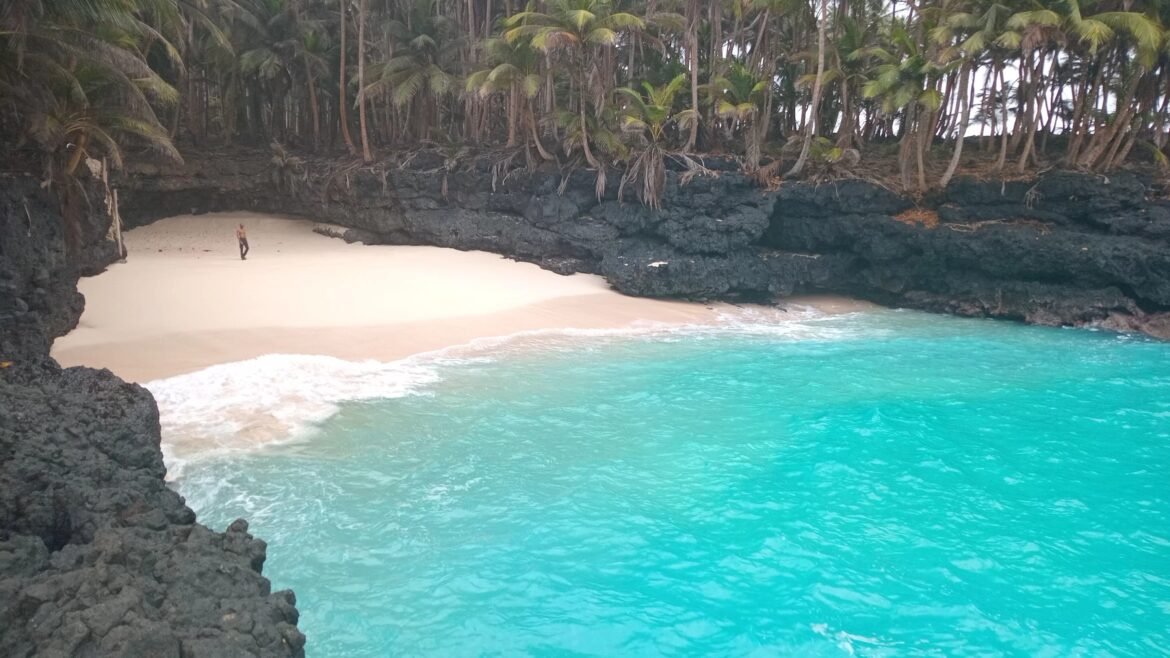
Uma excursão pelas praias pode incluir diferentes paragens, como Praia Jalé, Praia Inhame, Praia Piscina, Praia Cabana e outras zonas costeiras, dependendo das condições da estrada e do tempo disponível.

A Praia Jalé, por exemplo, aparece entre as atrações mais procuradas pelos visitantes de São Tomé e Príncipe.

Este tipo de passeio permite aproveitar o dia sem ficar limitado a uma única praia. O visitante pode conhecer diferentes paisagens, tomar banho de mar, fazer fotografias e almoçar com gastronomia local.

Para famílias e casais, pode ser uma excelente opção para combinar relaxamento e descoberta.

Ideal para: praia, famílias, casais, fotografia e viajantes que procuram tranquilidade.

7. Excursão de natureza e mangal de Malanza

Uma das experiências diferentes no sul da ilha é a visita ao mangal de Malanza.

O Ministério do Turismo de São Tomé e Príncipe destaca o passeio tradicional de canoa pelo rio Malanza, no maior mangal do país. A experiência permite observar a vegetação característica do ecossistema, aves e outros elementos da fauna local.

O passeio de canoa proporciona uma perspetiva completamente diferente da ilha. Em vez de percorrer estradas ou trilhos, o visitante entra num ambiente aquático rodeado por mangais.

É uma atividade especialmente interessante para quem gosta de natureza, fotografia e observação de fauna.

A experiência pode também ser combinada com outros pontos do sul, criando um programa de dia inteiro.

Ideal para: ecoturismo, famílias, fotógrafos, observadores de aves e amantes da natureza.

8. Tour histórico e cultural pela cidade de São Tomé

Nem todas as melhores excursões precisam de sair da cidade.

A cidade de São Tomé oferece uma experiência cultural importante para compreender o arquipélago. Um passeio guiado pode incluir monumentos históricos, igrejas, mercados, edifícios antigos, espaços culturais e zonas relacionadas com a história da cidade.

Uma visita guiada permite conhecer não apenas os edifícios, mas também as histórias e tradições relacionadas com a população local.

O Mercado de São Tomé, por exemplo, pode proporcionar contacto com produtos locais, frutas tropicais, especiarias, peixe e outros elementos da vida quotidiana.

Para quem tem apenas um dia ou algumas horas disponíveis, o city tour pode ser uma excelente introdução ao país.

Ideal para: primeira visita, cultura, história, gastronomia e viajantes com pouco tempo.

9. Excursão às roças históricas de São Tomé

As antigas roças de São Tomé e Príncipe são fundamentais para compreender a história económica e social do país.

Durante décadas, as plantações de cacau e café desempenharam um papel importante na economia das ilhas. Atualmente, algumas antigas estruturas agrícolas continuam a fazer parte da paisagem e constituem pontos de interesse cultural e histórico.

Uma excursão pelas roças pode incluir visitas a antigas instalações, plantações, secadores, hospitais, casas e outros elementos da arquitetura agrícola.

O grande valor deste roteiro está na possibilidade de combinar história com contacto com comunidades e paisagens rurais.

Para melhorar a experiência, é aconselhável realizar a visita com um guia local que consiga explicar o significado das diferentes estruturas e a evolução da produção de cacau e café.

Ideal para: história, cultura, arquitetura, fotografia e turismo responsável.

10. Excursão de observação de golfinhos, baleias e vida marinha

São Tomé também oferece possibilidades para quem quer explorar o ambiente marinho.

Dependendo da época do ano, das condições do mar e da localização, podem existir oportunidades de observação de diferentes espécies marinhas.

Alguns operadores turísticos apresentam experiências de observação de baleias, com determinadas épocas do ano sendo mais adequadas para essa atividade.

As excursões marítimas devem ser realizadas com operadores experientes, respeitando as regras de segurança e de observação responsável dos animais.

A experiência pode ser complementada com snorkeling, observação da costa ou simplesmente um passeio de barco pelas águas de São Tomé.

Ideal para: famílias, casais, fotógrafos, amantes do mar e observadores de fauna.

Como escolher a melhor excursão em São Tomé?

A melhor excursão depende principalmente do tipo de experiência que o visitante procura.

Se o objetivo é praia e relaxamento, as praias do sul e o Ilhéu das Rolas são excelentes opções.

Para quem prefere história e cultura, a cidade de São Tomé, as roças e a Rota do Cacau oferecem experiências diferentes.

Quem procura natureza e aventura pode escolher o Parque Natural Obô, Lagoa Amélia, Cascata de São Nicolau ou a região do Pico Cão Grande.

Já os interessados em gastronomia e produtos locais podem combinar visitas às roças de café e cacau com refeições tradicionais.

Outro fator importante é o tempo disponível. Um visitante com apenas dois ou três dias deve escolher roteiros estratégicos, enquanto quem permanece uma semana pode distribuir as excursões pela ilha e incluir diferentes experiências.

Quantos dias são necessários para conhecer São Tomé?

Para uma primeira experiência, 4 a 5 dias permitem conhecer vários dos principais pontos da ilha de São Tomé.

Um programa de cinco dias pode, por exemplo, combinar:

Dia 1: Cidade de São Tomé e experiência cultural.

Dia 2: Rota do Cacau e Norte.

Dia 3: Rota do Café e interior da ilha.

Dia 4: Sul, praias e Pico Cão Grande.

Dia 5: Ilhéu das Rolas e Marco do Equador.

Quem tiver mais tempo pode acrescentar caminhadas, observação de aves, experiências gastronómicas, passeios de barco e visitas mais profundas às comunidades e roças.

Por que fazer excursões com um guia local?

São Tomé e Príncipe é um destino onde o acompanhamento de um guia local pode acrescentar bastante valor à viagem.

O guia conhece as estradas, condições locais, horários, histórias, comunidades, pontos de interesse e particularidades de cada região.

Além disso, um roteiro privado permite adaptar o ritmo da viagem às necessidades do visitante. Uma família pode preferir mais tempo nas praias; um fotógrafo pode precisar de mais tempo em determinados miradouros; e um viajante interessado em história pode dedicar mais horas às roças.

Para quem procura uma experiência personalizada, empresas locais como a e outros operadores turísticos sediados em São Tomé oferecem diferentes serviços relacionados com excursões e turismo local.

Reserve a sua excursão em São Tomé e Príncipe

São Tomé e Príncipe não é apenas um destino de praias tropicais. É um país onde natureza, história, cultura, cacau, café, floresta, vulcões, gastronomia e mar se encontram numa área relativamente pequena.

As 10 excursões apresentadas neste guia permitem conhecer diferentes lados do arquipélago: desde o Marco do Equador no Ilhéu das Rolas até às montanhas do interior, das antigas roças às praias do sul e da floresta do Obô ao mangal de Malanza.

O mais importante é escolher um programa adequado ao seu tempo, interesses e condição física.

Se pretende conhecer São Tomé de forma mais completa, uma boa estratégia é combinar um roteiro cultural, uma excursão de natureza, uma rota histórica, um dia de praia e uma experiência no sul ou no Ilhéu das Rolas.

Com um bom planeamento e acompanhamento local, cada dia pode transformar-se numa nova descoberta.

São Tomé e Príncipe espera por si. Explore, descubra, conheça a cultura local e leve consigo experiências que vão muito além das fotografias.
0 comment
0 FacebookTwitterPinterestEmail
Praia Melão São Tomé: History, Sugar Heritage and Archaeological Tourism

Praia Melão São Tomé is a fascinating destination for travelers who want to discover a different side of São Tomé and Príncipe. Beyond its tropical beaches, lush forests and spectacular landscapes, São Tomé Island has a remarkable historical heritage connected to agriculture, colonial architecture, plantations and the development of the sugar and cocoa economies.

Located on São Tomé Island, Praia Melão is particularly interesting because of its historical association with the island’s former sugar production. Today, the remains and landscape connected with this period provide an opportunity to understand an important chapter in the history of São Tomé and Príncipe.

A visit to Praia Melão can therefore become much more than a simple excursion. It can be a cultural and historical journey through the transformation of São Tomé Island, from its early agricultural development to the plantation economy that later shaped much of the country’s identity.

For visitors interested in historical tourism in São Tomé, archaeological sites in São Tomé, plantations, colonial heritage and authentic local experiences, Praia Melão offers an unusual and meaningful destination to explore.

Where Is Praia Melão in São Tomé?

Praia Melão is located on São Tomé Island, in the Democratic Republic of São Tomé and Príncipe. The area can be visited as part of a cultural or historical tour departing from São Tomé city.

Its location makes it possible to combine the visit with other attractions and historical places on the island. Depending on the itinerary, travelers can explore plantations, old agricultural facilities, villages, beaches, viewpoints and other locations connected with São Tomé’s history.

One of the advantages of visiting Praia Melão with a local guide is that the landscape can be interpreted in its historical context. What may initially appear to be ruins, vegetation or old structures can reveal important information about how agricultural production was organized in the past.

This is particularly valuable for travelers who want to understand São Tomé beyond the conventional tourist attractions.

The Historical Importance of Praia Melão

The history of Praia Melão is associated with the development of agricultural production on São Tomé Island.

São Tomé became an important agricultural territory during the Portuguese colonial period. Sugar was one of the earliest major commercial crops introduced to the island, and the development of sugar plantations had a profound impact on its economy, population and landscape.

Large agricultural estates, known locally as roças, became an important characteristic of São Tomé. These plantation complexes included agricultural areas, processing facilities, houses, warehouses, roads and other structures required for production.

Praia Melão is connected with this broader historical landscape.

The remains associated with former sugar production are important because they help visitors visualize an economic system that played a major role in the development of the island.

Although much of the original infrastructure has changed or disappeared over time, archaeological remains and the surrounding landscape can still provide clues about the past.

Praia Melão and the History of Sugar Production

Sugar was one of the first crops to become economically important in São Tomé.

During the early period of Portuguese settlement, the island’s tropical climate and fertile volcanic soils offered favorable conditions for sugarcane cultivation. The development of sugar plantations transformed parts of the island into intensive agricultural zones.

Sugar production required much more than planting sugarcane.

The process involved cultivating and harvesting the cane, transporting it to processing facilities, extracting juice, concentrating it through heating and producing sugar and related products.

This required specialized infrastructure and considerable organization.

The remains associated with historical sugar production therefore have archaeological importance. They can help researchers and visitors understand the technology, labor organization and economic structures used during different periods of São Tomé’s history.

For this reason, a Praia Melão tour in São Tomé can be especially interesting for people who enjoy cultural tourism and historical interpretation.

What Can Visitors Discover at Praia Melão?

A visit to Praia Melão is an opportunity to observe the relationship between the natural environment and São Tomé’s historical agricultural landscape.

Depending on the condition and accessibility of individual remains, visitors may encounter traces of former structures, old plantation areas and archaeological evidence associated with historical agricultural activities.

The surrounding vegetation is also an important part of the experience.

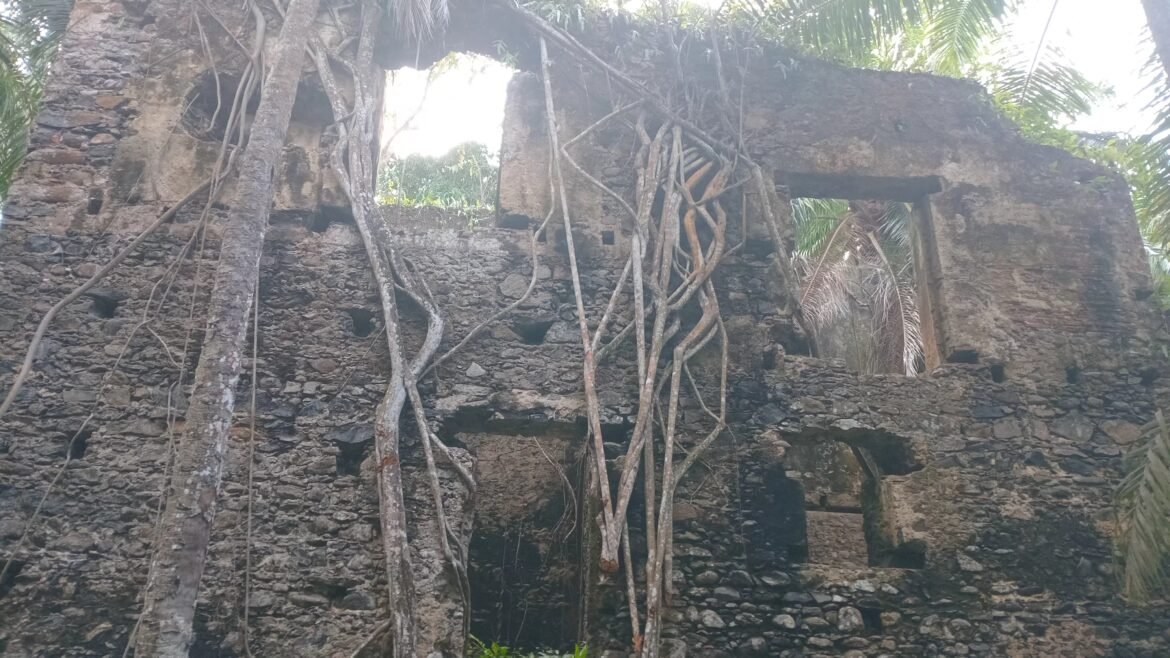
São Tomé’s tropical climate means that abandoned or partially abandoned historical areas can gradually become surrounded by vegetation. Trees, plants and roots may grow around old structures, creating a distinctive atmosphere in which nature and history coexist.

This combination makes Praia Melão particularly attractive for travelers interested in São Tomé cultural heritage.

Rather than visiting a conventional museum, travelers can experience history directly within the landscape.

Archaeological Heritage of Praia Melão

The archaeological dimension of Praia Melão deserves particular attention.

Archaeology is not limited to famous monuments or spectacular ruins. Small structural remains, foundations, fragments of industrial installations and the layout of historical agricultural spaces can all contribute to our understanding of the past.

At Praia Melão, the historical landscape can be interpreted as part of the wider evolution of São Tomé’s plantation economy.

The remains associated with agricultural and industrial activities can help explain how production was organized and how plantations interacted with settlements, transportation routes and the surrounding environment.

For visitors, this makes a guided tour especially valuable.

A professional local guide can explain what travelers are seeing, distinguish historical structures from later modifications and provide information about the broader context of the site.

Understanding São Tomé Through Its Plantation Heritage

To understand São Tomé today, it is important to understand its plantation history.

The island’s economy was shaped by different agricultural cycles. Sugar was particularly important during the early colonial period, while coffee and cocoa later became central to the plantation economy.

The famous roças of São Tomé and Príncipe became large and complex agricultural systems.

Many included administrative buildings, workers’ housing, hospitals, churches, warehouses, agricultural facilities and processing installations.

Some plantation complexes have survived relatively well, while others are now partially ruined or integrated into modern communities.

Praia Melão contributes to this wider historical story.

Visiting the site allows travelers to look beyond São Tomé’s beaches and discover the economic and cultural forces that shaped the island.

Why Visit Praia Melão With a Local Guide?

Exploring historical sites without interpretation can sometimes be difficult.

An old wall may simply look like an old wall. A foundation may appear to be little more than stones covered by vegetation. However, when a guide explains its possible function and historical context, the same structure can become part of a much larger story.

A local guide can help visitors understand:

– The history of sugar production in São Tomé
– The development of plantation agriculture
– The importance of the roça system
– Traditional agricultural practices
– The relationship between plantations and local communities
– Historical architecture and industrial remains
– The cultural transformation of São Tomé
– The importance of preserving historical heritage

This makes a guided Praia Melão tour particularly suitable for travelers interested in history, culture, photography and educational experiences.

Praia Melão for Cultural Tourism

Cultural tourism is becoming increasingly important for travelers looking for authentic experiences.

Many visitors to São Tomé arrive because of the country’s tropical beaches, biodiversity and beautiful landscapes. However, the island also offers a deep cultural and historical experience.

Praia Melão provides an opportunity to combine nature with history.

Visitors can explore the landscape, learn about the island’s agricultural past and understand how historical economic activities influenced local communities.

This type of experience is different from a standard sightseeing tour.

It encourages travelers to slow down, observe the environment and listen to the stories connected with the place.

A Different Experience From São Tomé’s Beaches

São Tomé is internationally appreciated for its beaches and tropical landscapes.

Places such as Praia Jalé, Praia Inhame and other coastal destinations offer opportunities for swimming, relaxation and nature experiences.

Praia Melão offers something different.

Instead of focusing primarily on the sea, the experience is centered on history, agriculture, archaeology and cultural heritage.

For travelers staying several days on São Tomé Island, combining a historical visit with beach excursions can create a more complete itinerary.

A day can include cultural attractions in the morning, a plantation or historical site during the afternoon and a coastal destination later in the day.

Photography at Praia Melão

Historical sites surrounded by tropical vegetation can provide excellent opportunities for photography.

The contrast between old structures and the green environment creates a distinctive visual atmosphere.

Travelers interested in documentary photography may also find the site interesting because it illustrates the relationship between human activity and the tropical environment.

However, visitors should photograph respectfully and avoid climbing unstable structures or removing archaeological objects.

Historical remains are part of the cultural heritage of São Tomé and should be preserved for future generations.

Responsible Tourism at Historical Sites

Responsible tourism is particularly important when visiting archaeological and historical locations.

Visitors should avoid damaging walls, moving stones, collecting fragments or entering unsafe structures.

It is also important to respect local communities living around historical areas.

Traveling with a local tourism company can help visitors understand appropriate behavior and support the local economy.

Responsible tourism also means recognizing that historical sites may contain difficult aspects of the past.

The history of plantation agriculture in São Tomé includes subjects such as forced labor, colonial exploitation and social inequality. These subjects should be approached with respect and historical context rather than treated simply as tourist attractions.

A responsible guided tour can acknowledge the complexity of this history while helping visitors understand how São Tomé developed into the country it is today.

How to Include Praia Melão in a São Tomé Tour

Praia Melão can be incorporated into a wider cultural and historical itinerary.

For example, a private tour can combine Praia Melão with other attractions related to São Tomé’s plantation history, colonial heritage, local communities and natural landscapes.

A customized itinerary may include:

São Tomé City – Discover the capital, historic buildings, markets and local culture.

Praia Melão – Explore the historical landscape and remains associated with sugar production.

Plantation heritage – Learn about the development of the roças and the agricultural economy.

Local villages – Experience contemporary life and interact respectfully with local communities.

Nature attractions – Combine cultural tourism with São Tomé’s forests, waterfalls and viewpoints.

Coastal areas – Finish the day at one of the island’s beautiful beaches.

The exact itinerary can be adapted according to the interests, available time and mobility of each traveler.

Praia Melão as an Educational Experience

Praia Melão can also be valuable for students, researchers and travelers with a particular interest in African history and colonial heritage.

The site offers an opportunity to connect historical information with physical evidence in the landscape.

Instead of learning only through books or photographs, visitors can observe the environment in which historical economic activities took place.

This creates a more tangible understanding of São Tomé’s past.

For schools, universities, cultural organizations and specialized travel groups, historical tours can be organized around themes such as plantation archaeology, colonial history, agricultural development and cultural heritage.

Best Way to Experience Praia Melão

For a first-time visitor, a private guided tour of Praia Melão can provide a more informative experience than simply visiting the location independently.

A private tour allows the itinerary to be adapted to the traveler’s interests and schedule.

Visitors can ask questions, stop for photographs and spend more time at places that interest them.

For international travelers, having a guide who speaks English or another international language can also make historical explanations easier to understand.

Local knowledge is especially valuable because São Tomé’s history is deeply connected to its landscape, communities and oral traditions.

Discover Praia Melão With Voltours

For travelers looking for an authentic cultural experience in São Tomé, Voltours can organize private and guided excursions that include historical and cultural attractions such as Praia Melão.

The objective is to provide visitors with more than transportation from one location to another. A well-organized tour should help travelers understand the places they visit.

A Praia Melão experience can be adapted for couples, families, private travelers, small groups, photographers, cultural tourists and travelers interested in the history of São Tomé and Príncipe.

Depending on the itinerary, the experience can include transportation, a professional local guide and visits to additional attractions.

Travelers can contact Voltours before arrival to discuss their interests and create an itinerary according to their available time.

Why Praia Melão Deserves a Place on Your São Tomé Itinerary

Praia Melão represents an important part of São Tomé’s historical landscape.

The destination provides an opportunity to explore the island’s agricultural past, understand the importance of sugar production and observe the remains of a historical economic system.

For travelers interested in history, archaeology, cultural tourism and authentic experiences in São Tomé, Praia Melão offers a different perspective on the island.

The experience becomes even more meaningful when combined with the stories of the plantations, the evolution of agriculture and the people who shaped São Tomé’s history.

São Tomé is not only a destination of beaches and tropical forests. It is also an island of historical memory.

From old plantations to archaeological remains, from colonial architecture to local communities, every part of the island can reveal another chapter of its story.

Praia Melão São Tomé is one of those places where history and nature meet.

If you want to discover this lesser-known side of São Tomé and Príncipe, consider adding Praia Melão to your itinerary and exploring it with a knowledgeable local guide.

Book your private Praia Melão tour with Voltours and discover the historical and cultural heritage of São Tomé through a local perspective.
0 comment
0 FacebookTwitterPinterestEmail
Praia Melão Sugar Mill: A Journey Through the Archaeological History of São Tomé and Príncipe

São Tomé and Príncipe is widely known for its tropical landscapes, volcanic mountains, beautiful beaches, cocoa plantations and lush rainforests. However, beyond its natural beauty lies another extraordinary dimension of the country: a rich history shaped by Portuguese colonisation, sugar production, plantation agriculture, Atlantic trade, African cultures and the lives of thousands of people who contributed to the development of the islands.

One of the most fascinating places to discover this history is the Praia Melão Sugar Mill, an archaeological site located on São Tomé Island, close to the coast and near the Manuel Jorge River.

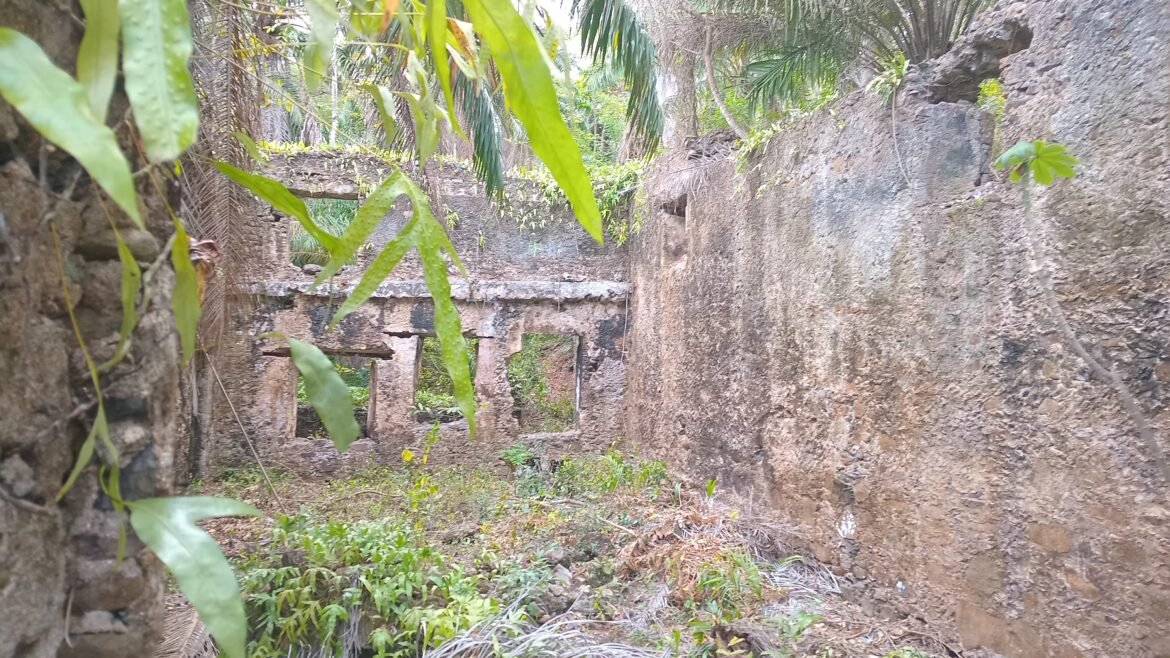
The ruins of Praia Melão provide an exceptional opportunity to understand the early sugar plantation system of São Tomé and its connection with the wider Atlantic world. Archaeological research identifies Praia Melão as the largest known plantation and sugar mill on the island, active from the 16th to the 18th century. It is also the subject of the first archaeological project carried out in São Tomé and Príncipe.

Today, a visit to Praia Melão is much more than a sightseeing experience. It is a journey into the history of sugar, colonialism, technology, archaeology, African societies and the formation of the modern Atlantic world.

Where Is Praia Melão Sugar Mill?

The archaeological site of Praia Melão is located near the Manuel Jorge River, south of the fishing village of Praia Melão and approximately five kilometres south of São Tomé city.

Its location is particularly important because water played a central role in the operation of many historical sugar mills on the island.

Most of São Tomé’s early sugar mills were associated with rivers and streams descending from the central highlands towards the coast. Water could be channelled and used as a source of mechanical energy, making it possible to operate machinery for processing sugar cane.

This relationship between the river, landscape and mill is one of the most interesting aspects to explore during a historical tour.

Instead of seeing the ruins simply as an abandoned stone building, visitors can begin to understand them as part of a much larger agricultural and industrial landscape.

The Origins of Sugar Production in São Tomé

Sugar production became increasingly important in São Tomé after Portuguese colonisation.

During the 16th century, the island developed a plantation economy based largely on sugar cane. The production system required agricultural land, labour, water, transportation, processing facilities and access to international markets.

The sugar produced on São Tomé became connected to commercial networks extending across the Atlantic.

Historical research indicates the enormous scale of the sugar industry on the island. By 1595, there were reportedly around 95 sugar mills, and by 1600 the number had reached approximately 120. Some mills employed more than 200 enslaved workers.

Praia Melão developed within this wider sugar-producing landscape and eventually became one of the most important estates on the island.

Praia Melão: A Major Sugar Plantation

Praia Melão was not simply a small agricultural property.

Archaeological and historical research describes it as the largest plantation and sugar mill on São Tomé, operating from the 16th to the 18th century.

The estate combined agricultural production with industrial processing.

Sugar cane had to be cultivated, harvested and transported to the mill. Once there, the cane was processed to extract its juice, which could then be transformed into sugar through several stages.

The mill was therefore the industrial centre of the plantation.

The surrounding agricultural landscape supplied the raw material, while the mill provided the technology necessary to transform cane into a valuable commercial product.

This combination of agriculture, technology, labour and trade made places such as Praia Melão important elements in the development of the early Atlantic plantation system.

How Did the Sugar Mill Work?

One of the most remarkable features of Praia Melão is its hydraulic technology.

Archaeological investigations have identified remains associated with a water channel, or levada, positioned above the building. Evidence suggests that water was directed towards a vertical water wheel, which supplied mechanical power to the mill.

In simplified form, the system can be imagined as:

River → water channel → water wheel → mechanical power → sugar-processing machinery

This technology allowed the natural energy of flowing water to be transformed into mechanical energy.

For visitors interested in engineering and historical technology, Praia Melão offers an extraordinary opportunity to understand how people adapted the island’s natural environment to support industrial production centuries ago.

The river was not merely part of the landscape. It was an essential component of the production system.

The Architecture of Praia Melão

The surviving building is another important element of the archaeological site.

The structure was built in stone and developed over time through modifications and extensions. It has a rectangular layout and two floors, with internal stairs connecting the levels.

Archaeological research has found substantial quantities of roof-tile fragments, indicating that the building was roofed with tiles. Excavations carried out in 2023 recovered approximately 105 kilograms of roofing ceramics, mostly from the upper layers of the excavation.

The surviving walls are remarkably substantial, with many sections reaching several metres in preserved height.

However, the building is in a vulnerable condition. Parts of the walls and entrances have collapsed, and the original roof is no longer present.

This makes archaeological research and heritage conservation especially important.

The People Behind the Sugar

The history of Praia Melão cannot be understood solely through its architecture or technology.

The sugar economy of São Tomé was deeply connected to the enslavement of African people.

Enslaved people performed much of the agricultural and industrial labour required to maintain the plantation system. Archaeological research at Praia Melão therefore investigates not only sugar-production infrastructure but also structures and material evidence associated with the control of enslaved populations.

This part of the site’s history deserves particular attention.

A responsible historical tour should explain that the wealth generated by sugar production came within a system involving forced labour, violence and severe restrictions on human freedom.

Understanding this difficult history is essential to understanding São Tomé’s past.

Resistance and Social Change

The history of São Tomé’s sugar plantations also includes resistance.

During the late 16th and early 17th centuries, several sugar mills were affected by uprisings and revolts involving enslaved people. These conflicts contributed to the decline of São Tomé’s central role in the sugar economy.

The archaeological landscape therefore represents more than economic success.

It also contains evidence of a society marked by unequal power relationships, resistance and profound social transformation.

For modern visitors, this provides an opportunity to learn about the different communities and experiences that shaped São Tomé and Príncipe.

The Decline of the Sugar Industry

São Tomé’s sugar industry declined significantly during the 17th century.

Several factors contributed to this transformation, including competition from other Atlantic sugar-producing regions, economic changes and social conflicts.

However, Praia Melão did not simply disappear when sugar production declined.

The plantation adapted to changing circumstances and continued to be used for other activities. Research indicates that the estate later became associated with the production of sugar-cane spirit and cassava flour.

This transformation demonstrates how historical plantations could change their economic functions over time.

The ruins we see today are therefore the result of several periods of occupation and adaptation.

Archaeology at Praia Melão

One of the most important chapters in the recent history of Praia Melão began with archaeological research in the 21st century.

The project represents a major development in the study of São Tomé’s material history.

According to the research published in 2025, Praia Melão is the subject of the first archaeological project in São Tomé and Príncipe. Excavation campaigns, including work undertaken in 2022 and 2023, have provided new information about the structure of the mill and its relationship with sugar production and plantation society.

Archaeology is particularly valuable because written documents tell only part of the story.

Buildings, ceramics, water-management systems, architectural remains and other objects can provide evidence about how people actually lived and worked.

At Praia Melão, archaeology helps bring together these different sources of information.

Why Is Praia Melão Important?

Praia Melão is important not only because it is an old building.

Its significance extends far beyond the physical ruins.

The site helps researchers understand the development of plantation agriculture in Africa and the role of São Tomé in the emergence of the early modern Atlantic world.

The history of Praia Melão connects several themes:

Portugal → São Tomé → sugar → plantation agriculture → forced labour → Atlantic trade → African societies → the modern Atlantic world

This makes the site relevant not only to visitors interested in São Tomé’s history but also to travellers interested in African history, archaeology, colonial heritage and the history of global trade.

A Historical Tour to Praia Melão

A Praia Melão Sugar Mill Tour can be an excellent addition to a cultural itinerary in São Tomé.

The experience can begin in São Tomé city, travelling towards Praia Melão with a professional local guide.

During the journey, visitors can learn about the island’s colonisation, the introduction and development of sugar production, the plantation system and the importance of rivers to the old mills.

At Praia Melão, the guide can introduce the archaeological site and explain the surviving structures.

The tour can focus on:

– The history of Praia Melão;
– The development of sugar production;
– The architecture of the old mill;
– The hydraulic system;
– The Manuel Jorge River;
– The plantation landscape;
– Archaeological discoveries;
– The history of enslaved labour;
– Resistance and social change;
– The decline of the sugar economy;
– The importance of heritage preservation.

This approach transforms a simple visit into an educational cultural experience.

Who Should Visit Praia Melão?

Praia Melão is particularly interesting for travellers who want to experience a different side of São Tomé.

The site is ideal for people interested in:

– Archaeology;
– African history;
– Colonial history;
– Sugar production;
– Cultural tourism;
– Heritage tourism;
– Historical architecture;
– Plantation landscapes;
– Photography;
– Educational travel.

It can also be an interesting experience for students, researchers, historians, photographers and travellers who want to move beyond conventional beach tourism.

São Tomé has extraordinary natural attractions, but understanding its history makes the destination even richer.

Responsible Heritage Tourism

Because Praia Melão is an archaeological site, visitors should treat the location with care.

The ruins are vulnerable, and archaeological materials should never be removed from the site.

Visitors should avoid climbing unstable walls, moving stones, collecting ceramics or damaging surfaces.

They should also avoid writing on the walls or leaving any marks.

A responsible visitor understands that archaeological remains belong to the cultural heritage of the country and should be protected for future generations.

Tourism can contribute positively to this process by increasing awareness of the site’s importance and encouraging interest in preservation.

Discover São Tomé Beyond the Beaches

Many travellers arrive in São Tomé looking for tropical beaches, forests and adventure.

These experiences are an important part of the destination, but the island has another story waiting to be discovered.

The ruins of Praia Melão reveal a chapter of São Tomé’s history that connects the island to major transformations in the Atlantic world.

Here, the visitor can see how water, agriculture, architecture and technology were brought together to create an early sugar-processing system.

At the same time, the site encourages reflection on the human cost of that economic system and the experiences of the people who lived and worked within it.

This combination of history, archaeology and landscape makes Praia Melão a distinctive cultural destination.

Plan Your Praia Melão Historical Experience

A visit to the Praia Melão Sugar Mill is an opportunity to discover a lesser-known side of São Tomé and Príncipe.

Instead of simply passing through the landscape, visitors can learn how the island was transformed by sugar production and how São Tomé became connected to wider Atlantic networks.

With a local professional guide, the experience becomes much more meaningful. Historical information, archaeological evidence and local knowledge can be brought together to explain what happened at the site and why it remains important today.

For travellers looking for an authentic cultural experience, Praia Melão offers something different: a journey through the archaeological history of São Tomé and Príncipe.

Conclusion

The Praia Melão Sugar Mill is one of the most significant archaeological heritage sites associated with the history of sugar production in São Tomé and Príncipe.

Active from the 16th to the 18th century, it was once the island’s largest known plantation and sugar mill. Its surviving architecture, hydraulic infrastructure and archaeological remains provide valuable evidence about sugar production and plantation society.

But Praia Melão is also a place of human history.

Its story includes colonial expansion, African societies, forced labour, resistance, technological adaptation, economic transformation and the development of the Atlantic world.

The archaeological research carried out in recent years is helping to recover this history and protect a fragile heritage that might otherwise disappear.

Today, visiting Praia Melão offers travellers an opportunity to look beyond the postcard image of São Tomé and discover the deeper story of the island.

Explore Praia Melão, walk through its historic landscape and discover the archaeological heritage of São Tomé and Príncipe.

A journey to Praia Melão is not simply a visit to an old sugar mill.

It is a journey through centuries of history.
0 comment
0 FacebookTwitterPinterestEmail
Como Pode Ser Feita uma Visita Guiada em São Tomé e Príncipe

São Tomé e Príncipe é um destino turístico único no Golfo da Guiné, conhecido pelas suas paisagens tropicais, praias de águas cristalinas, antigas roças de cacau e café, florestas exuberantes, cultura, gastronomia e hospitalidade. Para quem visita o arquipélago pela primeira vez, uma das melhores formas de conhecer o país é através de uma visita guiada em São Tomé e Príncipe.

Uma visita guiada não significa apenas deslocar-se de um ponto turístico para outro. Trata-se de uma experiência organizada em que o visitante tem a oportunidade de conhecer a história, a natureza, a cultura e as tradições locais com o acompanhamento de um guia que conhece o território e pode explicar os lugares visitados.

Dependendo do interesse do viajante, a visita pode ser realizada na cidade de São Tomé, no norte, centro ou sul da ilha, ou ainda incluir experiências em outras zonas do arquipélago. Pode durar algumas horas, um dia inteiro ou fazer parte de um programa de vários dias.

O que é uma visita guiada em São Tomé e Príncipe?

Uma visita guiada é uma atividade turística realizada com o acompanhamento de um profissional ou conhecedor local que orienta os visitantes durante o percurso.

Em São Tomé e Príncipe, esse tipo de experiência pode combinar diferentes elementos: transporte, acompanhamento de guia, visitas culturais, contacto com comunidades locais, observação da natureza, praias, gastronomia e atividades ao ar livre.

O grande benefício é que o visitante não precisa simplesmente observar uma paisagem ou um edifício histórico. O guia pode explicar a sua origem, importância e relação com a história do país.

Por exemplo, ao visitar uma antiga roça de cacau, o turista pode conhecer a importância que a produção de cacau teve para a economia de São Tomé e Príncipe, observar a arquitetura colonial e compreender melhor a realidade histórica dessas comunidades.

Como organizar uma visita guiada?

O primeiro passo é definir o objetivo da visita. Nem todos os viajantes procuram a mesma experiência.

Alguns querem conhecer a cidade de São Tomé e os principais monumentos. Outros preferem praias, natureza e aventura. Há também visitantes interessados em cacau, café, história, fotografia, observação de aves, caminhadas ou gastronomia.

Depois de identificar os interesses do visitante, pode ser criado um itinerário adequado ao tempo disponível.

Uma visita de meio dia pode concentrar-se na cidade ou numa determinada região. Uma visita de dia inteiro permite combinar vários pontos turísticos. Para quem permanece vários dias no arquipélago, pode ser criado um programa mais completo, distribuindo as experiências entre diferentes regiões.

Visita guiada pela cidade de São Tomé

Para muitos turistas, a cidade de São Tomé é o primeiro contacto com o país.

Uma visita guiada pela capital pode começar pelo centro histórico, onde o visitante encontra importantes edifícios, igrejas, mercados, praças e espaços relacionados com a história do arquipélago.

O percurso pode incluir locais de interesse histórico e cultural, permitindo ao visitante compreender a evolução da cidade e observar a influência portuguesa na arquitetura.

O mercado local também pode fazer parte da experiência. É um espaço interessante para observar produtos locais, frutas tropicais, peixe, especiarias e outros elementos da vida quotidiana.

Durante o passeio, o guia pode explicar os costumes locais, a gastronomia, as tradições e aspetos importantes da sociedade são-tomense.

Para quem dispõe de pouco tempo, um city tour em São Tomé pode ser uma excelente maneira de conhecer a essência da capital.

Visita às roças de São Tomé e Príncipe

As roças são uma das principais atrações culturais e históricas do arquipélago.

São Tomé e Príncipe possui uma história profundamente ligada à produção de cacau e café. As antigas plantações deixaram um importante património arquitetónico e cultural.

Uma visita guiada a uma roça permite observar edifícios históricos, antigas estruturas agrícolas, caminhos, plantações e comunidades.

A experiência pode tornar-se ainda mais interessante quando o visitante tem a oportunidade de conhecer a produção de cacau ou café e conversar com pessoas envolvidas nessas atividades.

A Rota do Cacau é uma possibilidade particularmente interessante para quem deseja compreender a relação entre São Tomé e o cacau.

Já a Rota do Café pode proporcionar uma experiência diferente, permitindo conhecer zonas de produção e paisagens do interior da ilha.

Explorar o norte da ilha

O norte de São Tomé oferece uma combinação interessante de cultura, história e paisagens.

Uma visita guiada pode passar por antigas roças, plantações, comunidades e zonas costeiras.

O percurso deve ser organizado de acordo com o tempo disponível e as condições das estradas.

Uma das vantagens de viajar com um guia local é poder descobrir lugares que muitas vezes não aparecem nos roteiros turísticos mais tradicionais.

Além dos principais pontos turísticos, o visitante pode conhecer pequenas comunidades, ouvir histórias locais e observar aspetos da vida quotidiana que dificilmente seriam percebidos numa visita independente.

Conhecer o centro de São Tomé

O centro da ilha é marcado por uma paisagem mais verde e montanhosa.

Esta região é especialmente interessante para quem procura natureza, caminhadas e contacto com a floresta.

Locais como Bom Sucesso e áreas próximas do Parque Natural Obô podem fazer parte de determinados itinerários, dependendo das condições e do nível físico dos visitantes.

Uma visita guiada nesta região deve ser cuidadosamente preparada, especialmente quando envolve caminhadas.

O guia pode orientar o grupo, explicar as características da floresta, identificar espécies de plantas e aves e ajudar os visitantes a compreender a importância da conservação ambiental.

Para quem gosta de fotografia, esta região oferece excelentes oportunidades para captar paisagens tropicais.

Visita guiada pelo sul da ilha

O sul de São Tomé apresenta algumas das paisagens mais impressionantes do arquipélago.

As praias, a floresta tropical, as roças e as comunidades tornam esta região particularmente atrativa.

Uma visita pode incluir paragens em praias como Jalé, Inhame ou outras zonas costeiras, de acordo com o programa escolhido.

O objetivo não deve ser simplesmente visitar várias praias no mesmo dia. Uma boa visita guiada deve permitir ao turista aproveitar cada lugar, tirar fotografias, descansar e compreender o ambiente que está a conhecer.

O guia também pode fornecer informações sobre segurança, condições do mar e regras de preservação ambiental.

Marco do Equador e Ilhéu das Rolas

Para muitos visitantes, conhecer o Marco do Equador é uma experiência especial.

O local está associado à passagem da linha do Equador e tornou-se um dos pontos de interesse turístico mais conhecidos de São Tomé e Príncipe.

A visita ao Ilhéu das Rolas pode ser organizada como uma excursão de um dia ou integrada num programa de vários dias.

A travessia de barco acrescenta uma dimensão especial à experiência.

No ilhéu, além da visita ao marco, o viajante pode apreciar praias, paisagens tropicais e o ambiente tranquilo da região.

Como as condições marítimas podem variar, é importante considerar o estado do mar e organizar previamente os horários de transporte.

Natureza, cascatas e caminhadas

São Tomé é um destino particularmente interessante para turistas que gostam de natureza.

Uma visita guiada pode incluir caminhadas por trilhos, cascatas, florestas e miradouros.

Locais como a Cascata de São Nicolau, a Cascata N’Gola e outras áreas naturais podem fazer parte de determinados programas, dependendo da acessibilidade e das condições locais.

Para caminhadas mais exigentes, é importante avaliar previamente a condição física dos participantes.

O guia deve explicar o nível de dificuldade, duração aproximada, tipo de terreno e o que levar.

Calçado adequado, água, proteção contra chuva e roupa confortável são normalmente importantes para atividades na natureza.

Observação de golfinhos e experiências marítimas

O mar de São Tomé e Príncipe também oferece oportunidades para experiências relacionadas com a vida marinha.

Dependendo da época, das condições do mar e da disponibilidade das operações locais, podem ser organizadas atividades de observação de golfinhos e outros animais marinhos.

Estas experiências devem ser realizadas de maneira responsável, respeitando as regras de proteção da vida selvagem.

O objetivo é observar os animais sem provocar alterações no seu comportamento natural.

Para o visitante, pode ser uma das experiências mais memoráveis da viagem, especialmente quando combinada com uma paisagem costeira tropical.

Como deve ser o transporte durante uma visita guiada?

O transporte é um elemento importante de uma visita guiada em São Tomé e Príncipe.

Dependendo do itinerário e do tamanho do grupo, pode ser utilizado carro, veículo 4×4, minibus ou outro meio de transporte adequado.

Para determinadas zonas, especialmente áreas rurais e alguns acessos de natureza, um veículo apropriado pode proporcionar maior conforto e segurança.

Uma boa organização deve considerar os horários, distância entre os pontos turísticos, condições das estradas e tempo necessário para cada visita.

Para grupos privados, o itinerário também pode ser adaptado ao ritmo dos participantes.

O papel do guia turístico

O guia é uma das partes mais importantes da experiência.

Um bom guia não deve apenas indicar o nome dos lugares. Deve saber comunicar, contar histórias, responder a perguntas e adaptar a explicação ao perfil dos visitantes.

Um casal, uma família com crianças, um grupo de amigos, um fotógrafo profissional ou um grupo corporativo podem ter necessidades completamente diferentes.

O guia também pode ajudar o visitante a compreender determinados costumes e comportamentos locais.

Além disso, a presença de um profissional local pode facilitar a comunicação com comunidades, restaurantes, operadores marítimos e outros prestadores de serviços.

Visitas guiadas para turistas de diferentes nacionalidades

São Tomé e Príncipe recebe visitantes de diferentes países.

Por isso, a possibilidade de contar com guias que falem diferentes idiomas pode melhorar significativamente a experiência.

Uma equipa turística pode disponibilizar visitas em português, inglês, francês ou outros idiomas, conforme a disponibilidade.

Para turistas internacionais, ter um guia de turismo que fale inglês pode ser particularmente importante, sobretudo em visitas relacionadas com história, cultura e natureza.

A comunicação clara também ajuda a explicar regras de segurança, horários e informações práticas.

Visita guiada privada ou em grupo?

O turista pode escolher entre uma visita privada e uma visita em grupo.

Na visita privada, o itinerário pode ser mais flexível. O grupo pode decidir quanto tempo pretende permanecer em determinado local e adaptar o ritmo da viagem.

Esta opção é interessante para famílias, casais, fotógrafos, viajantes que procuram privacidade ou clientes com necessidades específicas.

As visitas em grupo podem ser uma alternativa mais económica e também permitem conhecer outros viajantes.

A escolha depende do orçamento, do perfil do visitante e do tipo de experiência desejada.

Quanto tempo deve durar uma visita guiada?

Não existe uma duração única.

Uma visita pode durar três ou quatro horas, meio dia, um dia completo ou vários dias.

Para quem está em São Tomé apenas durante uma escala de cruzeiro, por exemplo, pode ser criado um programa mais curto, concentrado nos principais pontos de interesse próximos do porto.

Já para turistas que permanecem uma semana ou mais, pode ser desenvolvido um itinerário completo pela ilha.

Uma boa programação evita excesso de deslocações e permite aproveitar melhor cada experiência.

O que levar para uma visita guiada?

Antes da saída, o visitante deve receber informações básicas sobre o que levar.

Dependendo do programa, podem ser recomendados:

– Água;
– Protetor solar;
– Chapéu ou boné;
– Repelente;
– Calçado confortável;
– Roupa leve;
– Capa de chuva;
– Fato de banho para atividades de praia;
– Máquina fotográfica ou smartphone;
– Pequena mochila.

Para caminhadas, devem ser considerados requisitos adicionais, como calçado apropriado e quantidade suficiente de água.

Uma visita guiada também pode ser uma experiência gastronómica

A gastronomia são-tomense pode complementar perfeitamente um roteiro turístico.

Dependendo do itinerário, o visitante pode experimentar pratos preparados com produtos locais, peixe fresco, frutas tropicais e outros ingredientes tradicionais.

Uma visita a uma comunidade ou restaurante local pode transformar o almoço numa parte importante da experiência cultural.

Mais do que simplesmente comer, o visitante pode conhecer os ingredientes, métodos de preparação e tradições associadas à gastronomia local.

Turismo responsável em São Tomé e Príncipe

Uma visita guiada deve contribuir para um turismo responsável.

Isso significa respeitar a natureza, evitar deixar lixo, respeitar comunidades locais, não danificar património histórico e seguir as orientações dos guias.

Também é importante valorizar os serviços e produtos locais.

Quando o turista utiliza guias locais, restaurantes, transportadores, artesãos e outros pequenos negócios, uma parte maior dos benefícios do turismo permanece na economia local.

Dessa forma, a experiência turística pode contribuir para o desenvolvimento sustentável de São Tomé e Príncipe.

Por que escolher uma visita guiada?

Viajar sozinho pode proporcionar liberdade, mas uma visita guiada oferece conhecimento, organização e acompanhamento.

O visitante pode economizar tempo na preparação do roteiro, receber informações locais e ter apoio durante a atividade.

Além disso, um guia experiente pode adaptar o programa quando surgem alterações nas condições meteorológicas, no trânsito ou na acessibilidade de determinados locais.

O resultado é uma viagem mais organizada e, muitas vezes, mais enriquecedora.

Como pode ser um roteiro completo?

Para quem pretende conhecer diferentes aspetos de São Tomé, uma visita guiada pode ser organizada em vários dias.

Um exemplo seria:

Dia 1 – Cidade de São Tomé: centro histórico, mercado, monumentos e cultura local.

Dia 2 – Rota do Cacau: visita a roças, plantações e experiências relacionadas com o cacau.

Dia 3 – Rota do Café: exploração do interior da ilha e contacto com a produção de café.

Dia 4 – Sul da ilha: praias, paisagens costeiras e comunidades locais.

Dia 5 – Marco do Equador e Ilhéu das Rolas: travessia de barco, visita ao marco e exploração do ilhéu.

O programa pode ser adaptado ao número de dias, interesses e condições dos viajantes.

Conclusão

Fazer uma visita guiada em São Tomé e Príncipe é uma das melhores formas de descobrir o arquipélago de maneira organizada, segura e enriquecedora.

Desde a cidade de São Tomé às antigas roças de cacau e café, passando pelas praias do sul, florestas, cascatas, comunidades, experiências gastronómicas e pelo Marco do Equador, existem muitas possibilidades para criar uma experiência personalizada.

O verdadeiro valor de uma visita guiada está na combinação entre os lugares visitados e o conhecimento de quem acompanha o viajante. Um bom guia ajuda a transformar uma simples excursão numa experiência que permite compreender melhor a história, a cultura, a natureza e as pessoas de São Tomé e Príncipe.

Para quem pretende conhecer o país de forma autêntica, uma visita guiada pode ser organizada de acordo com o tempo disponível, interesses e perfil do viajante.

São Tomé e Príncipe não é apenas um destino para visitar. É um destino para descobrir, sentir e viver.
0 comment
0 FacebookTwitterPinterestEmail
São Tomé Local Operational Support: Reliable On-the-Ground Assistance for Travel Partners

Planning and operating travel services in São Tomé and Príncipe requires more than simply selling a tour or booking accommodation. International travel agencies, tour operators, cruise companies, destination management companies and corporate travel planners need a reliable local partner capable of handling the practical details on the ground.

São Tomé Local Operational Support provides the local knowledge, coordination and operational assistance that international travel partners need to deliver smooth experiences for their clients in São Tomé and Príncipe.

From airport and port assistance to transportation, guides, excursions, local coordination and emergency support, professional local operational assistance can make a significant difference to the quality and reliability of a destination service.

For international companies that do not have their own operational team in São Tomé, working with an experienced local tourism partner can provide a practical and efficient way to manage clients while they are in the country.

What Is São Tomé Local Operational Support?

São Tomé Local Operational Support refers to the range of services provided by a local tourism professional or destination partner to assist international travel businesses with their operations in São Tomé and Príncipe.

The objective is simple: to make sure that travel arrangements planned abroad are properly implemented locally.

An international travel agency may organize a holiday for its clients from Europe, North America, Brazil or another destination. However, once those clients arrive in São Tomé, someone on the ground needs to coordinate transportation, activities, guides, schedules, local suppliers and unexpected situations.

This is where local operational support becomes valuable.

A local partner can act as the connection between the international travel company and the destination itself. Instead of the foreign company trying to coordinate every local detail remotely, the local operator can manage the practical elements directly.

This can include:

– Airport assistance
– Hotel and accommodation coordination
– Private transfers
– Port transfers
– Cruise passenger assistance
– Private tours
– Group excursions
– Professional local guides
– Vehicle arrangements
– Driver services
– Restaurant coordination
– Activity coordination
– Shore excursions
– Last-minute operational assistance
– Local supplier coordination
– Emergency support
– Guest communication
– Itinerary implementation

The exact services can be adapted according to the requirements of each international partner.

Why International Travel Companies Need Local Support

São Tomé and Príncipe is a relatively small island destination, but its tourism environment has its own operational characteristics.

Distances, road conditions, local availability, weather, boat schedules, communication with suppliers and other practical considerations can affect the execution of an itinerary.

An international company may have excellent knowledge of its clients, sales channels and international travel markets, but local operational knowledge is different.

A local partner understands how the destination works in practice.

For example, an itinerary may look straightforward on paper. However, transportation times, road conditions, access to attractions, local opening schedules and weather conditions can influence the real experience.

A local operational team can identify these issues before they become problems.

This creates an important advantage for international partners: they can sell São Tomé with greater confidence because they know that someone reliable is available locally to implement the service.

Local Knowledge Makes a Difference

One of the most important advantages of local operational support is destination knowledge.

São Tomé is not simply a place to visit. It is a destination with different geographical areas, cultural experiences, beaches, plantations, historic sites, forests and communities.

A professional local operator can help international partners understand how to combine these experiences according to the client’s interests and available time.

For example, visitors may be interested in:

– São Tomé city
– Historical and cultural attractions
– Cocoa plantations
– Coffee plantations
– Tropical forests
– Waterfalls
– Beaches
– The south of the island
– The north of São Tomé
– Equator experiences
– Príncipe Island
– Nature and wildlife
– Boat experiences
– Local cuisine
– Photography
– Hiking
– Private excursions

Local operational support helps transform these interests into practical itineraries.

Airport Transfer and Arrival Assistance

The arrival experience is one of the first moments that can influence a traveller’s perception of a destination.

International travel partners may therefore require reliable airport assistance for their clients.

Local operational support can include welcoming passengers, confirming transportation, assisting with transfers and ensuring that clients know how to proceed to their accommodation.

For private travellers, families, executives and VIP guests, this additional level of assistance can create a more professional arrival experience.

For groups, coordination becomes even more important.

A group arriving at the same time may require multiple vehicles, luggage coordination, guide assistance and communication between the local team and the international tour operator.

Having a local operational contact can make the process significantly easier.

Port and Cruise Operational Support

Cruise tourism represents another important area where local operational support can be valuable.

Cruise passengers often have limited time ashore. Their excursions must therefore be organized carefully around the ship’s arrival and departure schedule.

A local cruise support partner can assist with:

– Cruise passenger transfers
– Shore excursions
– Port coordination
– Local guides
– Transportation
– Sightseeing tours
– Private cruise excursions
– Group excursions
– Timing management
– Return-to-ship coordination
– Last-minute operational adjustments

The objective is to provide an efficient experience while respecting the passenger’s limited time in the destination.

For cruise companies and cruise travel agents, reliability is particularly important. A tour that runs late can create serious operational concerns.

Local knowledge and careful timing can therefore become a critical part of cruise ground handling.

Transportation Coordination

Transportation is one of the fundamental components of tourism operations.

A beautiful itinerary cannot work properly if transportation is not reliable.

Local operational support can coordinate appropriate transportation according to the size and requirements of the group.

Services may include:

– Airport transfers
– Hotel transfers
– Private transportation
– Group transportation
– Tour vehicles
– Driver services
– Port transfers
– Full-day transportation
– Multi-day transportation
– Special transportation requirements

The choice of vehicle can depend on the number of passengers, itinerary, road conditions and type of experience required.

International partners benefit from having one local point of coordination instead of communicating separately with multiple transport providers.

Professional Guide Coordination

A professional local guide can transform a standard excursion into a meaningful destination experience.

International visitors often want more than photographs. They want to understand the history, culture, environment and people of São Tomé and Príncipe.

Local guides can provide information about the country’s history, cocoa and coffee production, Portuguese colonial heritage, biodiversity, local traditions and everyday life.

For international tour operators, guide coordination also helps ensure that the service matches the language requirements of their clients.

English-speaking support can be particularly valuable for international markets where English is the preferred communication language.

Other language requirements can be assessed according to availability and the specific needs of each group.

Tailored Support for Travel Agencies and Tour Operators

Every travel company operates differently.

Some agencies sell individual holidays. Others specialize in groups, luxury travel, adventure tourism, corporate travel or cruise passengers.

For this reason, local operational support should not be limited to a standard package.

A professional destination partner can work according to the requirements of the international company.

For example, a travel agency may request a private airport transfer and city tour.

A tour operator may require transportation, guides, meals and excursions for a group.

A cruise company may need port transfers and shore excursions.

A corporate client may require discreet transportation and professional assistance.

The local partner’s role is to understand the operational requirement and coordinate the necessary services.

B2B Local Support for International Partners

São Tomé Local Operational Support is particularly relevant for B2B tourism partnerships.

International companies may already have their own sales teams, websites, customer databases and travel products.

What they may not have is a permanent operational structure in São Tomé.

A local B2B partner can fill this gap.

Instead of establishing an office, recruiting local employees and developing relationships with multiple suppliers, an international company can work with an established local tourism operator.

This can reduce operational complexity while giving the international company access to local expertise.

The relationship can be structured around agreed services, net rates, commissions, individual bookings, groups, cruise operations or customized programs.

Emergency and Last-Minute Assistance

Travel does not always go according to plan.

Flights can be delayed. Guests can arrive late. Vehicles may need to be changed. Weather can affect outdoor activities. A client may require assistance outside the original itinerary.

For international travel companies, dealing with these situations remotely can be difficult.

A local operational partner can provide a point of contact capable of responding to situations within the destination.

Emergency assistance does not necessarily mean medical or security services. In tourism operations, it can also mean practical support such as helping reorganize transportation, contacting suppliers, assisting guests or adapting an itinerary.

The ability to react quickly can protect the traveller’s experience and the international company’s reputation.

Supporting Destination Management

Local operational support is closely connected to Destination Management Company, or DMC, services.

A strong DMC does more than sell tours. It helps international partners operate effectively within the destination.

This can involve combining accommodation, transportation, activities, guides, meals, excursions and local experiences into one coordinated program.

For companies looking to develop São Tomé as a destination product, local operational support can therefore become the foundation for a longer-term partnership.

Instead of purchasing isolated services, an international partner can develop a complete destination program with local assistance.

Why Reliability Matters

International travel companies are ultimately responsible for the experience they sell to their clients.

When something goes wrong in the destination, the traveller may not distinguish between the international agency and the local supplier. The entire travel product can be affected.

This is why choosing the right local partner is important.

A professional local operator should understand the importance of:

– Punctuality
– Clear communication
– Professional conduct
– Reliable transportation
– Proper itinerary planning
– Guest safety
– Supplier coordination
– Fast response
– Flexibility
– Transparency
– Consistent service quality

The objective should always be to protect the client’s experience while maintaining a strong relationship with the international partner.

São Tomé as a Growing Tourism Destination

São Tomé and Príncipe offers an attractive combination of nature, culture, history and tropical landscapes.

The destination can appeal to different tourism segments, including leisure travellers, adventure travellers, nature enthusiasts, couples, families, photographers, cultural travellers and cruise passengers.

Its cocoa and coffee heritage provides opportunities for specialized experiences, while its beaches and forests create possibilities for nature and leisure tourism.

For international travel companies searching for new destinations, São Tomé can offer an opportunity to develop products with a strong local identity.

However, successful destination development requires reliable local execution.

That is why local operational support should be considered an essential part of the B2B tourism structure.

Working With a Local Partner in São Tomé

For an international company considering São Tomé as a new destination product, the first step is to establish clear communication with a reliable local tourism partner.

The partnership can begin with a specific request, such as an airport transfer, private tour, group excursion or cruise shore excursion.

Over time, the relationship can develop into a broader operational partnership.

The local operator can gradually understand the international company’s expectations, preferred service standards, target markets and client profiles.

This creates the possibility of building customized products and long-term cooperation.

Voltours: Your Local Operational Partner in São Tomé and Príncipe

For international travel agencies, tour operators, DMCs, cruise companies and other tourism businesses looking for local assistance, Voltours can serve as a local operational contact in São Tomé and Príncipe.

As a tourism operator based in São Tomé, Voltours can support partners with local tourism services designed around the needs of international visitors and B2B clients.

The objective is to create a practical bridge between international tourism companies and local destination services.

Whether the requirement involves airport transfers, private tours, sightseeing, cruise shore excursions, transportation, professional guides, group services or customized travel programs, local coordination can help international partners operate with greater confidence.

For B2B partners, the most important benefit is having someone locally available who understands the destination and can coordinate the practical aspects of the client’s experience.

Build a Stronger São Tomé Travel Product

Selling São Tomé from another country is one thing. Operating São Tomé successfully for international clients is another.

A reliable local operational partner can connect these two sides.

International travel companies bring the clients, markets, sales expertise and international relationships.

The local tourism operator brings destination knowledge, supplier relationships, transportation coordination, guides and on-the-ground support.

Together, these capabilities can create a stronger and more reliable tourism product.

For travel agencies, tour operators, cruise companies and DMCs interested in expanding their São Tomé portfolio, local operational support can be the key to delivering a smoother experience from arrival to departure.

São Tomé and Príncipe has the potential to become an increasingly attractive destination for international travellers. Developing that potential requires partnerships based on professionalism, communication, flexibility and trust.

São Tomé Local Operational Support is not simply about providing a service. It is about being the local connection that helps international tourism businesses deliver their promises in São Tomé and Príncipe.

For companies looking to establish or expand their presence in the destination, working with a dependable local tourism partner can provide the operational foundation needed to serve clients confidently, develop new travel products and build long-term B2B cooperation.
0 comment
0 FacebookTwitterPinterestEmail

São Tomé Emergency Assistance: Reliable Support for Travelers and Tourism Partners

Traveling to a new country is an exciting experience. Discovering new landscapes, meeting local people, exploring different cultures and experiencing places outside the usual tourist routes can create unforgettable memories.

However, every international trip also requires preparation for unexpected situations.

A delayed transfer, lost luggage, a minor accident, a sudden illness, a communication problem, a vehicle issue or an unexpected change to a travel itinerary can quickly become stressful when travelers are far from home.

This is where São Tomé Emergency Assistance can play an important role.

For visitors traveling to São Tomé and Príncipe, having access to a reliable local contact can provide reassurance and practical support when something unexpected happens.

For travel agencies, tour operators, Destination Management Companies (DMCs), cruise companies and international travel professionals, local emergency assistance can also become an important part of professional destination management.

What Is São Tomé Emergency Assistance?

São Tomé Emergency Assistance refers to local support designed to help travelers and tourism partners deal with unexpected situations during their stay in São Tomé and Príncipe.

The objective is not to replace official emergency services, medical professionals or insurance companies.

Instead, local tourism assistance can help travelers communicate, coordinate and find the appropriate local support when an unexpected situation occurs.

Depending on the circumstances, assistance may involve contacting the appropriate service, helping with transportation, communicating with hotels, coordinating with guides or helping international travel partners understand what is happening locally.

This can be especially valuable for foreign visitors who may not speak Portuguese or who are unfamiliar with the local environment.

Why Emergency Support Matters in São Tomé

São Tomé and Príncipe is an island destination where many travelers enjoy nature, beaches, rainforest, hiking, cultural experiences and excursions.

These experiences are part of the attraction of the destination, but they can also involve situations where travelers need local assistance.

A visitor exploring a remote area may experience a vehicle problem.

A traveler may lose a passport or important personal document.

A tourist may need assistance communicating with a hotel or local service provider.

A cruise passenger may have a problem shortly before returning to the ship.

A family may need help arranging transportation after an unexpected change in plans.

In these situations, having someone familiar with the destination can make communication easier and help organize the next steps.

Emergency Assistance for International Travelers

International travelers can face additional challenges when an unexpected problem occurs.

They may not know:

  • Which local service to contact
  • Where to go
  • How to explain the situation
  • Which transportation is available
  • How to communicate with local providers
  • How to contact their travel agency
  • How to coordinate with their insurance company

A local tourism support team can help bridge this communication gap.

For example, if a traveler has an unexpected transportation problem, local assistance may help communicate with the driver, identify an alternative vehicle and inform the travel partner about the situation.

The goal is to provide practical coordination rather than create additional stress.

Medical Emergencies

Medical emergencies should always be treated as a priority.

If a traveler experiences a serious medical emergency, the appropriate emergency medical services should be contacted immediately.

Local tourism assistance can potentially support the communication and coordination process, particularly when the visitor does not know the local system or does not speak Portuguese.

Depending on the situation, assistance may include helping coordinate transportation, communicating with the hotel or tour operator, contacting relevant local services and helping the travel company remain informed.

Travelers should also have appropriate travel insurance and understand the coverage available to them before arriving in São Tomé and Príncipe.

Emergency assistance is therefore a support and coordination service, not a substitute for professional medical care.

Lost Passport or Important Documents

Losing a passport can be one of the most stressful situations for an international traveler.

The first priority is usually to protect the traveler and determine what happened.

Depending on the circumstances, the traveler may need to contact the appropriate authorities and their country’s embassy or consular representation.

A local tourism partner can help with communication and transportation logistics.

For example, assistance may include helping the traveler understand where they need to go, arranging transportation and communicating with the hotel or travel agency.

International travelers should keep copies of important documents separately from the originals and consider storing secure digital copies.

Lost Luggage

Lost or delayed luggage is another common travel problem.

A traveler arriving in São Tomé without luggage may need help communicating with the airline, airport or travel provider.

Local assistance may help coordinate transportation, communicate the situation to the relevant tourism partner and help the visitor continue their itinerary while the luggage issue is being resolved.

Travelers should keep essential items such as medication, important documents, chargers and basic personal necessities in their hand luggage whenever possible.

Vehicle and Transportation Assistance

Transportation is an essential part of tourism in São Tomé.

Visitors may travel by private vehicle, rental car, taxi, tour vehicle, hotel transfer or organized excursion.

Unexpected vehicle problems can therefore affect an entire itinerary.

A vehicle breakdown during a tour can be particularly stressful when travelers are in an unfamiliar area.

Local assistance can help coordinate communication with the driver or transportation provider and, where possible, arrange an alternative transportation solution.

For tourism companies, this type of operational support can help reduce disruption to the customer’s itinerary.

Cruise Passenger Emergency Assistance

Cruise passengers have a particularly important time constraint.

Unlike travelers staying several days in a hotel, cruise passengers normally have a fixed departure time.

If something unexpected happens during a shore excursion, the situation can become extremely stressful.

São Tomé Emergency Assistance can therefore be relevant to cruise tourism operations.

Possible support areas include:

  • Transportation coordination
  • Communication with excursion operators
  • Communication with cruise partners
  • Assistance after unexpected delays
  • Alternative transportation arrangements
  • Local logistical support
  • Coordination with the passenger’s travel provider

The most important principle is always to prioritize the safety of the passenger and communicate the situation clearly.

Cruise operators and shore excursion companies should also maintain their own operational and emergency procedures.

Emergency Assistance for Tour Operators

International tour operators have a responsibility to their customers even when they are thousands of kilometers away.

A local partner can act as an important point of communication when an unexpected event occurs.

For example, if a tour operator in Europe has a customer experiencing a problem in São Tomé, the operator may need someone locally who can help understand the situation.

A local tourism partner can potentially provide information about the circumstances, coordinate local logistics and keep the international operator updated.

This creates an additional layer of operational support between the traveler and the international company.

Support for Travel Agencies

Travel agencies can also benefit from having a reliable local contact.

An agency may sell a São Tomé holiday without having staff physically present on the island.

When everything goes according to plan, this may not be an issue.

However, if the traveler experiences an unexpected problem, the agency may need local assistance.

A dedicated local contact can help the agency communicate more efficiently with the traveler and destination suppliers.

This can improve customer confidence and strengthen the relationship between the agency and its clients.

Communication Is the First Step

During an emergency, communication is extremely important.

A traveler who is frightened or confused may not know exactly what to do.

A local assistance contact can help establish the basic facts:

Where is the traveler?

What happened?

Is anyone in immediate danger?

What assistance is required?

Who needs to be contacted?

What transportation is available?

Does the traveler have insurance?

These questions help organize the response.

When necessary, official emergency services should always take priority.

Emergency Assistance and Travel Insurance

Travel insurance remains an important part of international travel planning.

Emergency assistance should not be considered a replacement for insurance.

Travelers should check whether their insurance includes:

  • Medical expenses
  • Emergency transportation
  • Trip interruption
  • Lost luggage
  • Lost documents
  • Repatriation
  • Personal liability
  • Other travel-related risks

The exact coverage varies between insurance policies.

Travelers should therefore keep their insurance information easily accessible during the trip.

A local tourism partner can assist with communication and logistics, while the insurance provider manages the services covered under the policy.

Assistance for Families

Families traveling with children may have additional concerns when something unexpected happens.

Parents may need assistance arranging transportation, contacting accommodation providers or communicating with local services.

For family tourism, having a local point of contact can provide additional reassurance.

The objective is to ensure that an unexpected problem does not unnecessarily disrupt the entire holiday.

Emergency Assistance During Nature and Adventure Activities

São Tomé offers opportunities for hiking, rainforest exploration, beach visits and nature-based tourism.

Some experiences take travelers away from major urban areas.

Before participating in outdoor activities, travelers should follow the instructions of their guides and tourism operators.

They should also consider weather conditions, appropriate clothing, footwear, drinking water and communication arrangements.

If a problem occurs during an excursion, the guide or tour operator should follow the established emergency procedure.

Local assistance can then help coordinate communication and transportation where appropriate.

Responsible Emergency Management

Good emergency assistance is not about making unrealistic promises.

It is about having clear procedures, reliable communication and realistic expectations.

A professional tourism company should know its operational limits.

Emergency situations may require cooperation with:

  • Medical services
  • Police
  • Fire and rescue services
  • Hospitals
  • Embassies and consular authorities
  • Airlines
  • Hotels
  • Cruise companies
  • Insurance providers
  • Transportation companies

The role of a tourism assistance provider is to help coordinate the appropriate response rather than attempt to perform services outside its professional competence.

Why International Partners Need Local Support

For international travel businesses, local knowledge can be extremely valuable.

A company based abroad may understand its customers very well but have limited knowledge of São Tomé’s local logistics.

A local partner understands the destination environment, transportation options, tourism infrastructure and communication channels.

This combination creates a stronger tourism operation.

The international company manages the customer relationship and sales process, while the local partner provides destination support.

Building Confidence Before the Traveler Arrives

Emergency assistance should not only exist when something goes wrong.

It should also form part of good travel preparation.

Before arrival, travelers can receive information about:

  • Local emergency procedures
  • Important contact information
  • Travel insurance
  • Passport security
  • Transportation
  • Tour meeting points
  • Hotel information
  • Excursion requirements
  • Local conditions

Good preparation can prevent many problems.

For travel companies, providing clear pre-arrival information also demonstrates professionalism.

B2B Emergency Assistance in São Tomé

São Tomé Emergency Assistance can be particularly valuable as a B2B service.

Travel agencies, tour operators, DMCs, cruise companies and hotels can establish communication procedures with a local tourism partner.

A B2B emergency assistance arrangement can define:

  • Emergency contact procedures
  • Communication channels
  • Response expectations
  • Transportation support
  • Local coordination
  • Escalation procedures
  • Information sharing
  • Partner responsibilities

Having these procedures established before a problem occurs is much better than trying to create a solution during an emergency.

A Local Partner You Can Contact

For international tourism professionals, choosing the right local partner is essential.

The ideal partner should understand the destination, communicate professionally and know when an issue requires official intervention.

A reliable tourism company should prioritize:

Safety first.

Clear communication.

Fast coordination.

Professional conduct.

Respect for local authorities.

Transparent information.

These principles help build confidence between travelers and tourism businesses.

São Tomé Emergency Assistance for a Safer Travel Experience

Travel should be enjoyable, but professional tourism also requires preparation for the unexpected.

São Tomé and Príncipe offers remarkable experiences, from tropical beaches and rainforest landscapes to cultural heritage, cocoa plantations, coffee traditions and island excursions.

Visitors should be able to enjoy these experiences with confidence while knowing that, if an unexpected problem occurs, they have access to a local point of support.

São Tomé Emergency Assistance provides a practical concept for connecting travelers and international tourism companies with local destination support.

Whether the situation involves transportation, communication, lost luggage, documents, itinerary disruption or coordination with official services, local assistance can help travelers and tourism partners navigate unexpected circumstances more efficiently.

For international travel agencies, tour operators, DMCs, cruise companies and hotels, establishing a local emergency assistance contact can become an important part of responsible destination management.

The objective is simple:

When everything goes according to plan, travelers enjoy São Tomé. When something unexpected happens, they know where to turn for local support.

That combination of memorable experiences, professional service and responsible assistance can help create greater confidence in São Tomé as an international tourism destination.

0 comment
0 FacebookTwitterPinterestEmail


São Tomé B2B Net Rates: Professional Tours, Excursions and Ground Services for Travel Partners

São Tomé and Príncipe is becoming an increasingly attractive destination for travelers looking for authentic experiences, tropical landscapes, nature, culture and a slower, more sustainable way of discovering Africa. For travel agencies, tour operators, Destination Management Companies (DMCs), cruise partners and international travel professionals, the destination offers an excellent opportunity to create differentiated travel products.

At the same time, successful B2B cooperation requires reliable local partners, competitive net rates, professional ground services and clear communication.

São Tomé B2B Net Rates are designed to support international travel professionals who want to sell tours, excursions, transfers, car rental and destination experiences in São Tomé and Príncipe while working with a trusted local tourism partner.

Through a professional B2B model, international partners can access local services at agreed net rates and then create their own retail prices, packages and commissions according to their commercial strategy.

What Are São Tomé B2B Net Rates?

B2B net rates are special professional prices offered by a local tourism company to another tourism business.

Unlike public retail prices, net rates are normally intended for travel agencies, tour operators, DMCs, cruise companies, hotel partners, travel planners and other tourism professionals.

The principle is simple.

The local partner provides a net price for a specific service, while the international partner can add its own margin, commission or service fee when selling the experience to the final customer.

For example, a travel company may receive a net rate for a private São Tomé island tour. The company can then incorporate the service into a holiday package or sell the excursion to its customers at a retail price determined by its own business model.

This creates a professional relationship in which both parties can benefit.

Why Work With a Local B2B Partner in São Tomé?

Selling a destination from abroad is very different from operating inside the destination.

International travel companies may have the customers, marketing channels and sales infrastructure, but a local partner provides the destination knowledge and operational capacity required on the ground.

A local B2B tourism partner can help with:

– Airport transfers
– Private transportation
– Guided tours
– Shore excursions
– Cruise passenger services
– Cultural experiences
– Nature excursions
– Beach tours
– Hiking experiences
– Boat excursions
– Car rental
– Customized itineraries
– Group transportation
– Local guides
– Destination logistics

For an international travel professional, this means having someone locally available to coordinate the experience.

São Tomé is an island destination where distances, road conditions, weather, boat schedules and local operational realities can influence an itinerary. Working with an experienced local partner can therefore make a significant difference.

B2B Tours and Excursions in São Tomé

São Tomé offers a wide variety of experiences suitable for international tourism programs.

A B2B tour portfolio can include full-day island tours, half-day excursions, private experiences and customized itineraries.

Northern São Tomé

The northern part of the island offers opportunities to explore plantations, historical sites, coastal landscapes and local communities.

A northern itinerary can be particularly interesting for travelers interested in the history of cocoa production and the cultural development of São Tomé.

Travel professionals can incorporate plantation visits, cultural stops, photography opportunities and local experiences into a customized program.

Central São Tomé

The central region provides access to some of the island’s most important natural environments.

Tours can combine rainforest landscapes, viewpoints, botanical experiences and hiking routes.

For visitors interested in nature and adventure, central São Tomé can become an important part of a multi-day itinerary.

Southern São Tomé

The south is known for its tropical landscapes, beaches, forests and more remote atmosphere.

A southern tour can include destinations such as Praia Jalé, Praia Inhame and other coastal areas.

These experiences are particularly suitable for travelers searching for nature, relaxation, photography and authentic island landscapes.

Ilhéu das Rolas

One of the most distinctive experiences available in São Tomé and Príncipe is a visit to Ilhéu das Rolas.

Located near the southern coast of São Tomé Island, the islet is associated with the Equator and offers a combination of tropical scenery, beaches and cultural interest.

For international travel companies, an excursion to Ilhéu das Rolas can be included as part of a longer São Tomé itinerary or sold as a dedicated experience.

Cruise Ship B2B Net Rates

São Tomé can also be an interesting destination for cruise operators and cruise excursion companies.

Cruise passengers usually have limited time ashore. This makes professional ground handling, punctual transportation and well-organized excursions especially important.

A B2B cruise excursion program can include:

– Port pickup and drop-off
– Private shore excursions
– Small-group excursions
– Large-group transportation
– English-speaking guides
– Cultural tours
– Nature excursions
– Beach experiences
– Historical tours
– Customized cruise itineraries
– Time-controlled excursions

The objective is to allow cruise passengers to discover São Tomé efficiently while maintaining a clear return-to-ship schedule.

For cruise companies, reliability is not simply an advantage. It is a fundamental operational requirement.

A local partner should therefore understand the importance of timing, communication, transportation coordination and contingency planning.

English-Speaking Local Team

Language is another important factor in international tourism.

Travel companies selling São Tomé to English-speaking customers need local staff capable of communicating effectively with guests.

An English-speaking tourism team can support international visitors from the moment they arrive until the end of their excursion.

This can be particularly valuable for:

– British travelers
– American travelers
– International cruise passengers
– International tour operators
– English-speaking travel agencies
– Corporate groups
– International families

Professional communication helps visitors feel more comfortable and contributes to a smoother travel experience.

Flexible B2B Rates for Travel Professionals

Every travel business has a different commercial structure.

A boutique travel agency may need rates for private tours, while a large tour operator may require group rates. A cruise company may need specific shore excursion pricing, while a DMC may require a broader destination service agreement.

For this reason, B2B net rates can be structured according to the requirements of the partner.

Possible factors include:

– Number of travelers
– Type of vehicle
– Private or shared service
– Duration of the tour
– Guide requirements
– Boat transportation
– Meals
– Entrance fees
– Airport transfers
– Number of excursions
– Frequency of bookings
– Group size
– Seasonal demand

The objective is to create a commercial structure that is practical for both sides.

Net Rates and Your Own Retail Price

One of the main advantages of a B2B net-rate model is commercial flexibility.

A travel professional can receive a net rate and then establish a retail price according to the company’s positioning.

For example, a travel agency may combine a local excursion with flights, accommodation, insurance and additional services to create a complete package.

A DMC may use the local net rate as part of a larger destination program.

A cruise company may incorporate the excursion into its shore excursion catalog.

This allows the local supplier and international seller to operate as complementary partners rather than competitors.

Private Tours for International Clients

Private tourism is particularly attractive in São Tomé because many visitors are looking for personalized experiences rather than mass tourism.

B2B partners can request private tours for:

– Couples
– Families
– Small groups
– VIP travelers
– Photographers
– Nature enthusiasts
– Corporate travelers
– Special-interest groups

Private tours can provide greater flexibility regarding departure time, itinerary, stops and pace.

For premium travel companies, this can create an opportunity to position São Tomé as an exclusive and authentic destination.

Sustainable Tourism B2B Services

São Tomé and Príncipe’s natural environment is one of its greatest tourism assets.

Rainforests, beaches, marine ecosystems and endemic species contribute to the destination’s attractiveness.

B2B tourism programs should therefore consider responsible tourism principles.

This can include encouraging visitors to respect local communities, protecting natural environments, reducing unnecessary waste and supporting local businesses.

For international travel companies, sustainability is increasingly becoming an important part of destination selection.

A local tourism partner can help create experiences that combine commercial value with respect for the destination.

B2B Car Rental and Transportation

Transportation is another essential component of tourism operations in São Tomé.

International partners may require vehicles for individual travelers, families, executives, groups or tour operations.

B2B transportation services can include:

– Airport transfers
– Private drivers
– Tour vehicles
– Group transportation
– Car rental
– Multi-day transportation
– Hotel transfers
– Cruise port transfers

Providing transportation through a local partner simplifies the logistics for international agencies.

Instead of coordinating several independent suppliers, the travel company can work with one local contact for multiple destination services.

Customized São Tomé Itineraries

Not every traveler wants the same experience.

A B2B partner may request a three-day program, a five-day itinerary, a seven-night holiday package or a customized experience lasting several weeks.

A local tourism company can help build itineraries based on:

– Arrival and departure dates
– Hotel location
– Traveler interests
– Budget
– Group size
– Available transportation
– Cruise schedule
– Special activities
– Desired level of comfort

This flexibility is especially useful for international operators who want to develop São Tomé as a new destination product.

Why International Travel Companies Should Consider São Tomé

São Tomé offers something increasingly valuable in international tourism: authenticity.

The destination combines tropical landscapes, Portuguese historical influences, African culture, cocoa and coffee traditions, rainforest environments and relatively undeveloped coastal areas.

Travelers can experience nature and culture without the feeling of visiting an overly commercialized destination.

For travel professionals, this creates opportunities to develop niche products around:

– Eco-tourism
– Adventure travel
– Cultural tourism
– Beach holidays
– Wildlife experiences
– Photography
– Hiking
– Cocoa and coffee tourism
– Cruise excursions
– Private luxury travel
– Family travel

The destination can therefore appeal to several different market segments.

How B2B Cooperation Works

A professional B2B relationship normally begins with a conversation between the international travel company and the local supplier.

The travel company can provide information about its market, customer profile, expected volume and preferred services.

The local partner can then prepare a B2B proposal containing the relevant services and net rates.

Depending on the partnership, the agreement can cover individual bookings, groups, recurring programs or a long-term commercial relationship.

Clear communication is essential.

Both parties should understand:

– What is included
– What is excluded
– Cancellation conditions
– Payment terms
– Booking procedures
– Group requirements
– Transportation arrangements
– Guide services
– Entrance fees
– Boat services
– Emergency procedures

A transparent B2B structure creates confidence and reduces misunderstandings.

Building Long-Term Partnerships

The objective of B2B tourism should not be limited to one booking.

The strongest relationships are built over time.

A travel agency that receives consistent service quality is more likely to sell the destination repeatedly.

Similarly, a local tourism company benefits from working with partners who understand the destination and communicate customer requirements clearly.

Long-term partnerships can eventually include:

– Preferred net rates
– Annual agreements
– Group contracts
– Cruise programs
– Exclusive itineraries
– Co-branded products
– Destination marketing
– Familiarization trips
– Joint promotional campaigns

This can transform a simple supplier relationship into a strategic tourism partnership.

Who Can Request São Tomé B2B Net Rates?

B2B services can be relevant to a wide range of tourism professionals.

These include:

Travel Agencies: Companies selling holidays, tours and excursions to individual travelers.

Tour Operators: Businesses creating and distributing complete travel packages.

DMCs: Destination Management Companies requiring reliable local operational support.

Cruise Companies: Organizations looking for professional shore excursions and port services.

Hotels and Resorts: Accommodation providers wanting to offer tours and transfers to their guests.

Corporate Travel Companies: Businesses organizing travel and experiences for employees or corporate groups.

Luxury Travel Advisors: Professionals looking for private and personalized experiences.

Online Travel Companies: Digital businesses selling destination experiences and travel packages.

Requesting a B2B Proposal

Travel professionals interested in São Tomé can request a B2B proposal based on their specific business requirements.

Instead of using a generic tourism price, the partner can explain the type of service required, number of travelers, preferred dates, duration and operational needs.

A customized quotation can then be prepared.

This approach is particularly useful for international companies that want to develop São Tomé as a new destination or expand an existing African travel portfolio.

São Tomé as Your Next B2B Destination

São Tomé and Príncipe has the potential to become an increasingly interesting destination for international tourism professionals.

Its combination of tropical nature, culture, history, beaches and authentic experiences provides a strong foundation for developing differentiated travel products.

For international travel companies, however, destination potential must be supported by reliable local operations.

São Tomé B2B Net Rates provide a professional framework for cooperation between local tourism providers and international travel businesses.

Whether the requirement is a private island tour, a cruise shore excursion, airport transfer, car rental, group transportation, nature experience or complete multi-day itinerary, working with a local B2B partner can simplify the operational process.

For travel agencies, tour operators, DMCs, cruise companies and other tourism professionals, the opportunity is clear: build São Tomé into your travel portfolio with a local partner capable of delivering authentic experiences and professional destination services.

The future of São Tomé tourism will depend not only on attracting individual visitors, but also on developing strong international B2B partnerships.

By connecting international sales networks with local destination expertise, São Tomé can reach new markets while preserving the authenticity that makes the islands special.

0 comment
0 FacebookTwitterPinterestEmail


São Tomé English-Speaking Team – Your Local Tourism Partner in São Tomé and Príncipe

When international travelers arrive in São Tomé and Príncipe, having a reliable local team that speaks English can make the entire travel experience easier, safer, and more enjoyable. From airport transfers and private tours to cruise shore excursions, cultural experiences, nature adventures, and ground transportation, communication is an essential part of quality tourism.

For English-speaking travelers, travel agencies, cruise operators, tour companies, and international DMCs looking for a reliable local partner, a professional English-speaking team in São Tomé can provide the local knowledge and operational support necessary to create memorable experiences.

São Tomé and Príncipe is a unique destination in the Gulf of Guinea, known for tropical landscapes, volcanic mountains, rainforests, cocoa plantations, beautiful beaches, colonial history, and rich cultural traditions. Exploring these places with a local team makes it possible to understand the destination beyond its landscapes.

Why an English-Speaking Team Matters in São Tomé

English is one of the most important international languages in tourism. Travelers from different countries often use English as their common language when communicating with hotels, tour operators, guides, drivers, cruise companies, and travel agencies.

For visitors coming to São Tomé, communication should not become a barrier to discovering the island.

An English-speaking tourism team can help international visitors understand their itinerary, receive clear explanations about attractions, communicate with guides and drivers, ask questions, and respond quickly when changes occur.

This becomes particularly important for cruise passengers.

Cruise travelers usually have limited time on the island. Their excursion must be well organized because they need to return to the ship before departure. A local English-speaking team can help coordinate transportation, guides, timing, meeting points, excursions, and communication throughout the day.

For international tourism companies, working with an English-speaking local partner also makes coordination easier before the traveler even arrives.

Voltours – Your English-Speaking Local Tourism Partner

Voltours provides tourism services in São Tomé and Príncipe for international travelers looking to discover the island through professionally organized tours and excursions.

As a local tourism company, Voltours understands the destination from the inside. The team can assist travelers with tours, transportation, private excursions, cruise shore excursions, airport transfers, car rental services, and customized experiences.

The objective is simple: make it easier for international visitors to explore São Tomé with confidence.

For English-speaking visitors, communication is an important part of this service.

From the first contact to the end of the excursion, travelers can receive information in English about the itinerary, places to visit, transportation, activities, and practical arrangements.

This creates a smoother experience for visitors who may be discovering São Tomé and Príncipe for the first time.

English-Speaking Shore Excursions in São Tomé

São Tomé is increasingly attractive to cruise travelers looking for authentic experiences rather than conventional mass tourism.

A cruise passenger may have only a few hours to explore the island. Therefore, a shore excursion needs to combine organization, local knowledge, transportation, and efficient time management.

An English-speaking local team can organize experiences such as:

– São Tomé city tours
– Cultural excursions
– Cocoa plantation visits
– Coffee experiences
– Rainforest tours
– Waterfall excursions
– Beach excursions
– Southern São Tomé tours
– Ilhéu das Rolas excursions
– Equator experiences
– Historical tours
– Private shore excursions
– Customized cruise excursions

The advantage of working with a local operator is that the itinerary can be adapted according to the passenger’s interests, available time, and cruise schedule.

For cruise travel agencies and international tour operators, this local operational capacity can be particularly valuable.

Discover São Tomé with a Local English-Speaking Guide

A destination becomes much more meaningful when travelers understand the stories behind the places they visit.

São Tomé has a fascinating history shaped by Portuguese influence, African cultures, agriculture, cocoa production, plantations, and maritime connections.

A local English-speaking guide can explain the destination in a way that is easier for international visitors to understand.

Instead of simply visiting a plantation, travelers can learn about the history of cocoa production.

Instead of simply looking at a rainforest, they can understand the importance of São Tomé’s biodiversity.

Instead of simply visiting a beach, they can discover the natural and cultural characteristics of the southern part of the island.

The guide becomes a bridge between the traveler and the destination.

Cocoa and Plantation Experiences

São Tomé and Príncipe has a strong historical connection with cocoa.

Cocoa plantations are an important part of the country’s history and identity. For visitors interested in agriculture, history, gastronomy, and sustainable tourism, a plantation experience can become one of the highlights of a trip.

An English-speaking guide can explain the cocoa production process, plantation traditions, local agriculture, and the role cocoa has played in the development of São Tomé.

For international travelers, this type of experience offers something different from a traditional sightseeing tour.

It combines education, culture, nature, and local interaction.

Nature and Rainforest Tours

São Tomé is a destination where nature is always close.

The island’s tropical environment provides opportunities for travelers to explore forests, waterfalls, volcanic landscapes, beaches, and other natural attractions.

An English-speaking tourism team can help visitors discover these environments while explaining the characteristics of the island’s ecosystem.

Nature tours can include rainforest walks, waterfall visits, viewpoints, botanical experiences, and excursions through different parts of São Tomé.

For travelers from Europe, North America, and other international markets, the opportunity to experience tropical nature with local guidance can be one of the strongest reasons to visit the island.

English-Speaking Support for Cruise Travel Agencies

International cruise travel agencies need reliable local partners.

When a travel agency sells a shore excursion in São Tomé, it needs confidence that the local operator can execute the service according to the agreed itinerary.

Communication is therefore extremely important.

An English-speaking local team can communicate with international partners regarding:

– Passenger numbers
– Arrival and departure times
– Meeting points
– Excursion programs
– Transportation
– Tour guides
– Special requirements
– Private excursions
– Group management
– Changes to itineraries
– Operational information

This creates a direct communication channel between the international partner and the local operator.

For B2B tourism, this can make a significant difference.

Ground Handling and Local Operational Support

Cruise tourism is not only about excursions.

Passengers may require transportation, transfers, assistance, local coordination, and other services while the ship is in port.

A local tourism partner can help international companies coordinate these services on the ground.

For example, a cruise operator may need a combination of:

Port transfer + English-speaking guide + private vehicle + sightseeing + lunch + return to port.

Instead of coordinating several different local providers, an international partner can work with one local tourism company capable of coordinating the experience.

This simplifies communication and can make the operation more efficient.

Private Tours for English-Speaking Travelers

Not every traveler wants to join a large group.

Some visitors prefer private experiences that allow them to decide where to go, how long to stay, and what attractions to prioritize.

Private tours are particularly attractive to couples, families, photographers, business travelers, cruise passengers, and travelers celebrating special occasions.

A private English-speaking guide can adapt the experience according to the visitor’s interests.

A traveler interested in history may prefer a cultural itinerary.

A nature enthusiast may prefer rainforest and waterfalls.

A beach lover may prefer the southern coast.

A cruise passenger with limited time may need a carefully planned itinerary focused on the most important attractions.

The flexibility of private tours makes them suitable for different types of international travelers.

English-Speaking Team for International DMCs

Destination Management Companies, commonly known as DMCs, depend on strong local partners.

A DMC may organize a complete travel program for an international client but require a local company to operate tours and transportation in São Tomé.

This is where a local English-speaking team can become an important extension of the DMC.

The international company can manage its client relationship while the local partner manages the destination experience.

This partnership model can include:

– Shore excursions
– Private tours
– Group tours
– Airport transfers
– Port transfers
– Transportation
– Local guides
– Cultural experiences
– Nature excursions
– Customized itineraries

The objective is to create a professional connection between international tourism businesses and local tourism expertise.

Why Choose a Local Team in São Tomé?

Choosing a local tourism company offers several advantages.

First, local teams understand the destination.

They know the roads, attractions, travel times, local conditions, and practical realities of operating tours on the island.

Second, local operators can provide more direct communication.

Third, they can adapt itineraries according to local circumstances.

Finally, working with a local company helps international travelers connect with the destination in a more authentic way.

São Tomé is not a destination that should simply be seen through a vehicle window.

It should be experienced.

A More Personal Way to Discover São Tomé

Mass tourism is not the defining characteristic of São Tomé.

The island offers travelers an opportunity to experience a more peaceful and authentic environment.

Visitors can meet local communities, taste local food, explore plantations, walk through tropical landscapes, visit beaches, discover historical sites, and learn about the country’s culture.

An English-speaking local team can make these experiences easier to understand for international visitors.

The result is not simply transportation from one attraction to another.

It is a connection between people, places, history, nature, and culture.

English Communication Before, During, and After the Tour

Professional tourism starts before the traveler arrives.

International visitors often have questions before booking.

They may want to know how long a tour takes, what is included, where they will meet the guide, whether transportation is provided, or whether an excursion is suitable for their cruise schedule.

Clear English communication can provide confidence before the booking.

During the tour, communication remains important.

The guide can explain the itinerary, provide information about attractions, answer questions, and help travelers understand local customs and environments.

After the tour, communication can continue through feedback, recommendations, and future travel planning.

This complete communication process helps create a more professional tourism experience.

Building International Tourism Partnerships

São Tomé has significant potential for international tourism partnerships.

International travel agencies, cruise excursion companies, DMCs, tour operators, and specialized travel businesses can work with local operators to develop new experiences for their customers.

For Voltours, the objective is to establish long-term B2B relationships based on communication, reliability, local expertise, and quality service.

A partnership should not simply be about selling one excursion.

It should be about creating a reliable operational relationship.

International partners need to know that when their passengers arrive in São Tomé, there is a local team ready to receive them and provide the agreed service.

São Tomé English-Speaking Team for the Future of Tourism

As São Tomé and Príncipe becomes more visible internationally, communication will become increasingly important.

Travelers from different countries will continue searching for authentic experiences, responsible tourism, nature, culture, beaches, history, and adventure.

English will remain one of the most important communication languages connecting these visitors with local tourism businesses.

A professional English-speaking team can therefore play an important role in connecting São Tomé with the international tourism market.

For cruise passengers, travel agencies, DMCs, tour operators, and independent travelers, the ability to communicate clearly with a local team can provide greater confidence throughout the journey.

Your Local Connection to São Tomé and Príncipe

Discovering São Tomé is about more than visiting a destination.

It is about experiencing an island with its own history, people, culture, landscapes, food, plantations, beaches, forests, and traditions.

With a local English-speaking tourism team, international travelers can explore São Tomé with better communication, local knowledge, and professional support.

For travel agencies, DMCs, cruise excursion companies, and international tourism operators, a reliable local partner can provide the operational connection needed to deliver memorable experiences.

Voltours is ready to connect international travelers and tourism professionals with São Tomé and Príncipe.

Whether you are an English-speaking traveler planning your first visit, a cruise passenger looking for a shore excursion, a travel agency searching for a local operator, or a DMC looking for ground support in São Tomé, working with a local English-speaking team can make the difference between simply visiting the island and truly experiencing it.

São Tomé is waiting to be discovered — and your journey starts with the right local partner.

0 comment
0 FacebookTwitterPinterestEmail
10 Melhores Praias de São Tomé e Príncipe: Paraíso Tropical no Golfo da Guiné

São Tomé e Príncipe é um destino onde a natureza permanece no centro da experiência. Localizado no Golfo da Guiné, o arquipélago combina floresta tropical, montanhas vulcânicas, águas mornas, praias de areia clara, enseadas escondidas e paisagens costeiras de grande beleza. Muitas destas praias continuam tranquilas e pouco movimentadas, permitindo ao visitante desfrutar de uma experiência mais autêntica e próxima da natureza.

Escolher apenas 10 melhores praias de São Tomé e Príncipe não é fácil. Cada uma possui características próprias: algumas são excelentes para nadar, outras destacam-se pelas paisagens, pelo mergulho, pelas piscinas naturais, pelas tartarugas marinhas ou simplesmente pela sensação de estar num lugar ainda preservado.

Neste guia, reunimos dez praias que merecem estar no roteiro de quem visita São Tomé e Príncipe, incluindo opções na ilha de São Tomé, no Ilhéu das Rolas e na ilha do Príncipe.


—

1. Praia Jalé – Natureza selvagem e tartarugas marinhas

A Praia Jalé, localizada no sul da ilha de São Tomé, é uma das praias mais especiais do arquipélago.

O seu grande atrativo não está apenas na areia clara e nas águas tropicais, mas também no ambiente natural que a envolve. É uma zona associada à conservação das tartarugas marinhas e, em determinadas épocas, pode proporcionar experiências relacionadas com a observação da desova.

Jalé transmite aquela sensação de praia tropical que muitos viajantes procuram: natureza, tranquilidade, floresta e oceano.

É especialmente indicada para quem deseja fugir das zonas mais urbanizadas e conhecer um lado mais selvagem de São Tomé.

Ideal para: natureza, ecoturismo, fotografia e tranquilidade.


—

2. Praia Piscina – Uma piscina natural junto ao Atlântico

A Praia Piscina é uma das praias mais conhecidas do sul de São Tomé.

O nome explica-se pelas formações rochosas que ajudam a criar zonas de água mais protegidas, dando ao visitante a sensação de estar dentro de uma piscina natural. As rochas vulcânicas contrastam com as águas claras, criando um cenário particularmente fotogénico.

É uma praia que combina mar, rochas e vegetação tropical de uma forma muito característica de São Tomé.

As condições do mar podem variar, por isso é importante observar o estado da água antes de entrar. A beleza do local, porém, faz com que continue a ser uma das paragens mais procuradas nos roteiros pelo sul da ilha.

Ideal para: fotografia, contacto com a natureza e banho quando as condições do mar são favoráveis.


—

3. Praia Inhame – O sul tropical de São Tomé

A Praia Inhame encontra-se também no sul da ilha e destaca-se pela areia dourada, pela vegetação tropical e pela proximidade do Ilhéu das Rolas.

É uma das praias que melhor representa a combinação entre turismo de natureza e paisagem tropical. A zona é também associada ao ecoturismo e possui alojamento junto ao mar.

Da praia é possível contemplar o ambiente marítimo que envolve o extremo sul da ilha, tornando a experiência especialmente interessante para quem pretende combinar praia, passeio e exploração da região.

Para quem está a organizar um roteiro pelo sul de São Tomé, Inhame pode ser facilmente combinada com Jalé, Praia Piscina e uma visita ao Ilhéu das Rolas.

Ideal para: famílias, casais, ecoturismo e exploração do sul da ilha.


—

4. Praia dos Tamarindos – Uma das praias mais acessíveis

Para quem procura uma praia bonita sem precisar de fazer uma longa viagem, a Praia dos Tamarindos é uma excelente opção.

Localizada na parte norte da ilha de São Tomé, apresenta areia dourada e águas transparentes, sendo reconhecida como uma praia adequada para banho.

O ambiente é diferente das praias mais selvagens do sul. Tamarindos oferece um espaço amplo e agradável, onde é possível passar algumas horas junto ao mar.

Por estar relativamente próxima da cidade de São Tomé, pode ser uma boa escolha para visitantes que tenham pouco tempo disponível.

Ideal para: banho, famílias, relaxamento e passeios de curta duração.


—

5. Lagoa Azul – Águas azuis e paisagem tropical

A Lagoa Azul é provavelmente uma das paisagens costeiras mais reconhecíveis de São Tomé.

Situada no norte da ilha, a praia destaca-se pelas águas de tonalidade azul-turquesa e pela vegetação envolvente. A zona também possui elementos vulcânicos e uma paisagem costeira muito característica.

Além da praia, a área é conhecida pelo seu valor paisagístico e pela possibilidade de observar a vida marinha em condições favoráveis.

A Lagoa Azul é uma excelente paragem para quem está a fazer um passeio pelo norte da ilha e deseja combinar natureza, fotografia e mar.

Ideal para: fotografia, snorkeling em condições adequadas, contemplação e passeios.


—

6. Praia Micondó – Tranquilidade junto ao mar

A Praia Micondó é uma escolha interessante para quem procura uma experiência mais tranquila.

Situada na costa leste/sudeste da ilha de São Tomé, apresenta um cenário tropical onde o mar encontra a vegetação e a paisagem natural.

Micondó é particularmente interessante para quem prefere praias menos associadas ao movimento turístico e deseja simplesmente sentar-se, observar o oceano e aproveitar a natureza.

A experiência pode ser ainda melhor quando integrada num roteiro que percorra diferentes pontos da costa.

Ideal para: tranquilidade, fotografia, natureza e momentos de descanso.


—

7. Praia Café – O azul do Ilhéu das Rolas

O Ilhéu das Rolas é uma das grandes atrações turísticas de São Tomé e Príncipe, e a Praia Café está entre os lugares que ajudam a explicar a sua popularidade.

A praia apresenta areia dourada e águas transparentes de tonalidade azul-turquesa, sendo indicada para banho e snorkeling em condições favoráveis.

A visita ao Ilhéu das Rolas proporciona ainda uma experiência diferente da simples ida à praia. O visitante pode conhecer uma pequena ilha tropical, explorar a natureza e visitar o famoso ponto associado à passagem do Equador.

Para quem procura uma experiência completa, o passeio ao Ilhéu das Rolas pode transformar um simples dia de praia numa verdadeira excursão.

Ideal para: casais, fotografia, snorkeling, natureza e excursões.


—

8. Praia Banana – O cartão-postal do Príncipe

Na ilha do Príncipe encontra-se uma das praias mais emblemáticas do arquipélago: a Praia Banana.

O seu formato curvo, semelhante a uma banana quando observado de determinados pontos elevados, contribuiu para a sua fama e tornou-a uma das praias mais fotografadas da região.

A praia é cercada por vegetação tropical e apresenta uma paisagem que parece saída de um cenário cinematográfico.

O Príncipe é conhecido pelo seu ambiente mais tranquilo e pela forte presença da natureza. Por isso, visitar a Praia Banana não significa apenas ir à praia: significa entrar num território onde floresta, montanhas e oceano formam uma única paisagem.

Ideal para: fotografia, casais, natureza e experiências exclusivas.


—

9. Praia Boi – O lado selvagem do Príncipe

Também localizada na ilha do Príncipe, a Praia Boi apresenta características diferentes das praias de areia clara mais conhecidas do arquipélago.

A presença de areia escura, floresta densa e um ambiente mais selvagem proporciona uma experiência especial para quem deseja descobrir um Príncipe menos convencional. O turismo oficial destaca precisamente o caráter natural e selvagem desta praia.

É uma excelente escolha para viajantes interessados em paisagens vulcânicas e em praias onde a natureza permanece dominante.

Aqui, mais do que procurar estruturas turísticas, o objetivo é apreciar o ambiente natural.

Ideal para: aventura, natureza, fotografia e exploração.


—

10. Praia Abade – Rochas vulcânicas e mar poderoso

Para terminar a lista, encontramos a Praia Abade, na ilha de São Tomé.

Esta praia distingue-se pelo cenário dramático formado por rochas vulcânicas, vegetação tropical e um mar que pode apresentar ondas fortes. O turismo oficial inclui Abade entre as praias de paisagem vulcânica mais marcantes do país.

É importante não confundir uma praia bonita com uma praia necessariamente adequada para nadar em qualquer condição. Na Praia Abade, a força do mar deve ser respeitada e as condições locais devem ser avaliadas antes de entrar na água.

Para fotografia e contemplação, contudo, é uma paragem de grande interesse.

Ideal para: fotografia, paisagens vulcânicas, aventura e contacto com a natureza.


—

Qual é a melhor praia de São Tomé e Príncipe?

Não existe uma única resposta. A melhor praia depende do tipo de experiência que cada viajante procura.

Se o objetivo é ver tartarugas e conhecer uma praia selvagem, Jalé é uma excelente escolha.

Para quem procura piscinas naturais e formações vulcânicas, a Praia Piscina destaca-se.

Se a preferência é por águas azul-turquesa e uma paisagem tropical clássica, Lagoa Azul e Praia Café são excelentes opções.

Para uma experiência de praia paradisíaca no Príncipe, a Praia Banana é difícil de ignorar.

Já quem procura aventura e natureza selvagem pode encontrar na Praia Boi e na Praia Abade uma experiência diferente.

Esta diversidade é precisamente uma das grandes vantagens de São Tomé e Príncipe: o visitante não encontra apenas um tipo de praia.


—

Praias de São Tomé e Príncipe: mais do que areia e mar

Uma viagem pelas praias do arquipélago permite compreender que o grande património de São Tomé e Príncipe está na relação entre mar e floresta.

Em muitos lugares, a vegetação tropical chega praticamente até à costa. Palmeiras, árvores tropicais, rochas vulcânicas, pequenas baías e águas de diferentes tonalidades criam paisagens muito diferentes das praias urbanizadas encontradas em outros destinos.

O arquipélago possui ainda uma importante dimensão ambiental. Algumas zonas costeiras estão relacionadas com a conservação de tartarugas marinhas, enquanto outras permitem observar a riqueza da vida marinha.

Por isso, visitar estas praias exige também responsabilidade.

Evitar deixar lixo, não perturbar animais, respeitar zonas protegidas e seguir as orientações dos guias locais são atitudes fundamentais para preservar estes lugares para as próximas gerações.


—

A melhor forma de conhecer as praias

Para quem visita São Tomé pela primeira vez, tentar conhecer todas as praias de forma independente pode não ser a melhor estratégia.

As praias encontram-se distribuídas por diferentes zonas da ilha e algumas podem exigir deslocações consideráveis. Um guia turístico local pode ajudar a organizar o percurso de acordo com o tempo disponível e com o tipo de experiência pretendida.

Um roteiro pode, por exemplo, combinar praias com roças históricas, cascatas, plantações de cacau, florestas tropicais e comunidades locais.

No sul, um dia pode ser dedicado a Praia Inhame, Praia Jalé, Praia Piscina e Ilhéu das Rolas. No norte, pode-se combinar Lagoa Azul e Praia dos Tamarindos com outras atrações. No Príncipe, a experiência pode concentrar-se em praias e natureza.

A vantagem é transformar uma simples visita à praia numa verdadeira experiência de descoberta.


—

Conclusão: descubra o paraíso tropical de São Tomé e Príncipe

As 10 melhores praias de São Tomé e Príncipe apresentadas neste artigo mostram apenas uma parte da extraordinária costa do arquipélago.

De Jalé a Piscina, de Inhame a Lagoa Azul, passando por Tamarindos e Micondó, até às paisagens do Ilhéu das Rolas e às praias únicas do Príncipe, existe uma enorme diversidade de experiências.

O verdadeiro encanto de São Tomé e Príncipe está precisamente na possibilidade de encontrar praias bonitas sem perder a sensação de natureza, tranquilidade e autenticidade.

Se procura um destino tropical diferente, onde pode combinar praias paradisíacas, floresta, cultura, gastronomia, aventura e turismo de natureza, São Tomé e Príncipe merece estar na sua lista.

Não venha apenas conhecer São Tomé. Venha sentir São Tomé.

As 10 praias em resumo

1. Praia Jalé — natureza e tartarugas marinhas


2. Praia Piscina — piscinas naturais e rochas vulcânicas


3. Praia Inhame — sul tropical e ecoturismo


4. Praia dos Tamarindos — areia dourada e águas transparentes


5. Lagoa Azul — águas azul-turquesa e paisagem tropical


6. Praia Micondó — tranquilidade e natureza


7. Praia Café — águas cristalinas no Ilhéu das Rolas


8. Praia Banana — o cartão-postal do Príncipe


9. Praia Boi — ambiente selvagem e areia escura


10. Praia Abade — paisagem vulcânica e mar poderoso


Palavras-chave SEO: melhores praias de São Tomé e Príncipe, praias de São Tomé, praias paradisíacas São Tomé, Praia Jalé, Praia Piscina, Praia Inhame, Lagoa Azul São Tomé, Praia dos Tamarindos, Praia Banana Príncipe, Ilhéu das Rolas, turismo em São Tomé e Príncipe, viagens São Tomé e Príncipe, praias tropicais em África.
0 comment
0 FacebookTwitterPinterestEmail
Os 8 Destinos e Excursões de Qualidade em São Tomé e Príncipe
Um guia completo para explorar o arquipélago do equador com profundidade, conforto e autenticidade

São Tomé e Príncipe é um dos segredos mais bem guardados de África. Duas ilhas vulcânicas onde a floresta tropical abraça praias desertas, roças coloniais contam séculos de cacau e café, e a linha do Equador corta o oceano ao meio. Para tirar o máximo do arquipélago, vale escolher bem as excursões: a diferença entre “ver” e “viver” São Tomé está no roteiro.

A partir das operadoras locais e da experiência de viajantes, selecionei 8 destinos e excursões que combinam qualidade, segurança e imersão. São ideais para casais, famílias, aventureiros e até para quem tem só um dia livre entre reuniões.

—

1. Ilhéu das Rolas: Pisar a Linha do Equador e Mergulhar no Paraíso
Por que ir: É aqui que passa o Equador. Literalmente. O Ilhéu das Rolas, a sul de São Tomé, é famoso pelo monumento que marca a latitude 0º0’0’’ e por praias de areia branca com água tão transparente que parece vidro. bd942b20

A experiência: A excursão típica sai de Porto Alegre de barco. O passeio inclui caminhada até ao marco do Equador, tempo livre na Praia Café ou Praia Pesqueira e, muitas vezes, almoço de peixe grelhado na areia. O ilhéu tem um resort para quem quiser prolongar a estadia num cenário totalmente isolado. 261d4a3f

Para quem: Casais em lua-de-mel e viajantes que querem a foto icónica “um pé em cada hemisfério”. Também excelente para snorkeling.
Duração: Dia inteiro, 7–9 horas.
Dica de qualidade: Prefira operadores que incluam guia especializado e grupo pequeno. O mar pode estar agitado — confirme as condições antes. bd948985

2. Tour do Sul: Pico Cão Grande, Praia Jalé e Mangais de Porto Alegre
Por que ir: O sul concentra as paisagens mais dramáticas da ilha. É onde a estrada termina, a selva domina e o Pico Cão Grande, um “dedo” vulcânico de 663 m, rasga o céu. 2b20bd94

A experiência: Um tour de dia inteiro percorre Praia Inhame, Porto Alegre, Praia Jalé — ponto de desova de tartarugas do Programa Tatô — e miradouros para o Pico Cão Grande. Muitos roteiros incluem passeio de canoa pelos mangais de Malanza, santuário ecológico com macacos e aves endémicas. 261d2b20fe0f

Para quem: Aventureiros, fotógrafos e amantes da natureza. A Praia Piscina, no extremo sul, é considerada por muitos a mais bonita da ilha.
Nível: Médio. Estradas sinuosas e algumas caminhadas leves.
Dica de qualidade: Leve calçado fechado. A caminhada até à Praia Piscina é curta, mas rochosa. 261d8985

3. Parque Natural Obô e Lagoa Amélia: O Coração Verde da Ilha
Por que ir: O centro de São Tomé é montanha, névoa e biodiversidade. A Lagoa Amélia é uma cratera vulcânica a 1.400 m de altitude, rodeada por floresta húmida primária. 2b20

A experiência: A excursão começa no Jardim Botânico do Bom Sucesso e segue por trilho dentro do Parque Obô. A caminhada até à lagoa demora 2h30–3h e revela orquídeas raras, begónias gigantes e aves endémicas. É a caminhada mais procurada pelos amantes da natureza. 2b20

Para quem: Trekking moderado, observadores de aves e viajantes que querem “respirar” a floresta.
Duração: 6–8 horas com guia especializado.
Dica de qualidade: O trilho fica escorregadio com chuva. Leve impermeável, repelente e arranque cedo. Grupos pequenos são essenciais para não perturbar a fauna. bd94898587dc

4. Rota do Cacau: Roças Históricas e o Melhor Chocolate do Mundo
Por que ir: São Tomé foi o maior produtor mundial de cacau no início do séc. XX. Hoje, as roças — antigas fazendas coloniais — são museus vivos da arquitetura e da história agrícola. 2b20

A experiência: O “Tour do Norte” visita Agostinho Neto, a maior roça do país, Lagoa Azul e Diogo Vaz. Já o “Centro Tour” passa por Monte Café, única plantação de café arábica da ilha, com museu e prova. A degustação de chocolate artesanal é obrigatória. bd944a3ffe0f2b20

Para quem: Viajantes culturais, famílias e interessados em gastronomia. É muito apreciado por visitantes europeus.
Duração: Meio-dia 3–4h ou dia inteiro.
Dica de qualidade: Combine com a Fábrica de Chocolate Diogo Vaz no city tour de São Tomé. Compre cacau direto dos produtores. 2b208985fe0f

5. Pico de São Tomé: A Subida ao Teto do País
Por que ir: Com 2.024 m, o Pico de São Tomé é o ponto mais alto do país e uma das caminhadas mais sérias de África Ocidental. 87dc

A experiência: A rota clássica atravessa floresta nublada, terreno vulcânico e ecossistemas que mudam a cada 200 m de altitude. Pode ser feita em 1 dia longo ou 2 dias com acampamento. Mesmo sem atingir o cume, as rotas de alta elevação já entregam a experiência da floresta nublada. 87dc

Para quem: Aventureiros experientes. Exige guia, boa condição física e equipamento.
Duração: 1–2 dias.
Dica de qualidade: O clima muda rápido e a trilha fica lamacenta após chuva. Contrate guia certificado e leve lanterna, camada quente e saco estanque. 87dc

6. Excursão às Cascatas: São Nicolau, Bombaim e Segredos da Floresta
Por que ir: A ilha é água por todos os lados. As cascatas são espetáculos escondidos na selva. 2b20

A experiência: Os tours todo-o-terreno levam à Cascata de São Nicolau, perto de Bombaim, e à Cascata N’Gola. O percurso combina florestas tropicais, túneis de bambu e antigas roças. As caminhadas são leves e rodeadas por vegetação exuberante. 2b20bd94

Para quem: Famílias, casais e quem tem meio dia livre. Ideal para viajantes de negócios.
Duração: 3–4h meio-dia ou 6–8h se incluir trilhos.
Dica de qualidade: Leve fato de banho. Muitas cascatas têm poços naturais para banho. Respeite a sinalização — algumas rochas são escorregadias. 8985

7. Lagoa Azul e Costa Norte: Snorkel, Baobás e História
Por que ir: A Lagoa Azul é um dos locais mais fotografados de STP graças às águas transparentes, perfeitas para máscara e snorkel. A costa norte entrega praias, baobás centenários e história. 2b20

A experiência: O “Tour do Norte” passa por Lagoa Azul, Praia dos Tamarindos e Praia das Conchas, com paragem em Diogo Vaz para provar chocolate. É uma rota de paisagens costeiras, pequenas comunidades e plantações. bd94e635

Para quem: Primeira visita à ilha, famílias com crianças e quem quer um dia leve.
Duração: Meio-dia ou dia inteiro.
Dica de qualidade: A visibilidade para snorkel muda com marés e chuva. Leve o seu equipamento — o aluguer nem sempre está disponível. 898587dc

8. City Tour São Tomé + Observação de Tartarugas: Cultura e Conservação
Por que ir: A capital concentra história, mercados e o ritmo são-tomense. Combinar com o Programa Tatô transforma o dia numa experiência de impacto. 261d

A experiência: O city tour percorre Museu Nacional, Marco de Vasco da Gama, Praça da Independência, Mercado Municipal e termina na Fábrica de Chocolate. À noite, entre novembro e abril, o Programa Tatô organiza libertação de tartarugas recém-nascidas na Praia Jalé ou Praia Grande. fe0f261d

Para quem: Todos os perfis, especialmente quem tem pouco tempo. Recomendado se procura história e vida na capital.
Duração: City tour 3–4h + 2h para tartarugas.
Dica de qualidade: Reserve a experiência das tartarugas com antecedência. Siga sempre as orientações dos biólogos: nada de flash ou ruído. bd94

—

Como Escolher a Excursão Certa: Guia Rápido por Perfil
| Perfil de Viajante | Excursões Recomendadas | Porquê |
| — | — | — |
| Casais / Lua-de-mel | Ilhéu das Rolas, Tour Sul + Praia Piscina | Cenários românticos e isolados |
| Famílias com crianças | Lagoa Azul, Praia Piscina, Cascata São Nicolau | Águas calmas, esforço baixo, tempo moderado |
| Aventureiros | Pico de São Tomé, Lagoa Amélia, Cascatas Todo-o-Terreno | Trilhos, floresta e desafio físico |
| Viajantes de negócios | City tour, Meio-dia Norte ou Cascatas | Experiência genuína em 3–4h |
| Amantes da natureza | Tour Ecológico Obô, Observação de aves, Mangais | Guia especializado, grupos até 8 pessoas |
| Interesse cultural | Rota do Cacau, Roça Monte Café, Roça Agostinho Neto | História colonial e degustação |
8985bd942b20

Tipos de Tour: O Que Esperar

1. Meio-Dia 3–4h: Flexível e económico. Ideal para combinar 2 tours num dia. Visita 1–2 locais. Preço médio 25–40 €. 8985

2. Dia Inteiro 7–9h: Melhor relação qualidade-preço. Cobre 2–4 praias ou regiões e inclui almoço. 55–90 €. 8985

3. Tour Ecológico 6–8h: Grupo pequeno até 8 pessoas, guia especializado, foco em natureza e comunidades. 60–100 €. 8985

4. Passeio de Barco 2–5h: Acesso a Ilhéu das Cabras, Santana e zonas remotas. Perspectiva única da costa. 40–75 €. bd948985

Dicas Práticas para Excursões de Qualidade em STP

Melhor época: Junho–setembro e dezembro–fevereiro são os meses mais secos, ideais para praia e trilhos. O país pode ser visitado o ano todo. 13cf

Operadoras: Prefira empresas certificadas com seguros obrigatórios. Voltours, Privilege Tours, Terra Leve Tour e Ban Bé Non Tours são bem avaliadas. fe0fcc3b13cf

Personalização: Todos os pacotes podem ser adaptados ao orçamento e interesses. Para cruzeiros, há excursões ajustadas ao horário do navio. 13cfe635

O que levar: Calçado de trekking com boa aderência, impermeável, repelente, protetor solar, máscara de snorkel e saco estanque. 87dc

Sustentabilidade: Respeite os trilhos, não alimente animais e escolha tours ecológicos com grupos pequenos. O Programa Tatô depende do turismo responsável. 8985261d

Segurança: Para Pico de São Tomé e Lagoa Amélia, vá sempre com guia. O mar nos passeios de barco dita a viabilidade — pode causar enjoo. 87dc8985

Para Além dos 8: Outras Experiências que Valem a Pena

Roça São João dos Angolares: Gastronomia de autor com ingredientes do mato.
Praia dos Tamarindos e Micondó: Na Ilha do Príncipe, para quem estender a viagem. 8985
Observação de aves: STP tem 28 espécies endémicas. Há tours especializados. bd94
Mergulho: Águas quentes e visibilidade para explorar vida marinha. bd94

Quantos dias ficar? Para fazer os 8 roteiros com calma, 7 a 10 dias em São Tomé. Se incluir Príncipe, adicione 3–4 dias. Com 3–4 dias, priorize Sul + Ilhéu das Rolas + Centro + City tour.

São Tomé e Príncipe não é destino de “checklist”. É para desacelerar, conversar com guias que conhecem cada árvore pelo nome e sair com areia nos pés e história no coração. Escolha operadores locais, viaje leve e deixe a ilha te surpreender. Boa viagem — ou como se diz por lá, léve-léve.
0 comment
0 FacebookTwitterPinterestEmail