Cultural Tours São Tomé: Discover the History, Heritage and Traditions of São Tomé and Príncipe
São Tomé is a fascinating destination for travelers who want to discover more than beautiful beaches and tropical landscapes. A Cultural Tours São Tomé offers the opportunity to understand the history, traditions, architecture, gastronomy, music, local communities, plantations, and everyday life that make São Tomé and Príncipe a unique destination in the Gulf of Guinea.
The island combines African cultural heritage with centuries of Portuguese influence, creating a distinctive identity expressed through language, food, religious traditions, architecture, music, dance, agriculture, and local customs. Exploring São Tomé with a knowledgeable local guide allows visitors to look beyond the surface and understand the stories behind the places they visit.
Whether you are visiting for a day, arriving on a cruise ship, traveling with family, or staying for several days, a cultural tour can transform your trip into a deeper and more memorable experience.
Why Choose a Cultural Tour in São Tomé?
São Tomé is a destination where history and everyday life are closely connected. The capital, rural communities, old plantations, markets, churches, beaches, and agricultural landscapes all tell different parts of the country’s story.
A cultural tour provides context that travelers may not discover by exploring independently. A local guide can explain the significance of historical buildings, traditional foods, local expressions, plantation life, religious celebrations, and community traditions.
For international visitors, this is especially valuable because São Tomé has a culture that may be unfamiliar but highly welcoming.
Instead of simply taking photographs, travelers have the opportunity to understand the people, places, and traditions behind those photographs.
Discover São Tomé City
A cultural tour often begins in São Tomé city, the country’s capital and one of the most important centers of its historical heritage.
The city presents a mixture of Portuguese colonial architecture, African influences, colorful streets, churches, markets, public buildings, and local businesses.
Walking through the historic center provides an opportunity to observe how the capital has developed over time. Visitors can see historic buildings alongside modern shops, restaurants, markets, and residential areas.
The city is also an excellent place to observe everyday life. Street vendors, fishermen, artisans, shopkeepers, students, and families contribute to the atmosphere of the capital.
A guided city tour helps travelers understand the relationship between the country’s history and its contemporary identity.
São Tomé’s Colonial Heritage
The history of São Tomé and Príncipe is strongly connected with Portuguese colonialism.
Portuguese settlement began in the late fifteenth century, and the islands subsequently developed agricultural systems based initially on sugar and later on cocoa and coffee.
The legacy of this period remains visible in architecture, plantations, churches, language, cuisine, and aspects of social organization.
Understanding this history is an important part of a cultural tour. However, responsible cultural tourism should present the past honestly, including the difficult realities associated with forced labor, plantation systems, and colonial exploitation.
Historic sites therefore provide opportunities not only to admire architecture but also to reflect on the people and events that shaped São Tomé.
Roças: The Cultural Heritage of the Plantations
One of the most distinctive elements of São Tomé’s cultural landscape is the roça, the traditional plantation complex.
Roças played a central role in the production of cocoa and coffee and became important economic and social centers.
Today, some historic plantation complexes retain impressive buildings, agricultural landscapes, pathways, and other architectural elements that reveal their former importance.
Visiting a roça provides a fascinating connection between nature, agriculture, architecture, and history.
Travelers can learn how cocoa and coffee production influenced the development of the islands and how plantation communities were organized.
For those interested in cultural tourism, photography, architecture, or agricultural history, plantation visits are among the most rewarding experiences in São Tomé.
Cocoa and São Tomé Culture
Cocoa is deeply connected with the identity and history of São Tomé and Príncipe.
The islands became internationally known for cocoa production, and plantations transformed both the landscape and the economy.
A cultural tour can introduce visitors to the cocoa-growing process, from cultivation to harvesting and processing.
Beyond the agricultural experience, cocoa provides an opportunity to discuss the history of plantations and the people who worked within these systems.
Today, cocoa can also be presented as part of sustainable and locally focused tourism, particularly when visitors purchase products from local producers and businesses.
For travelers interested in gastronomy, agriculture, and history, a cocoa experience adds an important dimension to a São Tomé cultural tour.
Visit Local Markets
Markets are among the best places to experience contemporary São Tomé culture.
A local market offers a direct view of everyday commerce and food traditions. Visitors may find tropical fruits, vegetables, spices, fish, locally produced goods, and other products used in daily life.
Markets are also places where people meet, communicate, negotiate, and exchange information.
For visitors, the experience can be colorful and dynamic, but it is important to behave respectfully. When taking photographs of people, asking permission is a good practice.
A local guide can help explain the names and uses of unfamiliar products and introduce visitors to aspects of São Toméan food culture.
Traditional Gastronomy
Food is one of the most enjoyable ways to discover a culture.
São Tomé’s cuisine reflects the island environment, Portuguese influence, African traditions, and the availability of tropical ingredients.
Fish and seafood play an important role, while bananas, plantains, breadfruit, cassava, vegetables, spices, and tropical fruits are commonly incorporated into local meals.
Traditional dishes vary according to household, community, and restaurant, making gastronomy an excellent way to discover local diversity.
A cultural tour can include a traditional lunch, allowing travelers to taste local food while learning about the ingredients and customs associated with the meal.
For many visitors, food becomes one of the strongest memories of their time in São Tomé.
Music, Dance and Cultural Expression
Music and dance are important forms of cultural expression in São Tomé and Príncipe.
Traditional performances can communicate stories, historical experiences, social values, humor, and community identity.
One of the best-known traditional cultural expressions is Tchiloli, a theatrical performance with historical and dramatic elements. Another important tradition is Dança do Congo, associated with music, dance, and community performance.
These traditions demonstrate how cultural heritage can be preserved and transmitted from one generation to another.
Visitors should approach performances with respect and recognize that these are not simply entertainment for tourists. They are expressions of living cultural heritage.
Portuguese Language and Forro
Portuguese is the official language of São Tomé and Príncipe, reflecting the country’s historical connections with Portugal.
However, the linguistic identity of São Tomé is much richer. Forro, a Portuguese-based creole language, is widely associated with the island of São Tomé, while other local languages and creoles also form part of the country’s cultural diversity.
During a cultural tour, visitors may hear different accents, expressions, and forms of communication.
Learning a few simple Portuguese expressions can be a pleasant way to interact with local residents and demonstrate respect for the culture.
Even a simple greeting can help create a warmer connection between visitors and communities.
Religious and Community Traditions
Religion has played an important role in the cultural development of São Tomé and Príncipe.
Christian traditions, particularly those associated with Catholicism, are visible in churches, festivals, ceremonies, and community life. At the same time, local beliefs and cultural practices have contributed to the distinctive character of São Toméan society.
Churches and religious buildings can therefore be important stops during a cultural tour.
Visitors should remember that religious spaces are places of worship. Appropriate clothing, quiet behavior, and permission for photography should be respected.
Traditional Villages and Rural Life
Leaving the capital provides an opportunity to discover another side of São Tomé.
Rural communities are closely connected to agriculture, fishing, plantations, forests, and the surrounding environment.
A cultural tour through rural areas can include visits to villages, agricultural landscapes, local businesses, and community projects.
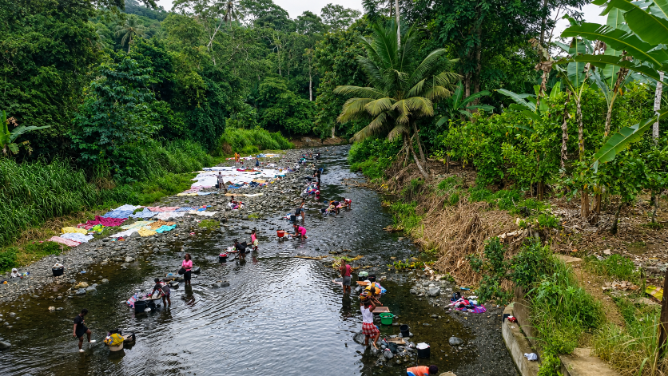
Travelers may observe traditional farming activities, tropical fruit cultivation, fishing practices, and other aspects of daily life.
These experiences are particularly valuable when tourism directly supports local communities through guides, restaurants, crafts, accommodation, and locally produced goods.
Fishing and Coastal Culture
São Tomé is an island, so the sea has always played an important role in local life.
Fishing communities along the coast contribute to the country’s food culture and economy. Visiting coastal communities can provide insight into traditional fishing practices and the importance of the Atlantic Ocean.
A cultural itinerary can combine a coastal visit with a traditional meal featuring locally sourced fish and seafood.
This combination of landscape, food, and community creates a richer understanding of island life.
Crafts and Local Products
Local crafts and products can also be part of a cultural experience.
Visitors may find handmade objects, traditional products, agricultural goods, cocoa, coffee, spices, and other items connected to local production.
Purchasing directly from local artisans and producers can help support the community while providing travelers with meaningful souvenirs.
Rather than buying generic imported products, choosing locally made items creates a stronger connection between the traveler and the destination.
Cultural Tours for Cruise Passengers
São Tomé is increasingly visited by cruise passengers who have only a limited number of hours to explore the island.
For these travelers, a carefully planned cultural excursion can combine several important experiences without creating an unnecessarily demanding schedule.
A cruise cultural tour might include São Tomé city, historic buildings, a market, a plantation, a local lunch, or a cultural community experience.
Because the ship’s departure time is fixed, transportation and scheduling are particularly important.
A professional local operator can design an itinerary around the ship’s arrival and departure schedule, allowing passengers to explore confidently while maintaining an appropriate time buffer.
Private Cultural Tours
Private cultural tours are ideal for travelers who want a personalized experience.
Families, couples, photographers, researchers, and small groups can choose the places and themes that interest them most.
A private tour may focus on history and architecture, while another can concentrate on food, plantations, markets, music, and community life.
The pace can also be adapted according to the group. This makes private cultural tours particularly useful for travelers who want to spend more time at specific locations rather than following a rigid itinerary.
Sustainable Cultural Tourism
Cultural tourism should benefit local communities and help preserve heritage.
Travelers can contribute by supporting local businesses, respecting cultural traditions, avoiding unnecessary waste, asking permission before photographing people, and purchasing locally produced goods.
Guides and tour operators also have an important role in ensuring that cultural experiences are presented accurately and respectfully.
Sustainable cultural tourism should create value for both visitors and residents.
The objective is not to turn traditions into artificial performances, but to create opportunities for genuine cultural exchange while supporting heritage preservation.
Best Cultural Experiences in São Tomé
There are many ways to experience São Tomé’s culture.
São Tomé city tours are ideal for discovering history, architecture, markets, and everyday life.
Roça and plantation tours connect visitors with the history of cocoa and coffee production.
Cocoa experiences reveal an important part of the island’s agricultural heritage.
Gastronomic tours allow travelers to discover local flavors and traditional ingredients.
Market visits provide an authentic glimpse into contemporary daily life.
Traditional music and dance experiences introduce visitors to important forms of cultural expression.
Village visits offer opportunities to understand rural life and community traditions.
Coastal experiences reveal the importance of fishing and the sea.
Why Choose a Cultural Tour in São Tomé?
A cultural tour offers something that a simple sightseeing trip cannot always provide: understanding.
The beauty of São Tomé is immediately visible, but its culture requires time, conversation, observation, and context.
A historic building becomes more meaningful when you understand why it was built. A plantation becomes more significant when you learn about the people who lived and worked there. A traditional dish becomes more memorable when you know its ingredients and cultural background.
This is the true value of cultural tourism.
Book Your Cultural Tours São Tomé
A Cultural Tour São Tomé is an invitation to discover the island through its people, history, traditions, food, architecture, plantations, music, markets, and communities.
From the streets of São Tomé city to historic roças, from local markets to traditional villages, every part of the journey can reveal another aspect of the country’s identity.
For first-time visitors, cultural tourism provides an excellent introduction to São Tomé and Príncipe. For returning travelers, it offers an opportunity to discover deeper stories and experiences that may have been missed during a first visit.
Whether you are traveling as a couple, with family, as part of a private group, or arriving on a cruise ship, a professionally organized cultural tour can transform your visit into a meaningful experience.
São Tomé is not only a tropical destination of beaches and forests. It is a country with a rich and complex cultural identity, shaped by African traditions, Portuguese history, plantation heritage, local communities, music, food, language, and generations of cultural exchange.
Cultural Tours São Tomé allows travelers to discover this identity respectfully and authentically.
Come beyond the beaches. Walk through the historic streets, taste local cuisine, visit plantations, meet communities, listen to traditional stories, discover local traditions, and experience the living culture of São Tomé and Príncipe.
Your journey will not simply be a visit to an island—it will become a deeper connection with its people, its history, and its unique cultural heritage.
